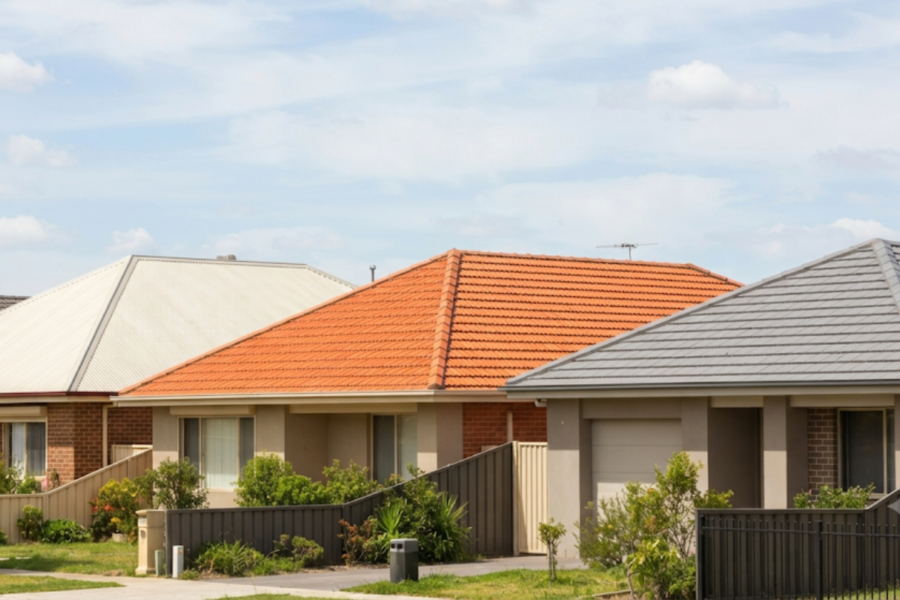
A new roof is one of the largest purchases you will make for your home, and you will live with it for decades. This guide compares the main roofing materials in Australia: Colorbond and Zincalume steel, aluminium, terracotta and concrete tiles, slate and asphalt shingles.
You will learn what each one costs, how long it typically lasts and where it works best. You will also see the coastal, bushfire and council rules that can narrow your choice before you even look at colours.
Quick answer
There is no single best roofing material for every Australian home. For most houses the real choice is between Colorbond steel and roof tiles.
- Colorbond steel is light, quick to install, suits low roof pitches and is usually the cheaper option per square metre in 2026 cost guides.
- Terracotta tiles cost more upfront but are often quoted as lasting 50 years or longer.
- Concrete tiles give a tiled look for less than terracotta, but their surface colour weathers over time.
- Slate is a premium, very long-lasting choice mostly used on heritage and high-end homes.
- Aluminium or stainless steel are the usual choices for homes very close to breaking surf.
- Asphalt shingles are a niche option in Australia, with a shorter life and limits in bushfire-prone areas.
Your distance from the sea, your Bushfire Attack Level (BAL), the strength of your roof frame, local planning rules and your budget will usually decide the shortlist for you.
Roofing materials compared at a glance
| Material | Typical installed cost (2026 guides) | Commonly quoted lifespan | Weight | Best suited to | Main watch-outs |
| Colorbond steel | About 80–180/m² | 30–50 years | Very light (about 4.35 kg/m² for 0.42 mm corrugated) | Most homes, low pitches, re-roofs on older frames | Rain noise without a blanket; standard product not for sites within 200 m of breaking surf |
| Zincalume steel | Usually a little below Colorbond; quote-dependent | Similar to Colorbond | Very light | Budget metal roofs, sheds, rural homes | Unpainted silver finish can cause glare; same coastal limits |
| Aluminium | Higher than steel; quote-dependent | Varies by product | Very light | Homes very close to the sea | Higher cost; needs compatible fixings |
| Concrete tiles | About 80–220/m² | 30–50 years | Heavy (about 48–53 kg/m²) | A tiled look on a tighter budget | Surface colour weathers; may need restoring |
| Terracotta tiles | About 120–250/m² | 50–75 years | Heavy | Heritage homes, long-term owners | Higher upfront cost; can crack under foot |
| Slate | About 200–500/m² | 75–100+ years | Very heavy | Heritage and premium homes | Specialist installers; frame must carry the load |
| Asphalt shingles | Quote-dependent | 15–25 years | Light, but needs a solid plywood deck | Low-risk sites with a specific design look | Combustible; few installers; shorter life |
Costs are rough ranges from published Australian cost guides updated in 2026. Your price depends on your city, roof size, pitch, access and what has to be removed. Lifespans are industry estimates, not guarantees.
Colorbond steel roofing
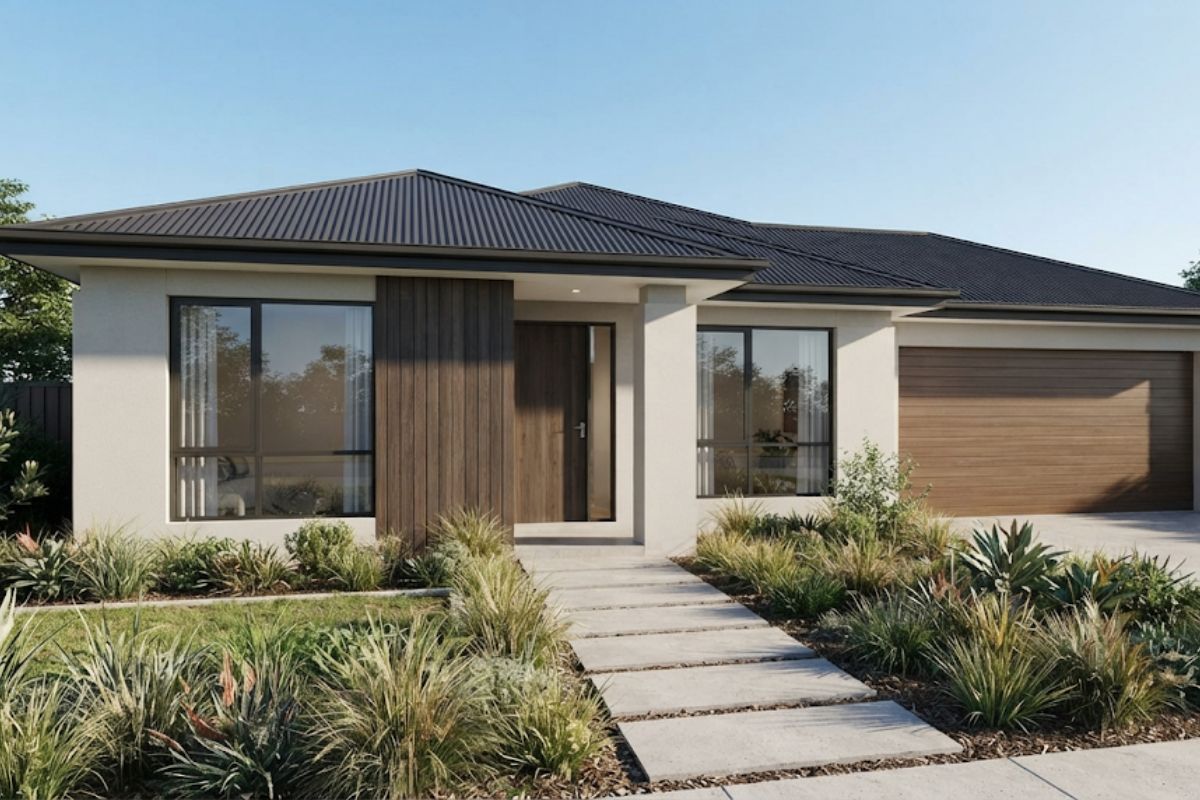
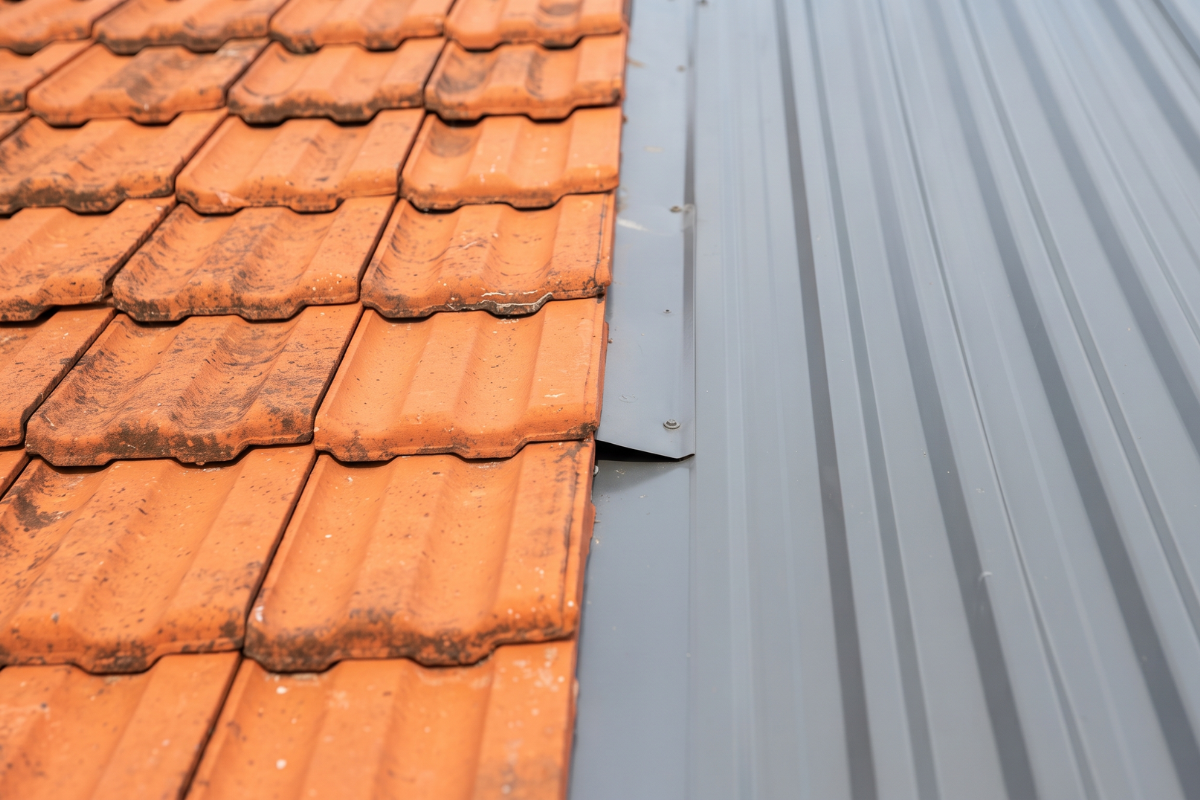
Colorbond is pre-painted steel made in Australia by BlueScope. It is one of the most common roofs on Australian houses because it is light, comes in a wide colour range and needs little upkeep.
Its weight is a big advantage on older homes. A typical corrugated sheet weighs about a tenth as much as a concrete tile roof, which takes load off a tired frame.
Colorbond is often described as ideal for coastal homes, but the right product depends on your distance from the sea. BlueScope recommends standard Colorbond (Classic and Matt finishes) for roofs more than 200 metres from breaking surf. Between 100 and 200 metres it recommends Colorbond Ultra, and within 100 metres its stainless-steel product, Superdura.
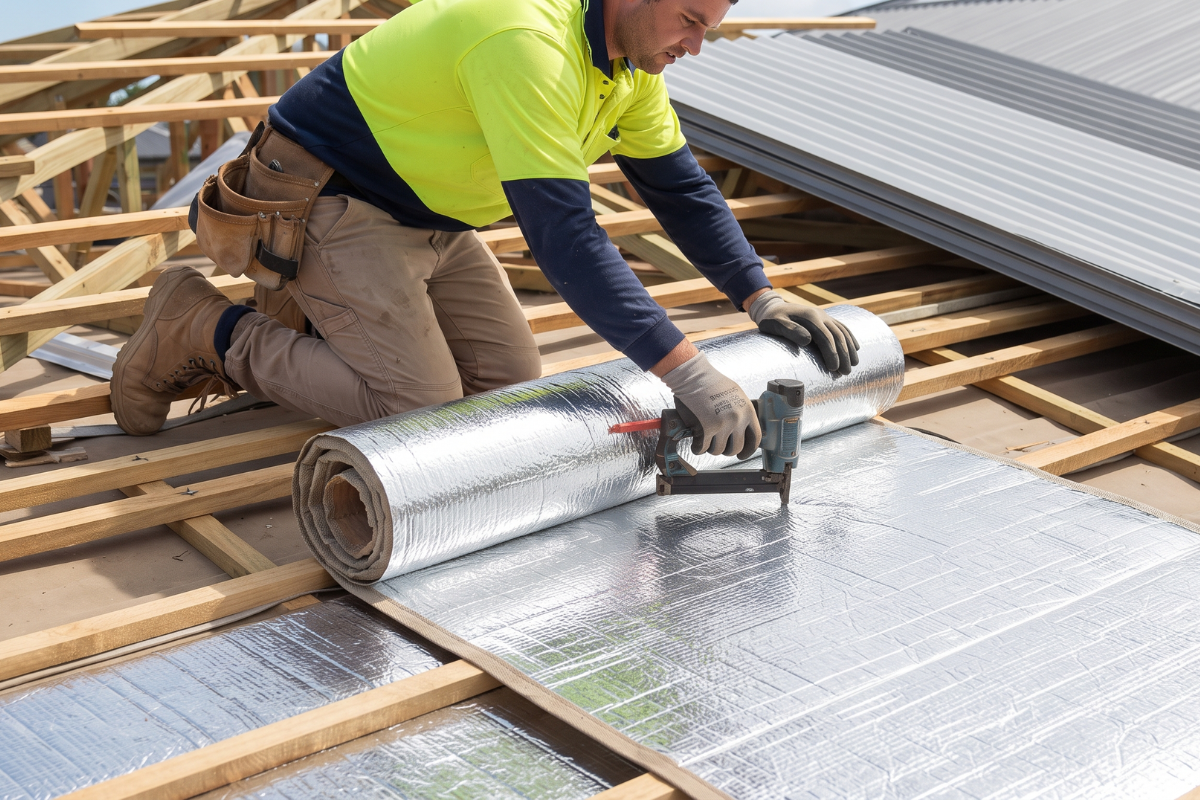
Colour also matters. Lighter colours absorb less of the sun’s heat, which helps in hot climates. Rain noise is the most common complaint, and a foil-backed insulation blanket under the sheets dampens it considerably.
Our detailed guide to Colorbond roofing costs, colours and drawbacks covers product choice, warranties and maintenance in more depth.
Zincalume and aluminium roofing
Zincalume is BlueScope’s unpainted steel with a metallic alloy coating of aluminium, zinc and magnesium. It has a plain silver finish and is generally priced a little below Colorbond.
Zincalume is not a coastal upgrade. BlueScope’s roofing guidance lists it for sites more than 200 metres from breaking surf and more than 100 metres from calm salt water. Its bright finish can also cause glare, and some councils limit very reflective roofs.
Aluminium does not rust, which is why roofers often suggest it for homes right on the coast. It usually costs more than steel, and it must be fixed with compatible fasteners to avoid corrosion where different metals meet.
With any metal roof, avoid water running off copper pipes or lead flashings onto the sheets, as this can corrode them.
Terracotta roof tiles
Terracotta tiles are made from clay fired in a kiln. Their colour comes from the clay or a fired glaze, so it does not depend on a paint layer.
Major Australian brands offer 50-year product warranties on terracotta tiles. Well-maintained terracotta roofs are commonly quoted as lasting 50 to 75 years, and many older homes still have their original tiles.
Terracotta is sometimes described as a good insulator, but that overstates it. Tiles have thermal mass, meaning they absorb heat and release it slowly, but they are not insulation. Ceiling insulation, sarking and roof ventilation do far more to keep a home comfortable.
Terracotta is non-combustible, but it can crack if walked on or hit by hail or branches. The mortar that holds the ridge capping needs re-bedding or re-pointing over time. If your home is under a heritage overlay, council may require you to replace terracotta with matching terracotta.
Concrete roof tiles
Concrete tiles are made from cement, sand and pigment. They give a tiled look for less money than terracotta and do not corrode in salt air.
Their main weakness is colour. The surface coating weathers over the years, so concrete roofs often fade and may need a restoration, which involves cleaning, repairing and recoating. Cost guides suggest a good restoration adds roughly 10 to 15 years to a sound roof.
Concrete tiles are heavy, at roughly 48 to 53 kg per square metre for common profiles. Like terracotta, they generally need a steeper roof pitch than metal sheeting, so check the tile maker’s minimum pitch.
Slate roofing
Slate is natural stone split into thin tiles. It is a premium material, and good-quality slate can last 75 to 100 years or more with care.
Most slate used in Australia is imported. It is heavy, so the roof frame must be checked before installation. Slate also needs a specialist slater, and repairs cost more than for other materials.
Slate suits heritage restorations and high-end homes where the look and long life justify the cost.
Asphalt shingles
Asphalt shingles are overlapping sheets of bitumen-coated mat topped with mineral granules. They are common in North America but remain a niche product in Australia.
Shingles are often described as budget-friendly, but in Australia that is not a safe assumption. Shingles are laid over a solid plywood roof deck, which adds material and labour. There are also fewer experienced installers, and cost guides quote a shorter life of about 15 to 25 years.
Bushfire rules are the bigger issue. In bushfire-prone areas rated BAL-12.5 or higher, the standard construction rules require non-combustible roof coverings, and asphalt shingles are combustible. Talk to your building certifier before considering shingles anywhere with a bushfire rating.
How to choose the right roofing material
1. Check your distance from the sea
Salt spray speeds up corrosion on any metal. Measure your distance from breaking surf and calm salt water, then ask your supplier which product and fasteners meet the warranty conditions for your site. Tiles and slate do not rust, which is one reason they remain popular in coastal suburbs.
2. Find out your Bushfire Attack Level (BAL)
A BAL rating measures how exposed a building is to embers, radiant heat and flames. There are six levels, from BAL-LOW to BAL-FZ (Flame Zone), set out in Australian Standard AS 3959.
From BAL-12.5 upwards, the roof covering must be non-combustible. Steel, terracotta, concrete and slate all qualify, but the material alone is not enough. Tiled roofs need full sarking, and gaps at the ridge, eaves and roof-to-wall junctions must be sealed against embers.
If you live in a bushfire-prone area, Standards Australia’s free Bushfire Construction Homeowner’s Handbook (SA HB 208.2) explains BAL ratings and construction requirements in plain language. Get your BAL assessed and ask your builder to show how the whole roof system meets it.
3. Check the roof pitch and frame
Metal sheeting works on much lower pitches than tiles. Swapping materials on an existing house also changes the load on the frame.
Moving from tiles to steel takes weight off, but the roof may need extra tie-downs to resist wind uplift. Moving from steel to tiles or slate adds weight, so the frame must be checked first. Either way, ask your roofer or an engineer to confirm what is needed.
4. Think about heat, insulation and colour
Roof colour affects how much heat your roof absorbs. Lighter roofs generally keep the roof space cooler, especially in hot climates.
Insulation, sarking and ventilation matter more than the roofing material itself. A well-insulated steel roof can perform as well as a tiled one. Windows are another major source of summer heat, as our guide to double glazed awning windows explains. A cooler roof can also reduce how hard your split system air conditioner has to work.
5. Consider noise
Tiles are naturally quieter in heavy rain. Steel can be just as comfortable with a foil-backed insulation blanket pulled tight under the sheets and good ceiling insulation below.
6. Check council, heritage and estate rules
Heritage overlays, estate covenants and some councils control roof material and colour. Check before you order, especially if you plan to change from tiles to steel or choose a very light or very dark roof.
7. Plan for solar panels
Metal roofs are generally simpler for solar installers because brackets fix straight through or clamp to the sheets. On tiled roofs, installers must lift tiles to fit brackets, and tiles can crack in the process. If you have tiles, ask about spare tiles and how the installer will keep the roof watertight.
8. Compare lifetime cost, not just the quote
A cheaper roof that needs replacing sooner can cost more over 40 years than a dearer one that lasts longer. Divide each quote by its expected life to compare the cost per year, and factor in maintenance such as restorations.
Repair, restore or replace your roof?
The right choice depends on the roof’s condition, not its age alone.
- Repair a small number of broken tiles, a damaged flashing or a single leak.
- Restore a structurally sound roof that looks tired: faded colour, worn pointing or a handful of cracked tiles.
- Replace the roof if leaks keep returning, the frame sags, battens are rotting, many tiles are crumbling or the roof contains asbestos.
A paid roof inspection is worth it before a big decision, and a second opinion helps if a roofer pushes for replacement without clear evidence.
Older homes: check for asbestos before any roof work
Homes built before 1990 may contain asbestos in roof sheeting, gutters, downpipes, ridge capping and eaves, according to the federal Asbestos and Silica Safety and Eradication Agency.
Never cut, drill, sand or water-blast a roof you suspect contains asbestos. Have it checked by a licensed asbestos assessor. If it needs to go, removal must be done by a licensed removalist, which adds to the cost of a re-roof.
How to get a fair roofing quote
- Get at least three written, itemised quotes from licensed roofers.
- Make sure each quote names the exact product, profile, colour and thickness.
- Check what is included: removal and disposal, sarking, insulation blanket, gutters, fascia, downpipes and flashings.
- Ask how the roof will meet your BAL rating and coastal warranty conditions.
- Ask about the roofer’s licence, insurance and workmanship warranty.
- Keep the invoice and product warranty paperwork for any future claim or sale.
For more practical guides on keeping your home comfortable and well maintained, browse our home improvement articles.
Final thoughts
The best roofing material for your home is the one that suits its location, structure and the way you plan to use it. Start with the non-negotiables: your distance from the sea, your BAL rating and any council rules. Then compare comfort, maintenance and lifetime cost.
Take your time with quotes, ask questions about every line, and choose a licensed roofer who explains how the whole roof system, not just the top layer, will perform.