
Choosing an air conditioner is a bigger decision than it first looks. The unit you pick affects your power bills, how well you sleep and how comfortable your home feels for years. A split system air conditioner is one of the most common choices for homes and small offices, and for good reason, but it is not the right fit for every space or budget.
This guide explains how a split system works, its five main benefits, the trade-offs to weigh, and what to check before you buy and install one.
Quick answer
A split system air conditioner has an indoor unit that cools (and often heats) a room and an outdoor unit that releases the heat outside. Its main benefits are efficient room-by-room cooling, installation without ductwork, filtered and drier air, quieter indoor operation, and better long-term value when the unit is correctly sized and maintained. The trade-offs are a higher upfront cost than a window unit, the need for a licensed installer, a permanent wall penetration and regular cleaning.
What is a split system air conditioner?
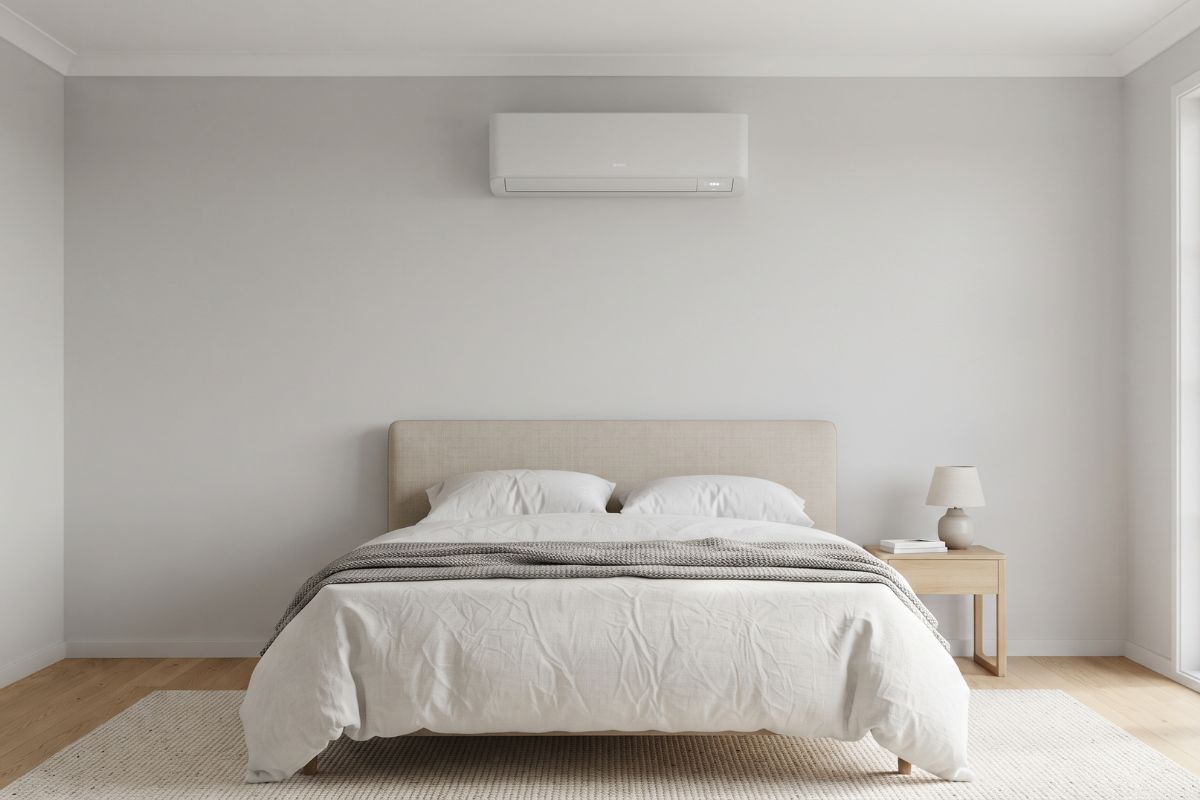
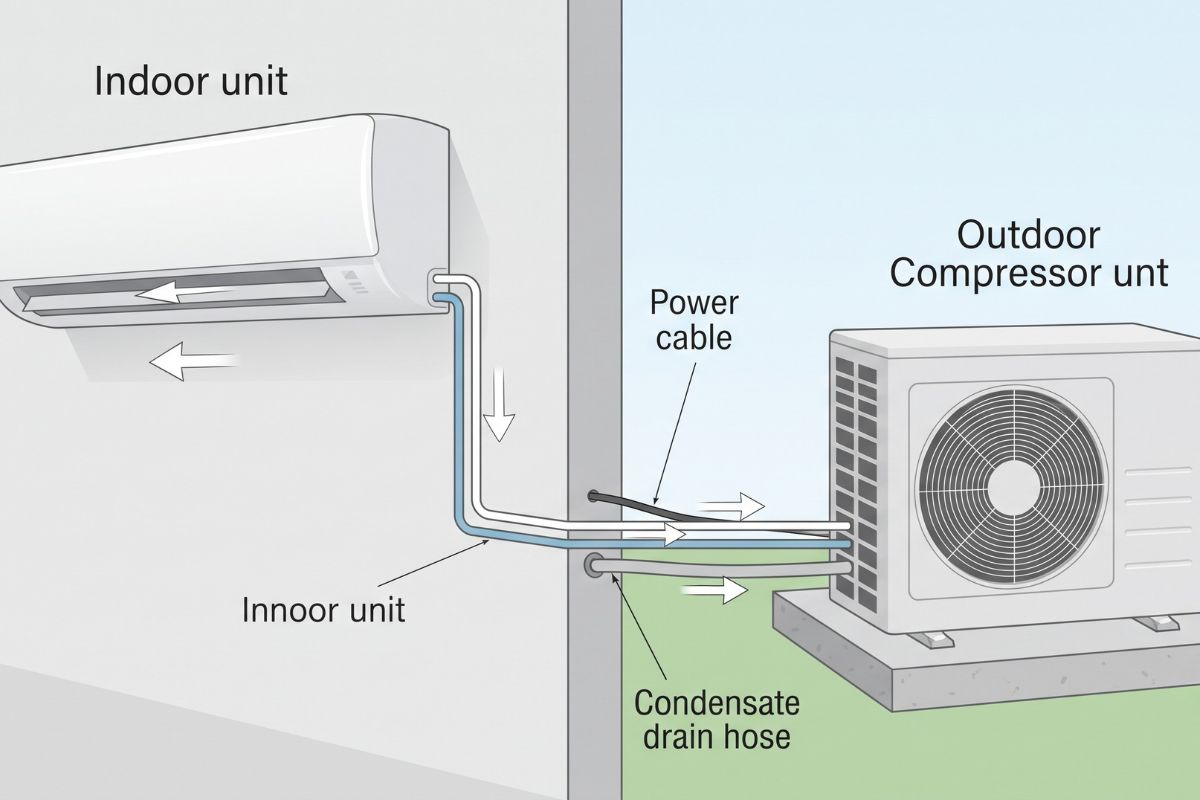
A split system air conditioner is an air conditioner divided into two parts. The indoor unit, usually mounted high on a wall, contains a fan, a filter and a cold coil called the evaporator. The outdoor unit contains the compressor and condenser, which push the heat removed from your room into the outside air.
The two units are joined by copper refrigerant pipes, an electrical cable and a condensate drain that carries away the water the system removes from the air. These pass through a small hole in the wall rather than through ducts.
You may see split systems described in different ways depending on where you live:
- Ductless mini split is the common US term for the same equipment.
- Reverse cycle or heat pump split systems can both cool and heat.
- Multi-split systems connect two or more indoor units to one outdoor unit.
- Inverter split systems vary the compressor speed instead of switching it fully on and off.
Indoor units also come in different styles, including wall-mounted (sometimes called hi-wall), floor console and ceiling cassette units.
5 benefits of a split system air conditioner
1. Efficient, room-by-room cooling
A split system cools the room it is installed in, so you can cool the bedroom at night or the home office during the day without paying to cool rooms nobody is using. If you have more than one indoor unit, each has its own controls, so different rooms can run at different temperatures.
Because cooled air is delivered straight into the room, a ductless split also avoids the energy that can be lost through leaky or poorly insulated ducts in some central systems.
Most new split systems use inverter technology. A conventional (fixed-speed) compressor runs at full power until the room reaches the set temperature, switches off, then starts again when the room warms up. An inverter compressor slows down instead, running gently to hold the temperature. This usually gives steadier comfort and lower energy use day to day, although the actual saving depends on the model, your climate and how you use it.
2. Easier installation without ductwork
A split system does not need ducts in the ceiling or under the floor. The installer mounts the indoor unit, places the outdoor unit on a bracket, pad or the ground, and runs the pipes and cables through a small hole in the wall. A single unit in a straightforward position is often installed within a day.
This makes split systems a practical choice for:
- Homes without existing ducts.
- Extensions, converted garages and granny flats.
- Single rooms that are always too hot, such as west-facing bedrooms.
- Apartments where ductwork is not an option.
Placement is flexible too. The indoor and outdoor units can sit some distance apart, within the manufacturer’s limits for pipe length and height difference, so the outdoor unit can often go somewhere out of sight.
3. Filtered, drier air, with realistic limits
Every split system has a washable filter in the indoor unit that traps dust, lint and pet hair before it reaches the coil. Some models add finer filters, such as ones marketed as anti-allergen or deodorising. As the system cools, it also removes moisture from the air, which can make a humid room feel more comfortable. Many units include a “dry” mode for this.
It is worth keeping expectations realistic:
- The standard filter’s main job is to protect the coil. It is not as fine as a dedicated HEPA air purifier.
- Most standard split systems recirculate room air. They do not bring in fresh outdoor air, so you still need ventilation.
- A neglected unit can collect dust and moisture on its coil and drain, which can lead to musty smells and mould growth.
If you live with asthma or allergies, a clean, well-maintained split system can help keep a room cooler and less humid, but it is not a medical treatment. Speak to your doctor about managing symptoms, and consider a separate air purifier if fine particles are a concern.
4. Quieter indoors
The noisiest parts of an air conditioner are the compressor and the condenser fan. In a split system, both sit in the outdoor unit, so indoors you mainly hear the indoor fan. That is why split systems are popular for bedrooms, nurseries, studies and home offices, where a rattling window unit can be hard to live with.
Noise levels vary between models, so compare the sound ratings in the specifications, measured in decibels (dB(A)), especially the figure at the lowest fan speed. The outdoor unit still makes noise. Place it away from bedroom windows, yours and your neighbours’, and check whether local rules limit air conditioner noise at night.
5. Better long-term value, including heating
A split system usually costs more upfront than a window or portable unit. Over time, lower running costs can narrow that gap, especially if you use air conditioning often and choose an efficient inverter model.
Many split systems are reverse cycle, which means the same unit can heat your home in winter. Because a heat pump moves heat rather than creating it, a reverse cycle split system is generally a more efficient way to heat a room than a plug-in electric resistance heater. One purchase can replace two appliances.
How long a split system lasts depends on build quality, your climate (coastal salt air is hard on outdoor units), how hard it works and how well it is maintained. The length of the manufacturer’s warranty is a useful clue to the build quality you are paying for.
Split system trade-offs to consider
A split system is a strong choice for many homes, but weigh these drawbacks before you commit:
- Higher upfront cost. You pay for the indoor unit, the outdoor unit and professional installation. Prices vary widely by capacity, brand, efficiency and how complicated the job is, so get several written quotes.
- Professional installation is required. The refrigerant pipes have to be connected, pressure-tested and evacuated correctly. In many countries, including Australia and the United States, handling refrigerant requires a licensed or certified technician, and a new circuit may need a licensed electrician.
- A permanent change to the building. A hole through an external wall and a mounted outdoor unit may need approval from a landlord, strata or body corporate.
- One unit cools one area. A single wall unit will not cool a whole house with closed doors. Several rooms need several indoor units or a different type of system.
- Regular cleaning. Filters need washing, and the coil and drain need periodic professional cleaning.
- Sizing matters. A unit that is too small struggles on hot days. One that is too big can cool the room quickly but switch on and off often, which wastes energy and removes less humidity.
Split system vs other types of air conditioning
| Type | Best for | Installation | Indoor noise | Main trade-off |
| Split system (wall-mounted) | One room or open-plan area | Professional; small wall hole | Low | Higher upfront cost than a window unit |
| Multi-split | Two to several rooms | Professional; one outdoor unit | Low | All connected rooms depend on one outdoor unit |
| Ducted system | Whole-home cooling with hidden vents | Professional; ducts in ceiling or floor | Low | Highest upfront cost; ducts can lose energy |
| Window or through-wall unit | Renters or short cooling seasons | Simple; fits a window or wall slot | Higher | Noisier and often less efficient |
| Portable unit | Temporary cooling | No installation; vents through a window | Highest | Least efficient; takes floor space |
How to choose the right split system
Get the size right
Capacity is listed in kilowatts (kW), British thermal units per hour (BTU/h) or, in some markets such as India, tons. The right size depends on more than floor area. Ceiling height, insulation, window size, which way the room faces, local climate and the number of people all affect how much cooling a room needs.
Online calculators give a rough starting point, but ENERGY STAR’s guidance on ductless heating and cooling recommends that your contractor confirm the size with a proper heating and cooling load calculation. A good installer should look at the room before quoting.
Compare energy efficiency labels
Look for the energy label used in your country, such as the Zoned Energy Rating Label in Australia, the BEE star label in India or ENERGY STAR certification in the United States. Compare models of the same capacity, and use the estimated annual energy figure to compare likely running costs.
Choose inverter and reverse cycle if they suit you
An inverter model is usually the better choice if you will run the unit for long periods. A reverse cycle model makes sense if you also need heating for part of the year.
Check noise and features
Compare indoor sound levels at low fan speed if the unit is for a bedroom. Useful features include a sleep mode, timers, Wi-Fi control and a filter-cleaning reminder. Avoid paying extra for features you will not use.
Choose the installer carefully
Installation quality has a big effect on how well a split system performs. Before you book:
- Ask for a written quote that lists the model, capacity, pipe length, electrical work and removal of any old unit.
- Confirm the installer holds the refrigerant and electrical licences required where you live.
- Ask where both units will go and how the condensate drain will be routed.
- Check what the product and installation warranties cover, and whether the warranty requires professional servicing.
If your home has older wiring, ask an electrician to check it before adding a large appliance. Our guide on how to make your home safer explains why outdated wiring is worth checking.
Plan the placement
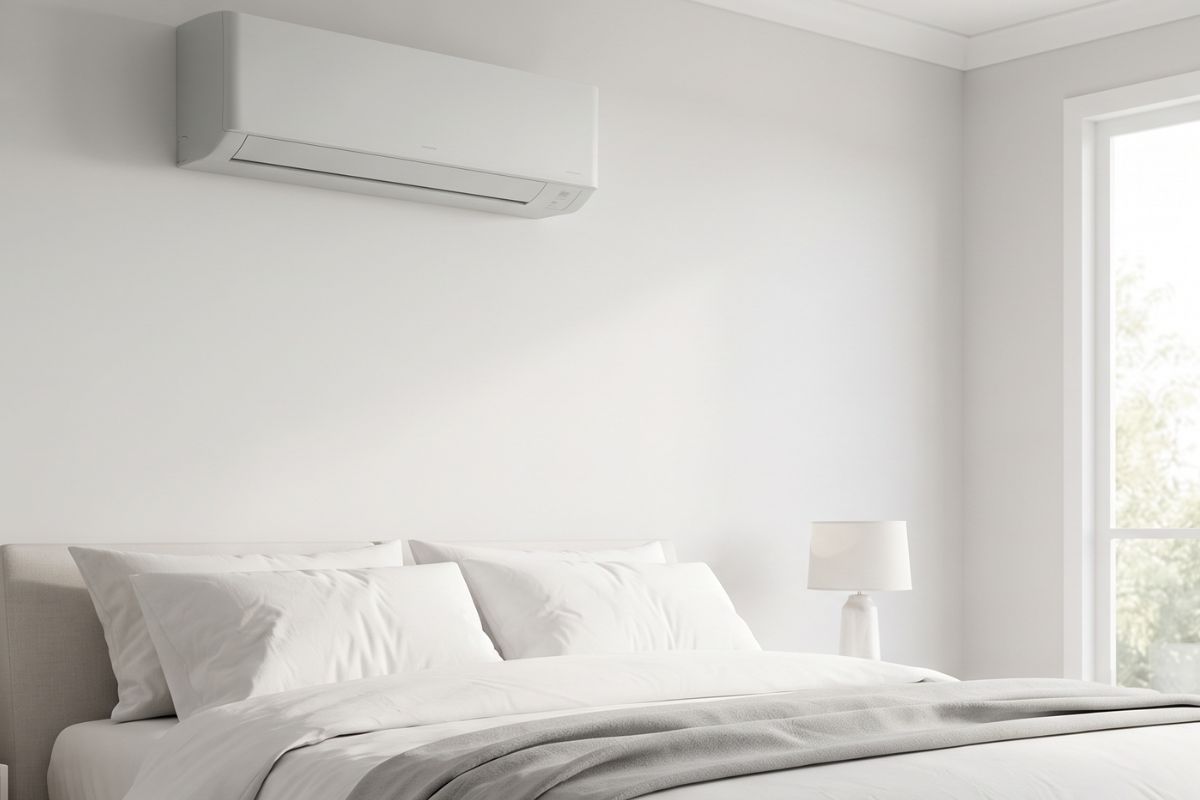
Mount the indoor unit where it can spread air across the room without blowing straight onto a bed or desk. Give the outdoor unit plenty of open space, keep it out of harsh afternoon sun where possible, and make sure a technician can reach it for servicing.
How to get the most from your split system
- Set a comfortable, steady temperature. Every degree cooler increases energy use, so choose the warmest setting you are comfortable with and let the unit hold it.
- Close doors and windows in the room you are cooling, and use blinds or curtains on sunny windows.
- Reduce heat gain through glazing. Single-glazed windows and doors can let a lot of summer heat in. If you are planning upgrades, our guides to double glazed entrance doors and double glazed awning windows explain how better glazing affects comfort.
- Wash the filters regularly. Follow your manual. During heavy use, many manufacturers suggest checking them every few weeks.
- Book professional servicing. A technician can clean the coil and drain, check refrigerant pressures and spot faults early. Many owners do this once a year.
- Keep the outdoor unit clear of leaves, plants and stored items.
- Act on warning signs such as musty smells, water leaking indoors, ice on the pipes, unusual noises or a sudden jump in your power bill.
For more practical guides to improving comfort at home, browse our home improvement articles.

Final thoughts
A split system air conditioner is one of the most efficient and flexible ways to cool a room, and a reverse cycle model can heat it too. The benefits are real, but they depend on the right size, a good energy rating and a qualified installer, followed by regular cleaning. Get several quotes, compare efficiency labels and plan the placement before you buy, and your split system should keep you comfortable for years.