
If you are tired of booking wax appointments every few weeks, you have probably wondered whether laser hair removal for the face is worth it. Both methods remove unwanted facial hair, but they work very differently and suit different people.
This guide compares facial laser hair removal and waxing on results, pain, cost, safety and skin tone. It also explains who is a good candidate for laser, how to prepare, and when to see a doctor about facial hair.
Quick answer
Facial laser hair removal is usually the better long-term choice if you have dark hair and want fewer sessions over time. It reduces hair growth for months or years, but it is rarely completely permanent on the face, especially when hormones are involved. Most people need several sessions and occasional top-ups.
Waxing is better if you want instant, low-cost results, have blonde, grey, white or red hair (which lasers cannot target), or are not ready for a course of treatment. Regrowth usually starts within two to three weeks.
If you have darker skin, laser can still be an option, but choose an experienced practitioner who uses a laser suited to your skin tone.
How each method works
Laser hair removal
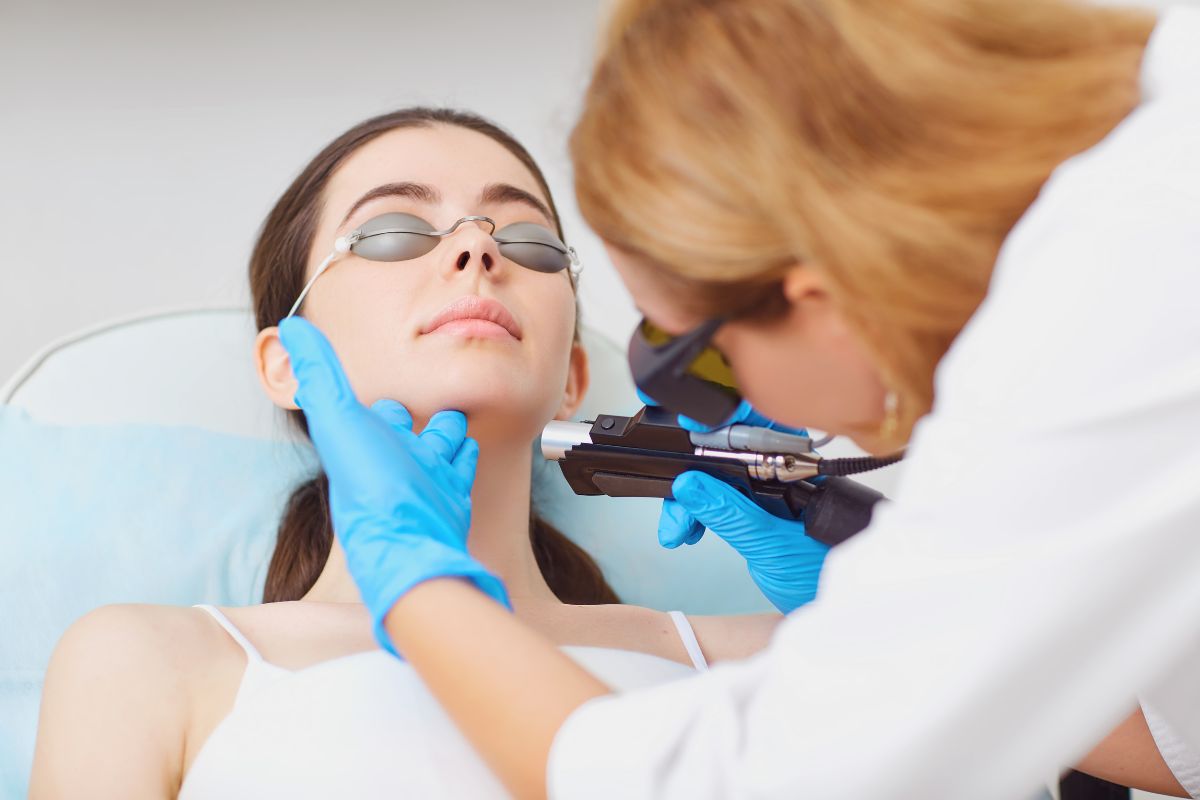
Laser hair removal uses concentrated light. The pigment (melanin) in the hair absorbs that light, which turns into heat and damages the hair follicle, the small pocket under the skin where hair grows. A damaged follicle grows hair more slowly, or produces finer, lighter hair.
Because the laser targets pigment, it works best when hair is darker than the surrounding skin.
Waxing
Waxing spreads warm or cold wax over the skin. The wax grips the hair, and when it is pulled off, it removes the hair from the root. The follicle is not destroyed, so hair grows back, usually within two to three weeks.

Facial laser hair removal vs waxing at a glance
| Factor | Facial laser hair removal | Facial waxing |
| How long results last | Months to years; maintenance sessions may be needed | About 2–3 weeks before regrowth starts |
| Results appear | Gradually, over a course of sessions | Immediately |
| Number of sessions | Usually several, spaced weeks apart | Ongoing, every few weeks |
| Upfront cost | Higher | Lower |
| Long-term cost | Can be lower than years of waxing, but not guaranteed | Adds up over time |
| Hair colour | Works on dark hair; does not work on blonde, grey, white or red hair | Works on any hair colour |
| Skin tone | Possible on most skin tones with the right laser and settings; higher risk on darker skin | Suitable for most skin tones |
| Common side effects | Redness, swelling and discomfort for 1–3 days | Pain, redness, ingrown hairs, folliculitis (inflamed follicles) |
| Less common risks | Burns, blisters, skin darkening or lightening, rarely scarring | Burns, dark marks, skin tearing in people using retinoids |
Benefits of facial laser hair removal
Long-lasting hair reduction
The biggest advantage is that results last far longer than waxing. According to the American Academy of Dermatology (AAD), most patients stay hair-free for months or years after a course of treatment. Any regrowth tends to be finer, lighter and less noticeable.
It is important to call this hair reduction rather than permanent removal. Facial hair in women is often influenced by hormones, so new hair can appear over time and top-up sessions may be needed.
Fewer ingrown hairs
Waxing can lead to ingrown hairs, where regrowing hair curls back into the skin and causes red bumps. Because laser reduces how much hair grows back, many people get fewer ingrown hairs and less razor-type irritation.
Less time spent on upkeep
Once the course is complete, you may only need occasional maintenance instead of regular appointments. Each facial session is quick, often a few minutes for a small area such as the upper lip.
Treatment can be adjusted to you
A trained practitioner chooses the laser type, energy level and timing based on your skin tone, hair colour and hair thickness. This tailoring matters most for people with darker skin.
Benefits of waxing
Instant results
Waxing removes hair straight away, which makes it handy before an event. Laser results build gradually over several weeks.
Lower upfront cost
A single wax costs far less than a course of laser sessions, and it is widely available.
Works on all hair colours
Waxing removes blonde, grey, white and red hairs, which lasers cannot treat. If your facial hair is light or fine, waxing, threading or another method may suit you better.
Is laser hair removal less painful than waxing?
For many people, yes, but pain varies. The AAD says many patients describe laser pulses as warm pinpricks or a rubber band snapping against the skin. A numbing cream can be used for sensitive areas such as the upper lip.
Waxing involves pulling hair from the root, which many people find sharper, especially on the face. Your pain threshold, the area treated and the device used all make a difference.
Is laser hair removal safe for darker skin?
Laser hair removal can be done on darker skin, but it needs extra care. Darker skin contains more melanin, which can absorb laser energy meant for the hair. This raises the risk of burns, blisters and dark or light patches if the wrong laser or settings are used.
Lasers with longer wavelengths are generally considered safer for medium and dark skin. The long-pulsed Nd:YAG laser (1064 nm) is commonly used for very dark skin, and long-pulsed diode lasers are often used for medium-brown skin. Settings and cooling also matter.
Before booking, ask how many treatments the practitioner has carried out on people with your skin tone. This is especially relevant for many South Asian, Middle Eastern, African and Latin American skin tones.
Waxing is not risk-free on darker skin either. Repeated irritation from waxing or threading can leave post-inflammatory hyperpigmentation, which means dark marks after inflammation. You can learn more about why dark marks appear on the face and how to fade them.
Who is a good candidate for facial laser hair removal?
You are likely to get good results if:
- your facial hair is dark and coarse
- there is clear contrast between your hair and skin colour
- you can commit to several sessions spaced weeks apart
- you can avoid tanning and protect your face from the sun
Laser may not suit you if:
- your facial hair is blonde, grey, white or red
- your hair is very fine and light (sometimes called peach fuzz)
- you are pregnant
- you have a tan, active skin infection or a rash in the area
- you have recently taken isotretinoin, a prescription acne medicine; tell the practitioner, as they will advise on timing
Laser is not usually done on the eyelids, eyebrows or close to the eyes because of the risk of serious eye injury.
How many sessions does facial laser hair removal take?
Most people need several sessions. The American Academy of Dermatology’s laser hair removal FAQ says most patients need two to six treatments, usually spaced four to six weeks apart, and may see a 10% to 25% reduction after the first session.
Facial hair grows quickly, so the face is often treated every four to eight weeks. Hair grows in cycles, and lasers only damage follicles that are actively growing, which is why several sessions are needed. People with hormone-related facial hair often need more sessions and regular maintenance.
What are the side effects of each method?
Laser hair removal
Common, short-lived effects include redness, swelling and discomfort, which usually settle within one to three days. The skin can look mildly sunburned.
Less common risks include blistering, crusting, cold sore flare-ups, infection, scarring and changes in skin colour. These are more likely when treatment is done by someone without enough training or with the wrong settings. Rarely, hair can grow thicker around a treated area, a reaction called paradoxical hypertrichosis.
Waxing
Waxing commonly causes pain and redness for a few hours. Other possible problems include ingrown hairs, folliculitis, dark marks, burns from wax that is too hot, and allergic reactions to ingredients such as rosin.
People using retinoids need extra caution. Oral retinoids such as isotretinoin can make the skin fragile enough to tear when waxed. DermNet advises waiting at least six months to a year after stopping oral retinoids, and stopping topical retinoids three to four weeks before waxing. Never wax skin that is sunburned, broken or irritated.

How to prepare for facial laser hair removal
- Book a consultation with a qualified, experienced practitioner, ideally a dermatologist or a clinic supervised by one.
- Tell them about your medicines, any history of cold sores, keloids or scarring, and any recent tan.
- Stop waxing, plucking and threading for at least four weeks before treatment, because the laser needs the hair root in place. Your clinic will usually ask you to shave instead.
- Avoid sun exposure, tanning beds and self-tanners before and between sessions, and use a broad-spectrum SPF 30 or higher sunscreen every day.
- Follow your aftercare advice, such as using a cool compress for redness.
Laser vs waxing: cost over time
Waxing costs less per visit, but the cost repeats every few weeks for as long as you wax. Laser costs more upfront for a full course, plus any maintenance sessions.
Prices vary widely by city, clinic, device and practitioner, so compare full quotes. Ask how many sessions are included, what top-ups cost, and whether a consultation or patch test is included. Be cautious of very cheap packages or promises of permanent results.
When to see a doctor about facial hair
Speak to a doctor if facial hair appears suddenly, grows quickly or comes with irregular periods, acne, scalp hair thinning or a deepening voice. These can be signs of a hormonal condition such as polycystic ovary syndrome (PCOS), which may need medical treatment alongside hair removal.
Also see a doctor or dermatologist if you develop blisters, burns, infection or lasting dark patches after any hair removal method.
The bottom line
Facial laser hair removal is often the better choice if you have dark hair and want less upkeep, while waxing suits people who want instant, low-cost results or have light hair. Neither method is right for everyone. A consultation with a qualified practitioner, honest expectations about maintenance and daily sun protection will help you get the best result for your skin. For more practical skin and health advice, explore our Health & Wellness section.