
Dark patches, brown spots and uneven tone are some of the most common skin concerns, and the face is where they show up first. If you have noticed pigmentation on your face, you are probably wondering what caused it and whether it will fade.
This guide explains what facial pigmentation is, the main reasons it appears, how to tell common types apart, and which prevention and treatment steps are worth your time. It also covers the products to avoid and when to see a dermatologist.
Quick answer
Pigmentation appears on the face when skin cells called melanocytes make extra melanin, the pigment that gives skin its colour. The most common triggers are sun exposure, hormonal changes (which can cause melasma), and inflammation from acne, eczema, injury or irritating products (which leaves post-inflammatory hyperpigmentation).
The face is affected most because it gets the most daily sunlight. People with medium to dark skin tones, including most South Asian skin, are more prone because their melanocytes respond more strongly to these triggers.
Daily sun protection is the foundation of both prevention and treatment. Many spots fade over months once the trigger is removed, but some types, especially melasma, can return and may need a dermatologist’s care.
What is facial pigmentation?
Facial pigmentation, or hyperpigmentation, means areas of skin that are darker than your natural tone. It can look like small spots, larger blotchy patches or a general unevenness.
The colour comes from melanin. Melanin is made by melanocytes, cells in the top layer of the skin (the epidermis). Melanin is useful: it helps shield skin from ultraviolet (UV) damage. Pigmentation becomes a concern when melanocytes make too much melanin in one area, or when melanin settles deeper in the skin.
Depth matters. Pigment near the surface usually looks brown and fades faster. Pigment that sits deeper often looks grey, blue-grey or very dark brown and can take much longer to clear.
Why does pigmentation come on the face? The main causes
Most facial pigmentation has more than one contributing cause. These are the most common.
1. Sun exposure
Sunlight is the biggest single trigger. UV rays signal melanocytes to make more melanin, which is why skin tans. Over years, repeated exposure can leave lasting dark spots called sun spots, age spots or solar lentigines.
The cheeks, forehead, nose and upper lip catch the most light, so they darken first. Sunlight also makes almost every other type of pigmentation worse, including melasma and acne marks.
Visible light, the part of sunlight we can see, can also deepen pigmentation in medium and darker skin. That is why ordinary sunscreen alone does not always stop patches from darkening (more on this below).
2. Hormonal changes and melasma
Melasma causes brown or grey-brown patches, usually on both cheeks, the forehead, the bridge of the nose, the chin or above the upper lip. It is much more common in women, especially between the ages of 20 and 40.
Known triggers include:
- pregnancy, which is why melasma is sometimes called the “mask of pregnancy”
- birth control pills
- sunlight and tanning beds
- some medicines, including certain anti-seizure drugs and medicines that make skin more sensitive to light
- thyroid problems
- possibly stress, although the evidence is mixed
Melasma can fade on its own after pregnancy or after stopping a triggering pill. It can also last for years and often returns with sun exposure.
3. Post-inflammatory hyperpigmentation (PIH)
Post-inflammatory hyperpigmentation is a dark mark left after the skin has been inflamed or injured. Common causes include:
- acne and picking at spots
- eczema or psoriasis flares
- cuts, burns and insect bites
- skincare or hair products that irritate the skin
- harsh scrubs, waxing, threading or cosmetic procedures done too aggressively
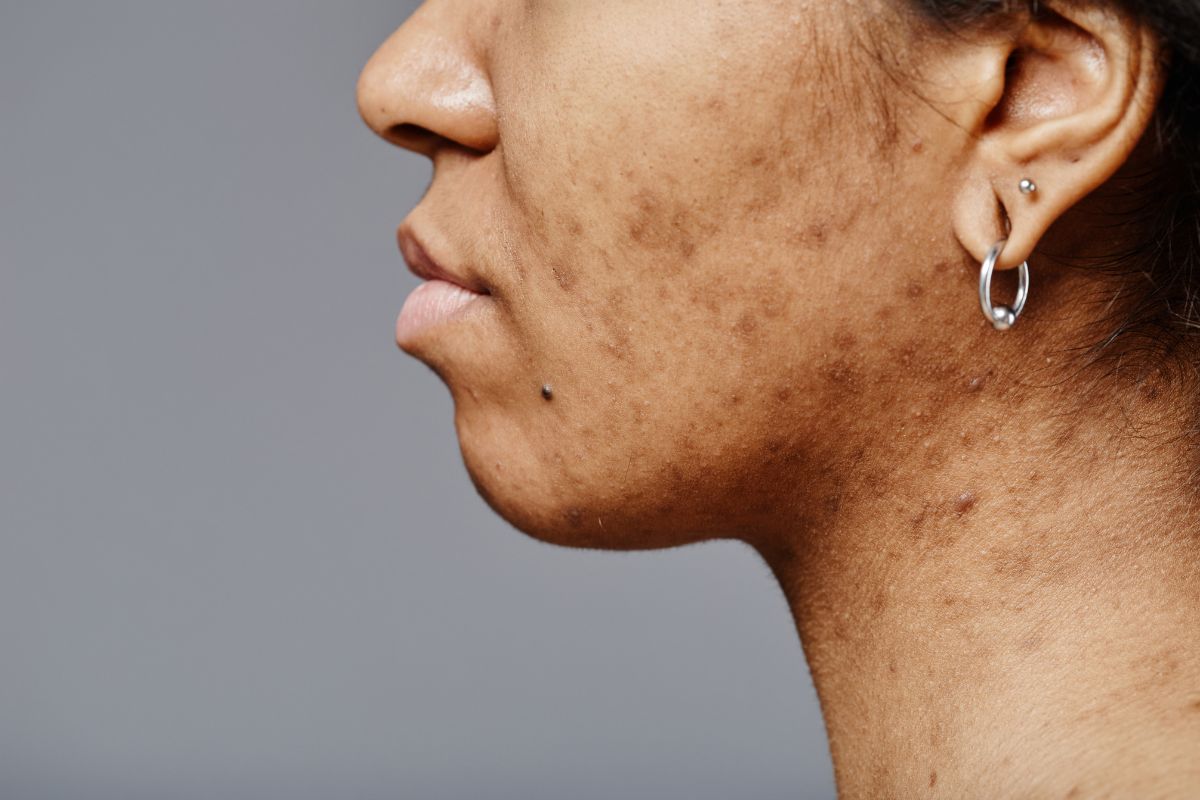
PIH is especially common in darker skin. It is not a true scar: the skin surface is usually flat and smooth, only darker. It usually fades with time once the inflammation stops.
4. Skin tone and genetics
People with medium to dark skin tones, including people of South Asian, East Asian, African, Latin American and Middle Eastern heritage, are more likely to develop melasma and PIH. Their melanocytes react more strongly to triggers such as sun, heat and inflammation.
Family history also plays a part. Many people with melasma have a blood relative who has it too.
5. Ageing and cumulative sun damage
Age spots are not caused by age alone. They mostly reflect years of sun exposure, which is why they tend to appear from middle age on the face, hands and other sun-exposed areas.
6. Medicines and medical conditions
Some medicines can darken the skin, either directly or by making it more sensitive to sunlight. Certain health conditions can also cause dark patches. One example is acanthosis nigricans, a velvety darkening often on the neck that can be linked to insulin resistance.
If you think a medicine is causing pigmentation, do not stop taking it. Ask the doctor who prescribed it whether discolouration is a known side effect and whether an alternative exists.
Common types of facial pigmentation at a glance
This table summarises typical patterns. It cannot diagnose you, because several types can look alike or occur together.
| Type | What it usually looks like | Common triggers | Typical course |
| Melasma | Brown or grey-brown patches, usually on both sides of the face | Hormones, sunlight, visible light, heat, genetics | Can last for years; often returns in sunlight |
| Post-inflammatory hyperpigmentation | Flat dark marks where acne, a rash or an injury healed | Acne, eczema, injury, irritation | Often fades over months; deeper marks can take longer |
| Sun spots (solar lentigines) | Small, well-defined brown spots | Years of sun exposure | Usually persistent without treatment |
| Freckles | Small light-brown spots, often darker in summer | Genetics plus sunlight | Fade in winter, darken with sun |
How to prevent pigmentation on the face
Prevention is mostly about reducing what triggers melanin and protecting skin while it heals.
Make sun protection a daily habit
Use a broad-spectrum sunscreen with SPF 30 or higher every day, including cloudy days. Apply it generously to the face, ears and neck, and reapply every two hours when you are outdoors or after sweating.
If you have medium or darker skin, or melasma, a tinted sunscreen containing iron oxides adds protection from visible light. The American Academy of Dermatology’s guide to fading dark spots recommends this type, with SPF 30 or higher and broad-spectrum protection. Iron oxides are usually listed among the inactive ingredients.
Add a wide-brimmed hat, sunglasses and shade, especially in the middle of the day when sunlight is strongest.
Treat acne and skin conditions early
Every pimple or eczema flare is a chance for a new dark mark. Getting acne or eczema under control is one of the most effective ways to stop new PIH. Try not to pick or squeeze spots.
Be gentle with your skin
Irritation can trigger pigmentation, so avoid harsh scrubs, rough cloths and products that sting or burn. Fragrance-free products labelled for sensitive skin are less likely to cause trouble.
If you wax or thread your face, make sure it is done hygienically and gently, and stop if the area becomes inflamed.
Discuss hormonal triggers with a doctor
If melasma started after beginning a birth control pill, talk to your doctor. They can discuss whether another option suits you. Do not stop a prescribed medicine on your own.
How to fade existing pigmentation
The right treatment depends on the type of pigmentation, how deep it is and your skin tone. Results usually take weeks to months, and no treatment works overnight.
Step 1: Remove the trigger
Once the cause is controlled, many dark spots fade on their own. According to the American Academy of Dermatology, a mark a few shades darker than your skin often fades within 6 to 12 months. Deeper, grey or blue-grey pigment can take years.
Step 2: Use evidence-backed skincare ingredients
Some over-the-counter ingredients can help fade dark spots or slow melanin production, including:
- azelaic acid
- glycolic acid
- kojic acid
- retinoids, such as retinol or adapalene
- vitamin C
Introduce one new product at a time and stop if it stings, burns or reddens your skin. Irritation can create new pigmentation, especially in darker skin.
If you use a non-prescription product for melasma, dermatologists suggest giving it no longer than three to six months. If you do not see the results you want by then, see a dermatologist.
Step 3: Consider prescription treatment
A dermatologist may prescribe stronger creams, such as hydroquinone or a combination cream containing hydroquinone, tretinoin and a mild steroid. These can work well, but they need medical supervision. Some dermatologists also use oral medicines, such as tranexamic acid, for selected patients with melasma.
In-clinic procedures such as chemical peels, microneedling and some lasers can help certain people. They can also worsen pigmentation, particularly melasma and darker skin, if they are not chosen and performed carefully. Ask about the risks for your skin tone before booking.
What about pregnancy?
If you develop melasma during pregnancy, dermatologists generally advise waiting until after the birth before treating it. Melasma often improves after delivery, and the safety of many over-the-counter treatments in pregnancy is unclear. Sun protection is still safe and helpful.
Products and remedies to avoid
Some popular quick fixes can harm your skin or make pigmentation worse.
- Steroid creams used without a prescription. In India, many “fairness” and pigmentation creams contain potent steroids. Long-term, unsupervised use on the face can thin the skin and cause acne, visible blood vessels, rashes and rebound darkening. Steroid creams are prescription medicines and should only be used as a doctor directs.
- Unlabelled or imported skin-lightening creams. Some have been found to contain hidden steroids or mercury.
- Lemon juice and other harsh DIY remedies. Lemon juice is acidic and can irritate skin. Irritation can leave new dark marks.
- Liquid bleach or household chemicals. Never apply these to your skin.
If you enjoy natural or homemade skincare, patch-test first and stop anything that stings.
When to see a dermatologist
Most facial pigmentation is harmless, but it is worth seeing a dermatologist if:
- a spot is new, changing in size, shape or colour, bleeding, itching or looks different from your other spots
- patches are spreading or not improving after three to six months of careful home care
- you are unsure what type of pigmentation you have
- you think a medicine, a thyroid problem or another health condition may be involved
- your skin has become thin, red, bumpy or sensitive after using a pigmentation cream
- the pigmentation is affecting your confidence or wellbeing
A dermatologist can confirm the cause, rule out conditions that need different care and build a plan that suits your skin tone. For more practical health guidance, you can browse The Care Diary’s health and wellness guides.
The bottom line
Pigmentation on the face is usually the skin’s response to sunlight, hormones or inflammation, and it is very common. Daily sun protection, gentle skincare and early treatment of acne or eczema prevent much of it. Patience matters too, because most marks fade over months, not days.
If your pigmentation is changing, stubborn or worrying you, a dermatologist can identify the cause and recommend treatment that is safe for your skin.