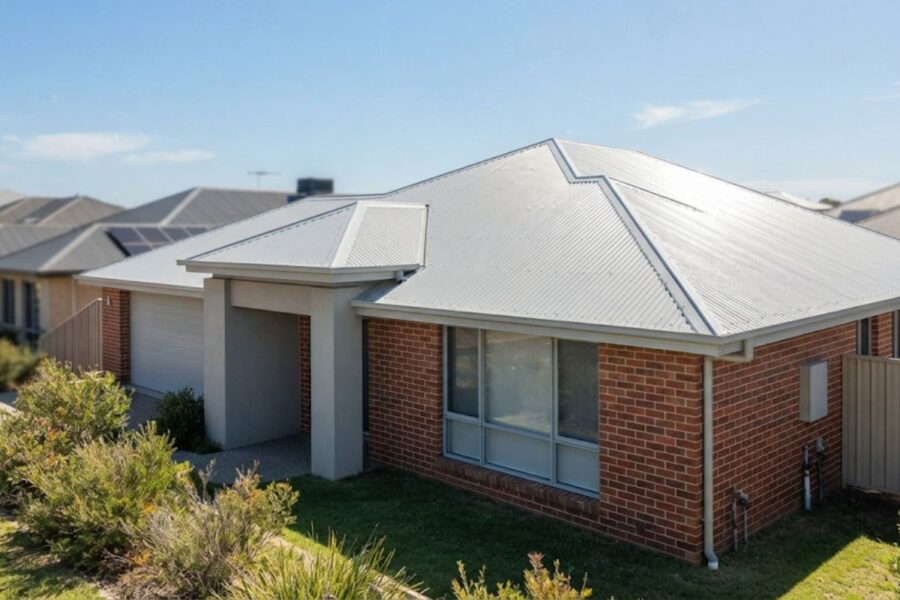
A new roof is one of the biggest single purchases you will make for your home, and you will live with the choice for decades. Colorbond roofing is one of the most common options on Australian houses, and for good reasons, but it is not automatically the right fit for every home, block or budget.
This guide explains what Colorbond roofing is, where it performs well, the trade-offs people often find out about too late, what it costs in 2026 and how to choose the right product, colour and installer.
Quick answer
Colorbond roofing is pre-painted steel roofing made by BlueScope for Australian conditions. Its main strengths are long corrosion life when the right product is used for your location, very low weight compared with tiles, a wide colour range, non-combustible material for bushfire-prone areas and simple upkeep. The trade-offs are louder rain without a proper insulation blanket, a risk of condensation if the roof is poorly detailed, dents from heavy hail, extra product requirements near the coast and more heat gain if you choose a dark colour. Most of these are managed with the right colour, insulation and a licensed roofer.
What is Colorbond roofing?
Colorbond is a brand of pre-painted steel made by BlueScope in Australia. The steel is coated at the factory, before it is rolled into roofing sheets, so the paint is baked on rather than brushed or sprayed on site.
BlueScope describes the product as having five layers of protection. In plain terms, that means a steel base, a metallic coating that protects the steel from corrosion, a pre-treatment, a primer and a baked-on topcoat on the outer face, with a backing coat on the underside.
The sheets are then shaped by roll-formers such as Lysaght, Stramit and Fielders into profiles, which is the term for the shape of the sheet. The classic wavy corrugated profile is the best known, but there are also trimdeck, ribbed and concealed-fix profiles for flatter or more modern roofs.
The main Colorbond products
| Product | What it is | Best suited to |
| Colorbond steel (Classic finish) | The standard product, in 22 core colours | Most homes away from the coast |
| Colorbond steel Matt | Six of the core colours in a low-sheen finish | Contemporary designs where a softer look is wanted |
| Colorbond Ultra steel | A heavier-duty version for harsher conditions | Homes closer to the coast or in industrial areas |
| Colorbond Coolmax steel | BlueScope’s most solar-reflective product, sold in the colour Whitehaven | Hot climates where keeping the roof cool is the priority |
| Colorbond Metallic steel | A metallic-look finish | Feature roofs and architectural designs |
Availability and colours vary between suppliers, so confirm the exact product name on your quote.
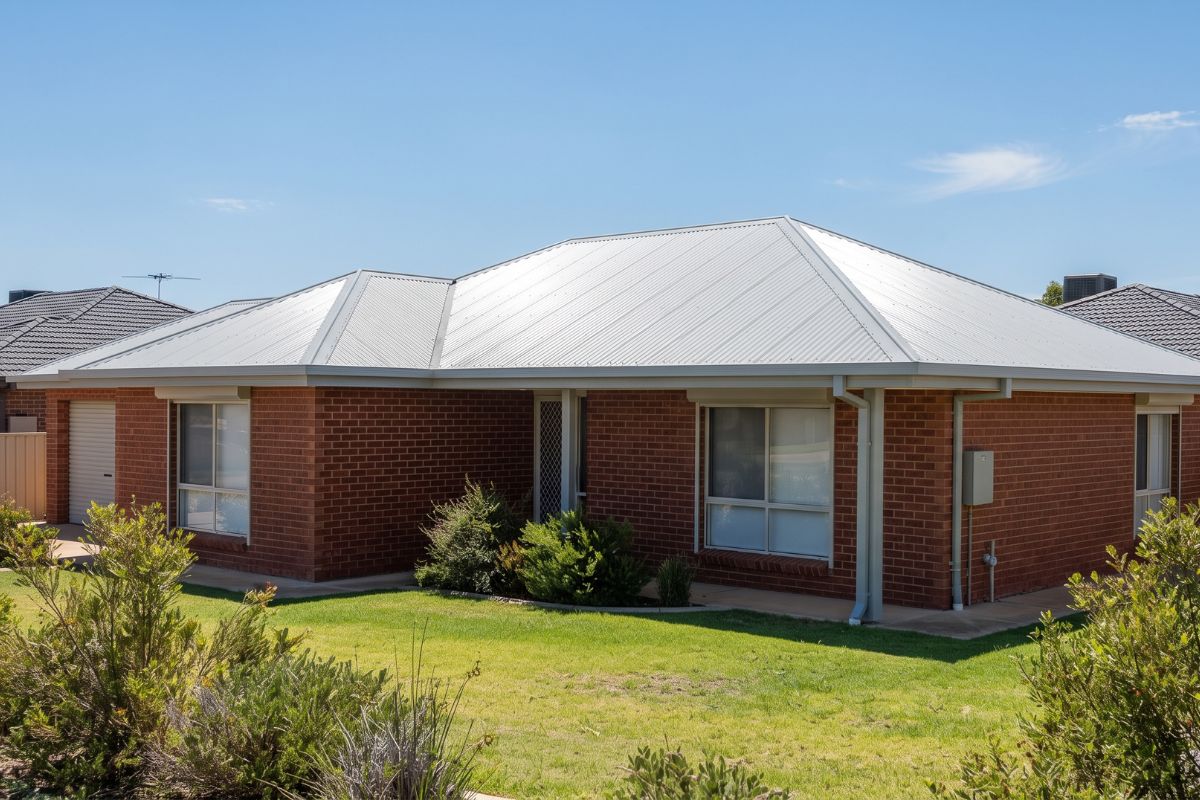
The benefits of Colorbond roofing
1. Long corrosion life, when matched to your location
Colorbond steel is designed and tested for Australian weather, including strong sun, heavy rain and high winds. Its metallic coating and paint layers protect the steel from rust far better than bare steel.
The key phrase is “matched to your location”. Salt spray near the coast and fallout from heavy industry speed up corrosion on any metal roof. BlueScope’s longest corrosion warranty for standard Colorbond roofing applies to homes more than 5 km from salt water, and its tougher Ultra and stainless products exist for sites closer to the sea. Choosing the wrong product for your distance from the coast is one of the most common reasons a steel roof ages early.
2. Much lighter than tiles
A typical corrugated Colorbond roof sheet (0.42 mm base metal thickness) weighs about 4.35 kg per square metre. Common concrete roof tiles weigh roughly 48 to 53 kg per square metre, according to manufacturer specifications.
That difference matters. A lighter roof puts less load on the frame, can suit steeper or more complex roof shapes and is often the reason homeowners replace tired tile roofs with steel. Any change of roofing material on an existing home should still be checked by your roofer or builder, as the frame, battens and tie-downs must suit the new roof and your local wind rating.
3. Colour choice that affects comfort, not just looks
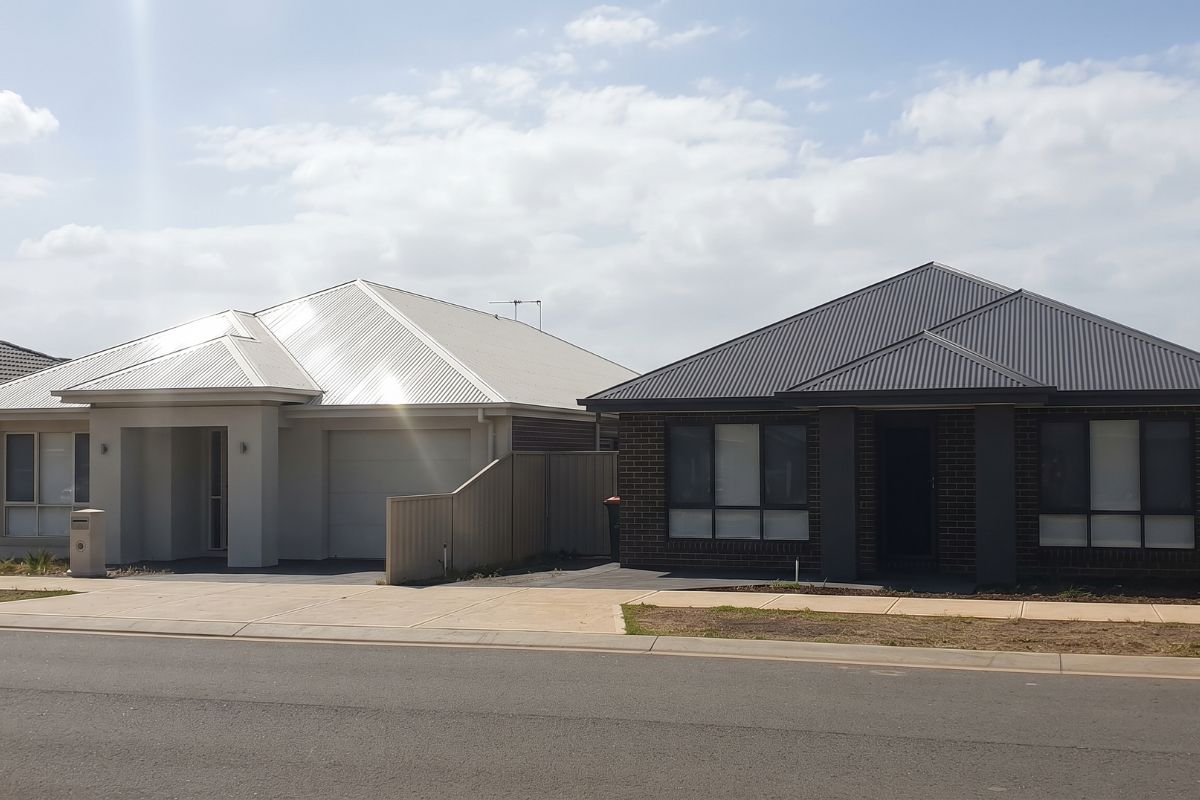
Colorbond comes in 22 core colours, with six also available in Matt. Colour is not only a style choice. It changes how much of the sun’s heat the roof absorbs.
This is measured as solar absorptance, a number from 0 to 1 that shows how much of the sun’s energy a surface absorbs. The lower the number, the cooler the roof stays. As a general guide, the NSW BASIX system groups roofs like this:
| Roof colour category | Solar absorptance |
| Light | below 0.475 |
| Medium | 0.475 to 0.7 |
| Dark | above 0.7 |
All Colorbond core colours except Night Sky, plus the Matt range, include BlueScope’s Thermatech technology. Thermatech is designed to reflect more of the invisible infrared part of sunlight, so a Thermatech colour stays cooler than an ordinary paint of the same shade. It does not make a dark roof behave like a light one. Monument, a popular charcoal, has a solar absorptance of about 0.73, while BlueScope lists 11 “cool roofing” colours with values of 0.45 or lower. Each colour’s value is printed on Colorbond swatches and colour pages, so compare the numbers rather than guessing from the shade.
The Australian Government’s Your Home guide recommends lighter coloured roofs, good insulation and a ventilated roof space as part of passive cooling, the low-cost way to keep a home comfortable in summer. A cooler roof will not replace good shading and glazing, though. Windows are a major source of summer heat gain, which our guide to double glazed awning windows explains. If you still need mechanical cooling, a cooler roof can reduce how hard it has to work; our guide to split system air conditioners covers sizing and running costs.
4. Non-combustible, with a role in bushfire design
Colorbond steel is non-combustible, which means it will not catch fire. BlueScope states that Colorbond roofing, walling, gutters and downpipes can be used as part of a compliant system in bushfire-prone areas, up to the most extreme rating, BAL-FZ (Bushfire Attack Level – Flame Zone), under Australian Standard AS 3959:2018.
“Part of a compliant system” is important. A steel roof sheet on its own does not make a house bushfire-ready. Your building’s BAL rating decides what is needed, which can include the sarking under the roof, how gaps at the ridge and eaves are sealed against embers, gutter guards, the roof framing and the rest of the building. If you live in a bushfire-prone area, get your BAL assessed and ask your builder or roofer to show how the whole roof system meets it.
5. Low maintenance, but not no maintenance
Rain naturally washes most of a Colorbond roof, so the main roof surface usually needs little attention. The parts that rain does not reach, known as unwashed areas, are different. These include the underside of gutters, wall cladding under eaves and sheltered spots near a barbecue or pergola.
BlueScope recommends hosing these unwashed areas with fresh water at least every six months, and every three months near the sea or heavy industry. Use a soft brush and mild detergent for stubborn dirt, and never use abrasive scourers or solvents such as turps or thinners. Keep leaves out of gutters and valleys, and keep soil and mulch away from any steel near the ground.
6. Recyclable steel
According to BlueScope, all Colorbond steel contains recycled content and the steel in it is 100% recyclable at the end of its life. Offcuts and old sheets can go to metal recyclers.
Drawbacks and trade-offs to weigh
No roof is perfect. These are the issues homeowners most often raise about steel roofs, with how to handle each one.
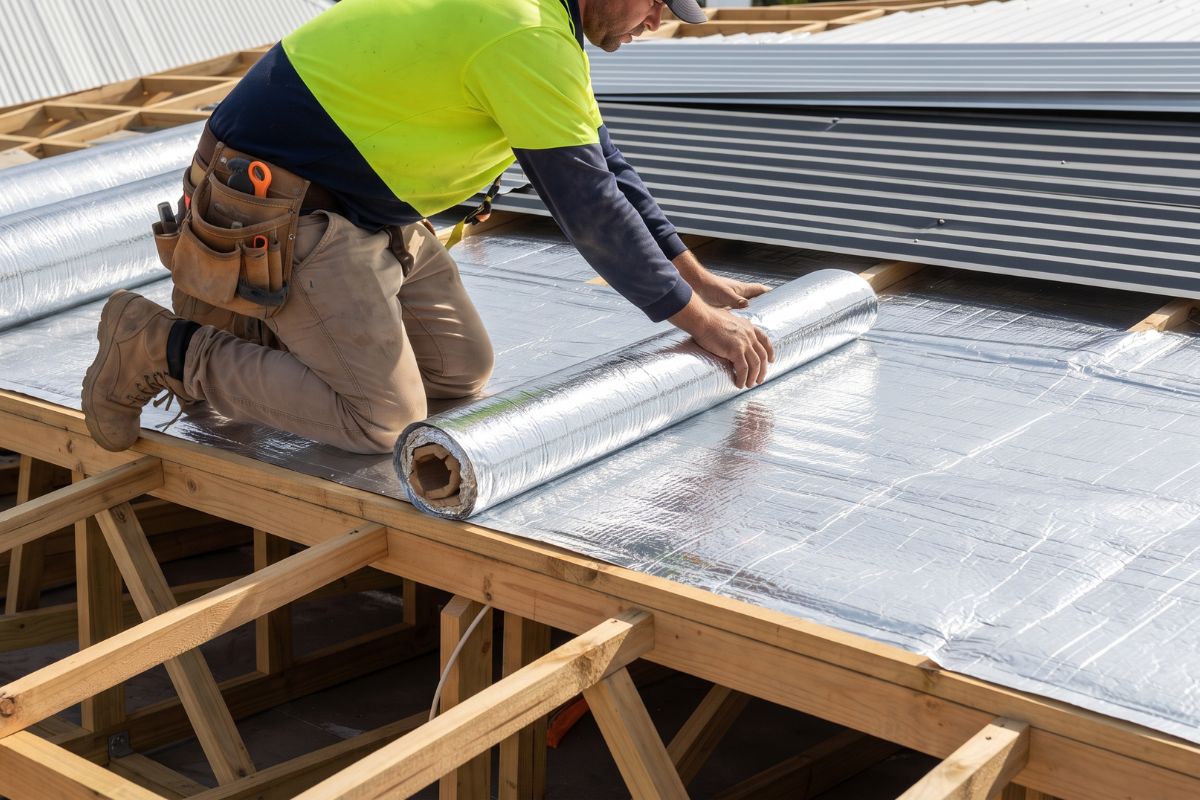
- Rain noise. Steel transmits the sound of heavy rain more than tiles. A foil-backed glass-fibre or wool insulation blanket installed tight against the underside of the sheets dampens this considerably and also reduces heat flow. It is much easier and cheaper to install while the roof is being laid than afterwards.
- Condensation. On cold, clear nights, the underside of steel sheets can cool below the dew point and collect moisture. Without sarking or a blanket, that water can drip onto ceilings and insulation. Good detailing and roof-space ventilation prevent this.
- Hail dents. Steel does not crack like tiles, but very large hail can dent it. Dents are usually cosmetic unless the paint is broken, but they can be hard to repair invisibly.
- Location limits. Sites close to surf, or with heavy industrial fallout, need a more durable product such as Colorbond Ultra. Copper pipes, lead flashings and some other metals must not drain onto or touch the steel, as they can cause corrosion.
- Heat from dark colours. Dark grey and black roofs are fashionable but absorb much more heat, especially in warm climates.
- Planning rules. Heritage overlays, estate covenants and some councils set rules on roof material or colour, including limits on very light, reflective roofs because of glare. Check before you order.
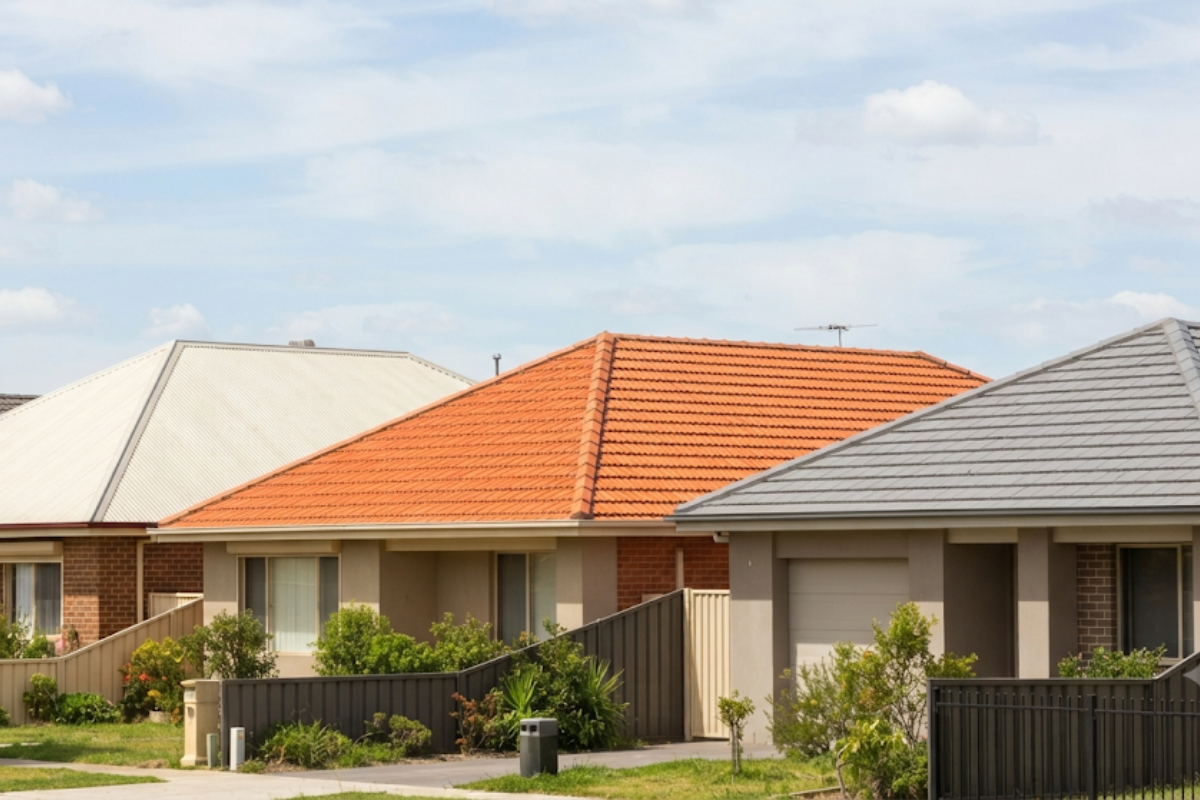
Colorbond vs tiles vs Zincalume
Zincalume is BlueScope’s unpainted metallic-coated steel, with a silvery finish. It is the same family of roofing, just without the paint system.
| Factor | Colorbond steel | Zincalume steel | Concrete or terracotta tiles |
| Weight | About 4.35 kg/m² (corrugated, 0.42 mm) | Similar to Colorbond | About 48–53 kg/m² for common concrete tiles |
| Look | 22 core colours, Classic or Matt | Plain metallic silver | Traditional; suits many heritage streets |
| Heat | Depends on colour; light Thermatech colours stay cooler | Reflective when new, but can cause glare | Heavier mass delays heat; colour still matters |
| Rain noise | Needs an insulation blanket | Needs an insulation blanket | Naturally quieter |
| Upkeep | Wash unwashed areas; clear gutters | Same as Colorbond | Broken tiles, ridge re-pointing, moss in damp areas |
| BlueScope warranty | Up to 36 years for corrosion and up to 20 years for paint, if conditions are met | Up to 36 years for corrosion, if conditions are met | Set by the tile maker |
Warranty periods are maximums with conditions, including distance from the coast and correct installation and maintenance. Ask your installer to register the BlueScope warranty for your project, and confirm what it covers, since material warranties generally cover the product rather than labour.
How much does Colorbond roofing cost in 2026?
Published Australian cost guides updated in mid-2026 put a Colorbond re-roof at roughly $75 to $205 per square metre installed, depending on the city and the job. For a typical family home, that works out to a total of roughly $14,000 to $46,000, with Sydney at the higher end.
Treat these figures as a rough guide only. Your price depends on:
- Roof size, pitch (steepness) and complexity, such as valleys, hips and skylights.
- Access, height and the scaffolding or edge protection needed for safety.
- Removing and disposing of the old roof. Older roofs may contain asbestos, which requires licensed removal and costs more.
- The product, profile and thickness, plus insulation blankets, sarking, gutters, fascia and downpipes.
- Any repairs to battens or the roof frame found once the old roof is off.
Get at least three written, itemised quotes and compare them line by line, not just on the total.
How to choose the right Colorbond roof
- Check your location first. Tell suppliers your distance from the coast or any industry, and ask which BlueScope product is recommended for that site.
- Pick the colour by its solar absorptance. In most of Australia, a lighter colour will keep the roof space cooler. Order free swatches and look at them outdoors, at different times of day, next to your walls and trims.
- Plan the layers under the roof. Ask whether the quote includes sarking or a foil-backed insulation blanket, its insulation value, and how the roof space will be ventilated.
- Choose the profile for your roof pitch and style. Each profile has a minimum pitch, so a low-slope roof needs a suitable profile.
- Check bushfire and planning requirements. Confirm your BAL rating and any council, heritage or estate rules.
- Use a licensed roofer. Ask for their licence number, insurance, a workmanship warranty, and confirmation that they use genuine Colorbond steel with fasteners suited to your location. Genuine product carries the Colorbond brand mark.
- Get the paperwork. Keep the invoice, product details, colour and the activated BlueScope warranty, as you will need them for any claim or when you sell.
Simple maintenance checklist
- Hose unwashed areas every six months, or every three months near the coast.
- Clear gutters, valleys and roof debris, especially before storm and bushfire season.
- Check for rusting screws, lifted flashings or damaged sealant after big storms.
- Remove metal swarf (tiny steel offcuts) after any roof work, as it rusts and stains the paint.
- Do not walk on the roof yourself. Steel roofs are slippery when wet or dusty, and falls from roofs cause serious injuries. Use binoculars from the ground or book a roofer.
Final thoughts
Colorbond roofing is a durable, light and versatile choice for many Australian homes, and it handles heat, storms and bushfire risk well when it is specified properly. The results depend less on the brand and more on the details: the right product for your distance from the coast, a colour chosen for your climate, proper insulation and condensation control, and a licensed installer who registers your warranty.
Take your time with quotes and swatches, and ask questions until each line of the quote makes sense. For more practical guides to keeping your home comfortable and well maintained, browse our home improvement articles.