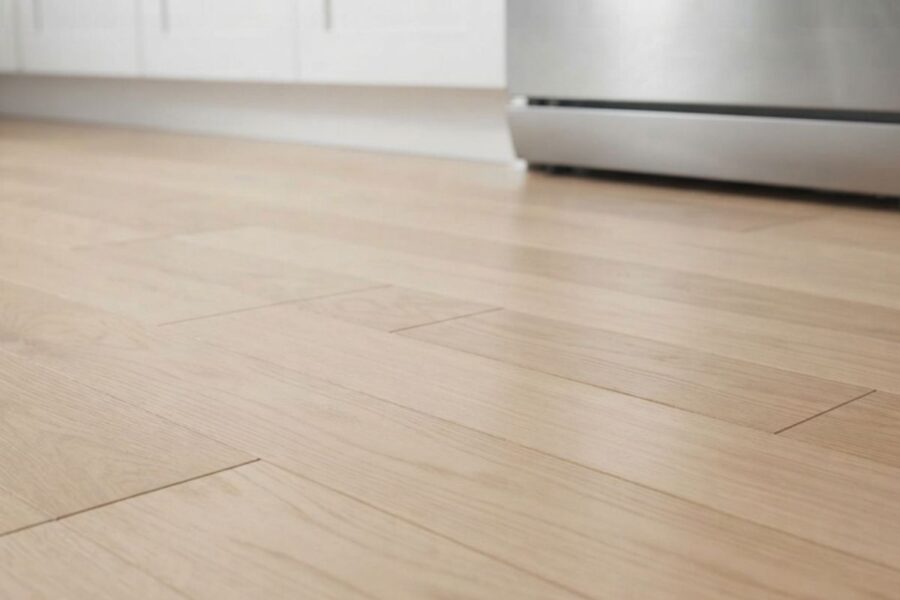
Engineered hardwood gives you a real timber surface with more stability than solid boards, which is why it is so popular in open-plan living areas and kitchens. The catch is water. Many people assume “engineered” means “waterproof”, and that misunderstanding is behind a lot of swollen boards.
This guide explains how engineered hardwood (often called engineered timber in Australia) reacts to spills, leaks and humidity, what makes one floor more water-resistant than another, where it works well, and what to do if your floor gets wet.
Quick answer
No, engineered hardwood is not waterproof. It is water-resistant. A good factory finish lets it cope with everyday spills if you wipe them up promptly, and its layered core makes it more stable than solid timber when humidity changes.
Standing water, slow leaks and water that gets into the joints can still make boards swell, cup, stain or separate. Some products are sold as “waterproof engineered hardwood”, but those claims usually cover a limited time and come with warranty conditions. For bathrooms and laundries, tile, sheet vinyl or hybrid flooring is usually the safer choice.
What is engineered hardwood?
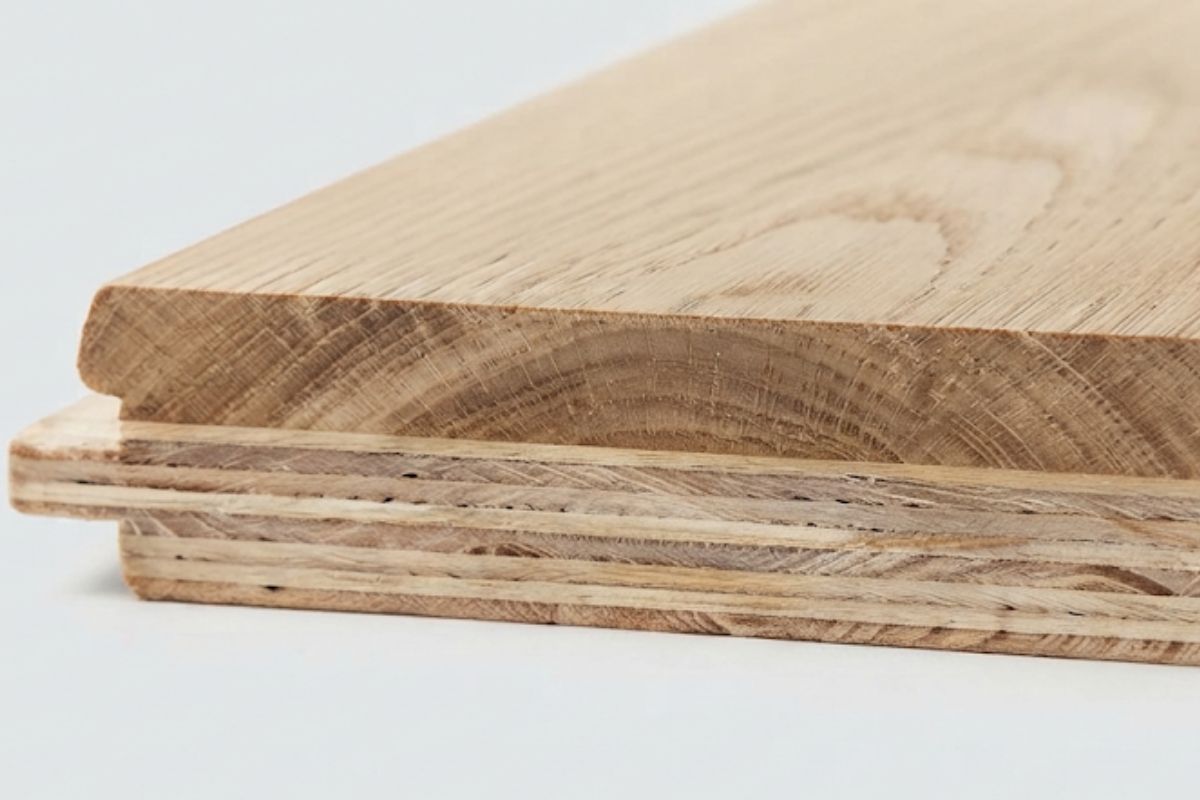
Engineered hardwood is a flooring board made of several layers bonded together under heat and pressure. The top layer, called the wear layer or lamella, is real hardwood. Underneath is a core that gives the board its strength and stability.
The core is usually one of three types:
- Plywood: thin sheets of timber glued together with the grain running in alternating directions.
- Timber strips: solid softwood or hardwood pieces laid across the board, often in a three-layer construction.
- High-density fibreboard (HDF): wood fibres compressed with resin into a dense, flat sheet.
Cross-layering is what makes engineered boards more stable than solid timber. Each layer resists the movement of the one next to it, so the board swells and shrinks less as humidity changes. That stability is why engineered hardwood is often called “moisture-resistant”. It does not stop liquid water from getting in.
Most engineered hardwood is prefinished, which means the protective coating is applied in the factory rather than on site.
Waterproof vs water-resistant: what is the difference?
The two terms are often used loosely, but they mean different things:
- Water-resistant flooring copes with small spills, splashes and normal humidity for a limited time. You still need to wipe water up fairly quickly. Standard engineered hardwood is in this group.
- Waterproof flooring is designed so water cannot get through the surface or core for a much longer period. Even then, manufacturers usually define “waterproof” by a set time and test, and no floor is flood-proof. Water can still travel around the edges and into the subfloor.
In short, water-resistant buys you time to clean up. Waterproof buys you more time, but not unlimited time.
How engineered hardwood reacts to water
How much damage water does depends on how much there is, how long it stays and where it goes.
| Situation | What usually happens | What to do |
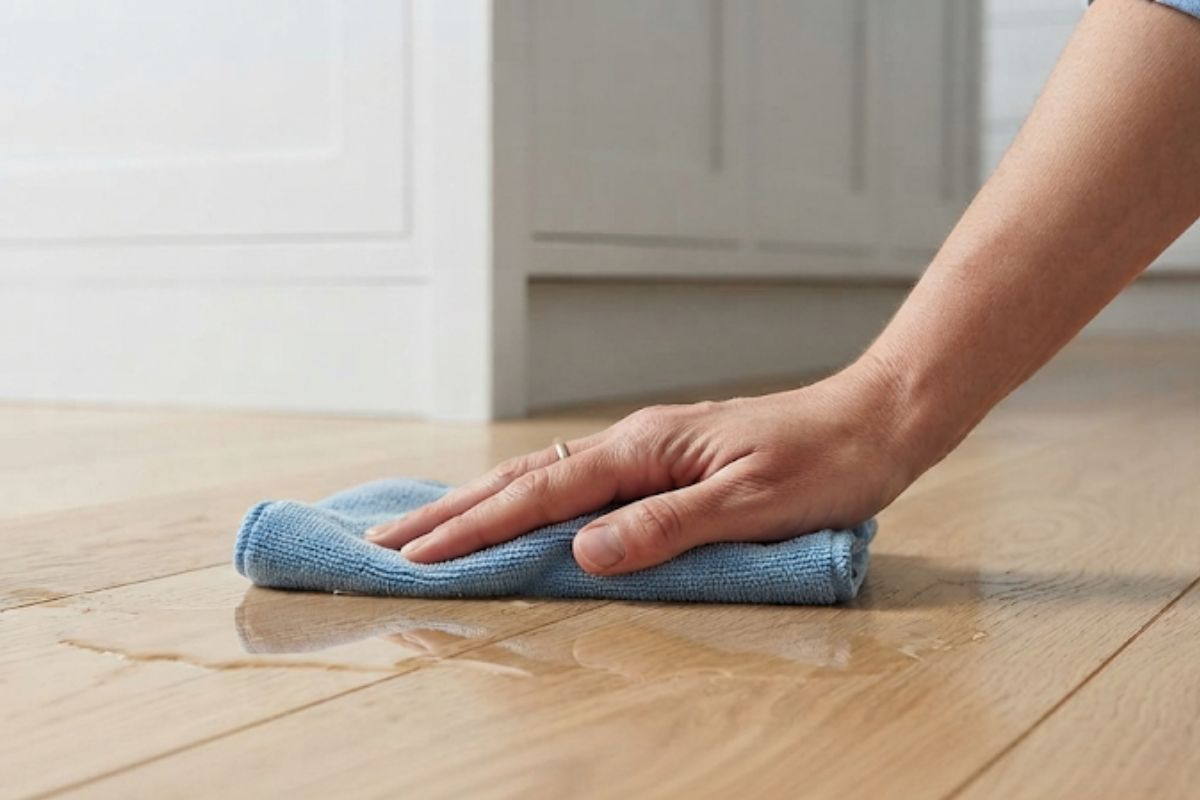
| A spilled drink, wiped up within minutes | Usually no damage on a well-finished floor | Blot with a dry or slightly damp cloth |
| Water left for hours (pet bowl, wet towel, pot plant) | Can mark the finish, seep into joints and swell board edges | Wipe up straight away; use waterproof trays and mats |
| A slow, hidden leak (dishwasher, fridge line, sink) | Often the most damaging, because water soaks the core and subfloor unnoticed | Fix the leak, then dry the floor and subfloor thoroughly |
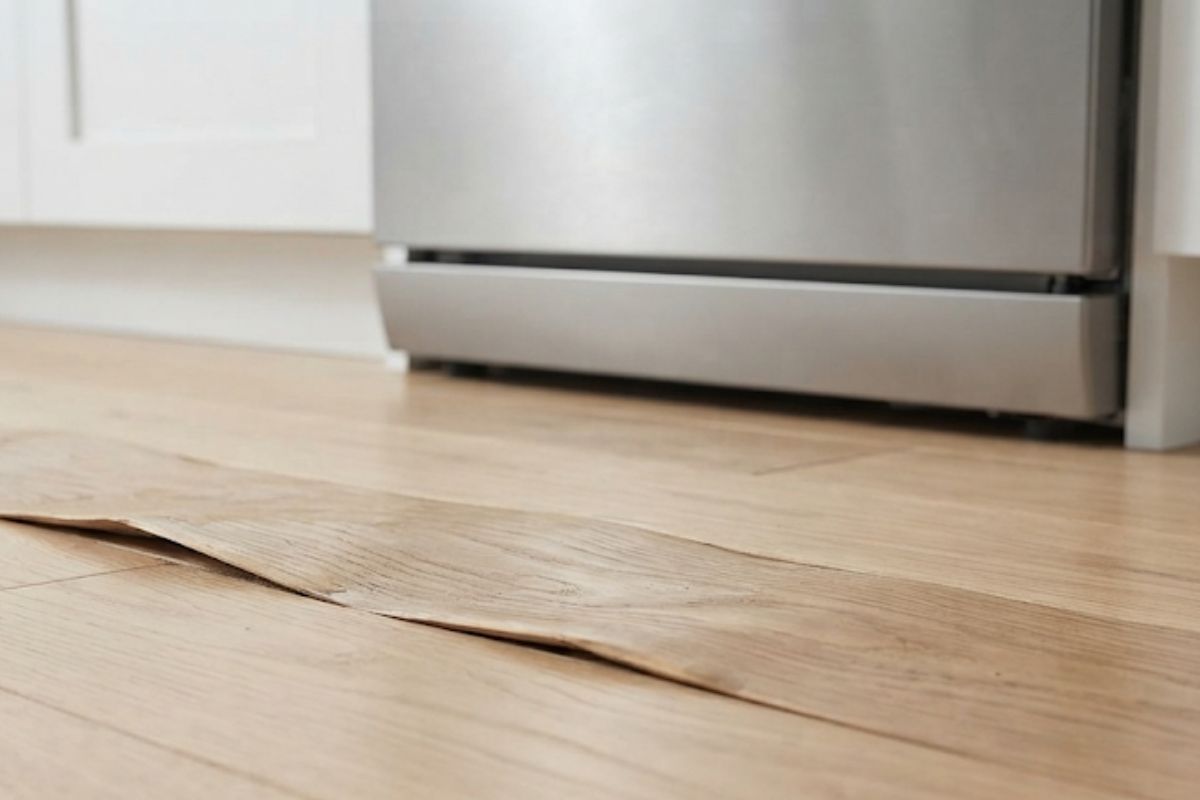
| A burst pipe or flood | Boards may cup, buckle or delaminate, and many need replacing | Stop the water, remove it, dry the area and call a professional |
| Long periods of high humidity | Boards can expand and cup, and damp conditions raise the risk of mould | Ventilate and reduce indoor humidity |
| Long periods of very dry air | Boards can shrink, gap, split or separate at the top layer | Keep humidity steady; keep heaters away from the floor |
These are the warning signs to look for:
- Cupping: the edges of a board sit higher than its centre.
- Crowning: the centre sits higher than the edges.
- Buckling: boards lift away from the subfloor.
- Delamination: the real-wood top layer separates from the core.
What makes one engineered floor more water-resistant than another?
Surface finish
The factory finish is the floor’s first line of defence. Film finishes such as polyurethane and UV-cured lacquer sit on top of the timber and make water bead. Oiled finishes soak into the wood and look more natural, but they usually need more regular maintenance to keep repelling water.
You may see finishes that contain aluminium oxide. This mainly improves scratch and wear resistance; it does not make a floor waterproof. A finish only protects while it is intact, so ask for the manufacturer’s care guide before you buy.
Joints and edges
The joints between boards are the weak point. The finish protects the face of each board, but water that runs into a joint can reach the raw edge and the core.
Tight click-lock joints and factory-sealed or treated edges help. Bevelled edges, the small V-shaped grooves between boards, look good but can hold water and grit, so dry them properly after a spill.
Core material
Cores react differently once water gets in. HDF is dense and very flat, but fibreboard can swell permanently when it gets wet. Many installers regard plywood and solid-timber cores as more forgiving of brief wetting, although they can still swell or delaminate if they stay wet.
In practice, the finish, the joints and the installation usually matter as much as the core.
Installation and subfloor
Many water problems start below the floor. Concrete slabs and timber subfloors must be dry before installation, slabs usually need a moisture barrier, and raised timber floors need good subfloor ventilation. A qualified installer should test moisture levels before laying anything.
Floating floors also need an expansion gap around the edges so the boards can move. The gap sits hidden under skirting boards or trims and must not be packed with rigid filler. Some manufacturers specify a flexible sealant at edges near wet areas. Follow your product’s installation instructions exactly, because shortcuts can void the warranty.
Indoor humidity
Timber constantly takes up and releases moisture from the air. As a general rule, guidance from the US-based National Wood Flooring Association (NWFA) says wood floors perform best at roughly 30% to 50% relative humidity, while noting that the right range varies by region.
Australian climates range from humid coastal and tropical areas to very dry inland regions. Follow the humidity range in your product’s warranty, and ask a local installer what is normal where you live. An inexpensive digital hygrometer will show your indoor humidity.
In humid weather, good ventilation, a dehumidifier or an air conditioner’s dry mode can help. Our guide to the benefits and trade-offs of split system air conditioners explains how dry mode removes moisture from a room.
What about “waterproof” engineered hardwood?
Some newer products are sold as waterproof engineered hardwood. They usually combine a real wood surface with a more water-resistant core, tighter locking joints and sealed edges.
These floors can cope with spills for longer, but read the claim closely. One major US flooring manufacturer, for example, describes its waterproof engineered range as repelling water for roughly 24 hours, and says “waterproof” means protection from everyday spills rather than floods. Warranties also often include conditions about standing water, installation and cleaning.
Before you buy, ask:
- How long can water sit on the surface under the warranty?
- Does the warranty cover the joints and core, or only the surface?
- Which rooms is the product approved for?
- Which cleaning products and methods does the warranty require?
- Is the product sold and warranted in Australia?
Where engineered hardwood works, and where to think twice
This is a general guide. Always check which rooms your chosen product is approved for.
| Room | Suitability | Tips |
| Living rooms, bedrooms and hallways | Well suited | Use doormats and felt pads under furniture |
| Kitchens | Usually suitable with care | Put a mat at the sink and dishwasher, and check appliance hoses |
| Entries from outdoors | Suitable with protection | Use a large absorbent mat and wipe up wet footprints |
| Powder rooms (toilet and basin only) | Possible with an approved product | Check toilet and basin connections regularly |
| Laundries | Use caution | Washing machines can leak or overflow, so many people choose tile, sheet vinyl or hybrid |
| Bathrooms with a shower or bath | Generally not recommended | Unless the product is specifically approved, choose tile, vinyl or hybrid |
How to protect engineered hardwood from water damage
- Wipe up spills promptly. The NWFA’s wood floor maintenance advice recommends cleaning spills immediately with a dry or slightly damp cloth, and avoiding wet mops and steam mops, which damage the finish and the wood over time.
- Use a cleaner made for your finish. Products for oiled and lacquered floors are not interchangeable. Our guide on how to restore parquet flooring without sanding explains how to identify your finish and includes a simple water-drop test to check whether it is still protecting the wood.
- Protect splash zones. Put washable mats at the sink, dishwasher and outside doors, and waterproof trays under pet bowls and pot plants. Lift a mat if it gets soaked, so water is not trapped against the floor.
- Check appliance hoses and connections. Inspect dishwasher, fridge, washing machine and sink connections regularly, and replace hoses that bulge, fray or rust. A small water leak alarm can warn you early.
- Keep humidity steady. Ventilate wet rooms, run exhaust fans and use a dehumidifier or air conditioner during long humid spells.
- Maintain the finish. Book a professional maintenance coat before the finish wears through in busy areas. Once bare timber is exposed, water soaks in much faster.
- Leave the edges alone. Keep expansion gaps clear and do not fill them with rigid sealant or grout.
What to do if your engineered floor gets wet
Act quickly. The longer water sits, the more likely it is to reach the core and subfloor.
- Stop the water. If a pipe has burst, turn off the water at the meter tap and keep away from water near electrics. Our guide on what to do first in a plumbing emergency walks through these steps.
- Take photos and video of the damage and the source before cleaning up, if it is safe. Your insurer may ask for them.
- Remove standing water with towels, a mop wrung almost dry or a wet-and-dry vacuum.
- Lift rugs and mats, and move furniture with wet bases.
- Dry the room steadily with fans, ventilation and a dehumidifier. Avoid blasting the boards with strong direct heat, which can dry them unevenly.
- Watch the floor for the next couple of weeks for cupping, soft spots, dark stains or musty smells.
- Call a professional if water got under the boards, boards are lifting or separating, or a musty smell will not go away. A flooring or water damage specialist can measure moisture in both the boards and the subfloor.
Light cupping after a brief wetting sometimes settles as the floor dries. Boards that have delaminated, swollen at the core or grown mould usually need replacing. Do not sand a cupped floor until a professional confirms it has dried back to normal, or the boards may end up uneven.
Engineered hardwood vs other flooring for wet areas
If water is a regular part of a room’s life, compare engineered hardwood with these alternatives.
| Flooring | Real timber surface | How it handles water | Best suited to |
| Engineered hardwood | Yes | Water-resistant; spills are fine if wiped up, but standing water is risky | Living areas, bedrooms, kitchens with care |
| Laminate | No (printed image layer) | Varies by product; the fibreboard core can swell if water gets in | Dry living areas; check any “waterproof” claim carefully |
| Hybrid (rigid core) | No | Non-porous core and surface, usually sold as waterproof; the subfloor beneath can still get wet | Kitchens, laundries, bathrooms and rentals |
| Vinyl (sheet, plank or tile) | No | Water-resistant; sheet vinyl can create an almost seamless surface | Bathrooms, laundries and kitchens |
| Porcelain or ceramic tile | No | The tile itself is waterproof, but wet areas also rely on correct waterproofing underneath | Bathrooms, laundries and entries |
Many homes combine floors: engineered hardwood through the living areas, and a water-tolerant floor in bathrooms and laundries.
Final thoughts
Engineered hardwood is a practical way to get real timber underfoot with better stability than solid boards, but it is not waterproof. Treat it as water-resistant. Choose a product approved for the rooms you plan, have it installed over a dry, well-prepared subfloor, wipe up spills promptly and keep indoor humidity steady.
For bathrooms and laundries, a genuinely water-tolerant floor is usually the better match. A qualified timber flooring installer can advise on products and conditions in your area. For more practical guides to caring for your home, browse our home improvement articles.