
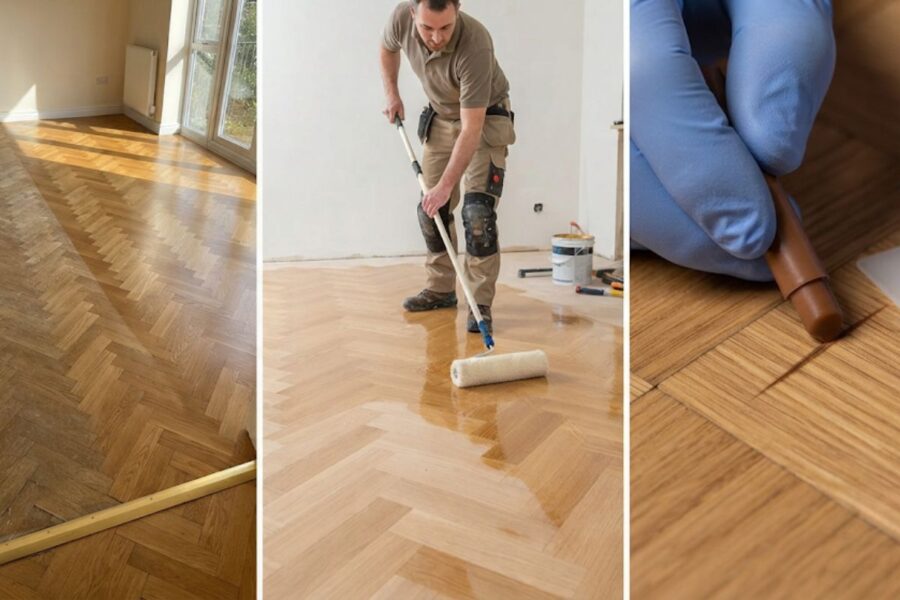
Parquet flooring brings pattern and warmth to a room, but years of foot traffic, furniture and pets can leave it dull, scuffed and tired. The good news is that many parquet floors can be brought back to life without a full sand.
This guide explains how to restore parquet flooring without sanding, which methods suit which kinds of wear, what to avoid, and how to tell when sanding is genuinely the better choice.
Quick answer
You can restore parquet flooring without sanding if its protective finish is still intact. Start with a thorough clean using a cleaner made for your floor’s finish. Then, depending on the wear, buff the surface, apply a refresher or maintenance coat that matches the finish, or have the floor screened and recoated. Fix scratches and loose blocks individually. If the finish has worn through to bare timber, or the floor has deep damage, sanding is usually unavoidable.
Can you really restore parquet without sanding?
Yes, in many cases. The key question is whether the damage sits in the finish or in the wood.
Most parquet is protected by a coating, such as polyurethane, or by oil. Light scratches, dullness and grime usually affect only that top layer. Because no-sand methods work on the finish, they can renew it without removing timber.
Once the finish has worn away and the bare wood is exposed, greyed or stained, surface treatments can no longer hide the damage evenly.
| Floor condition | Best no-sand option | DIY or professional? |
| Grimy, dull, but finish intact | Deep clean, then buff | DIY |
| Fine scratches and lost sheen | Refresher or maintenance coat matched to the finish | DIY, with care |
| Widespread surface wear on a coated floor | Screen and recoat | Professional recommended |
| A few deeper scratches or dents | Spot repair with wax sticks or filler | DIY for small areas |
| Loose, hollow or missing blocks | Re-bond or replace individual blocks | Often professional |
| Bare, grey or deeply stained timber | Sanding and refinishing | Professional |
Three checks before you start
1. Is the finish still protecting the wood?
Place a few drops of water on a worn area, such as a doorway. If the water beads or sits on top, the finish is still working. If it soaks in and the timber darkens within a few minutes, the finish is worn in that spot and will need more than a surface treatment.
2. What type of finish do you have?
This matters because products are not interchangeable. Polyurethane and lacquer finishes form a hard film on top of the wood. Oiled floors soak the oil into the timber and usually look more matt and natural. Some older floors were waxed.
If you have installation records, check them first. Otherwise, ask a timber flooring professional to identify the finish before you buy restoration products. Putting a coating over wax, or the wrong product over oil, can leave a patchy floor that peels or fails to bond.
3. Is the floor solid underfoot?
Walk the floor and listen. Blocks that rock, click or sound hollow may have lost their bond with the subfloor. Fix these before you work on the surface.
If timber sounds hollow and feels soft or papery rather than simply loose, stop and get it checked. Our guide on whether you can do termite control yourself explains these warning signs and why you should not disturb suspected activity. Dark staining or lifting near a kitchen, laundry or bathroom can point to a leak, so have a licensed plumber check for hidden leaks before you restore the surface.
Method 1: Deep clean properly
A proper clean is the first step for every method. Sometimes it is all a dull floor needs.
- Move furniture and rugs out of the room.
- Vacuum with a soft-head or bare-floor setting, or use a dry microfibre mop, to lift grit from between the blocks.
- Mist a cleaner recommended for your floor’s finish onto a microfibre mop or a small area of floor. Wipe with the grain where you can.
- Never flood the floor. Parquet has many joints where water can seep in and cause staining, swelling or lifting.
- Let the floor dry fully before the next step.
Avoid homemade mixes such as vinegar, and general-purpose cleaners that are not designed for timber floors. Products that promise to “shine” or “rejuvenate” can leave a residue that makes later recoating harder.
Method 2: Buff with a soft pad
Buffing uses a rotary floor machine fitted with a soft, non-abrasive pad to polish the existing finish. It can soften the look of very light scuffs and bring back an even sheen.
Buffing suits floors where the finish is still in good condition. Keep the machine moving, because pausing in one spot can leave a visible mark. If you have not used a rotary machine before, practise in a spare room first or ask a professional.
Buffing is not the same as screening. Buffing polishes the surface, while screening lightly abrades it so a new coat can bond.
Method 3: Screen and recoat
Screen and recoat is the main professional method for renewing a coated parquet floor without a full sand. It is sometimes called “buff and recoat” or “pad and recoat.”
The process usually involves:
- Deep cleaning to remove dirt, residue and any build-up.
- Lightly abrading the existing finish with a fine screen or abrasive pad. This removes only a thin layer of the coating, not the timber.
- Vacuuming and wiping away all dust.
- Applying one or more fresh coats of a compatible finish.
Some professionals use a chemical bonding system instead of abrasion. This prepares the old finish so new coating can adhere without screening.
Screen and recoat can remove light surface scratches and restore an even sheen. It can also change the sheen, for example from gloss to satin. It will not change the colour of the timber, and it cannot fix scratches that have cut into bare wood.
The method has limits. A recoat will not bond properly over wax or many polishes, so the floor may need a stripping process or a full sand instead. A professional will usually test a small area first to check adhesion before doing the whole room.
Allow the new finish to cure fully before returning heavy furniture or rugs. Curing times vary by product, so follow the manufacturer’s instructions.
Method 4: Refreshers and maintenance coats
Refreshers and maintenance products add a thin, protective layer to a floor whose finish is still in reasonable condition. They can make fine scuffs less visible and restore some sheen.
Match the product to the finish:
- Polyurethane or lacquered floors: use a refresher made for coated timber floors.
- Oiled floors: use a maintenance oil or oil refresher from the same system as the original oil, where possible.
- Waxed floors: use a compatible wax maintenance product, and expect to repeat it more often.
Refreshers do not remove scratches. They fill and mask very fine marks and add a sacrificial layer on top. Always test in a hidden spot, such as inside a wardrobe, and follow the label for drying time and coverage.
Method 5: Spot repairs for scratches, dents and loose blocks
When damage is limited to a few areas, targeted repairs are usually better than treating the whole floor.
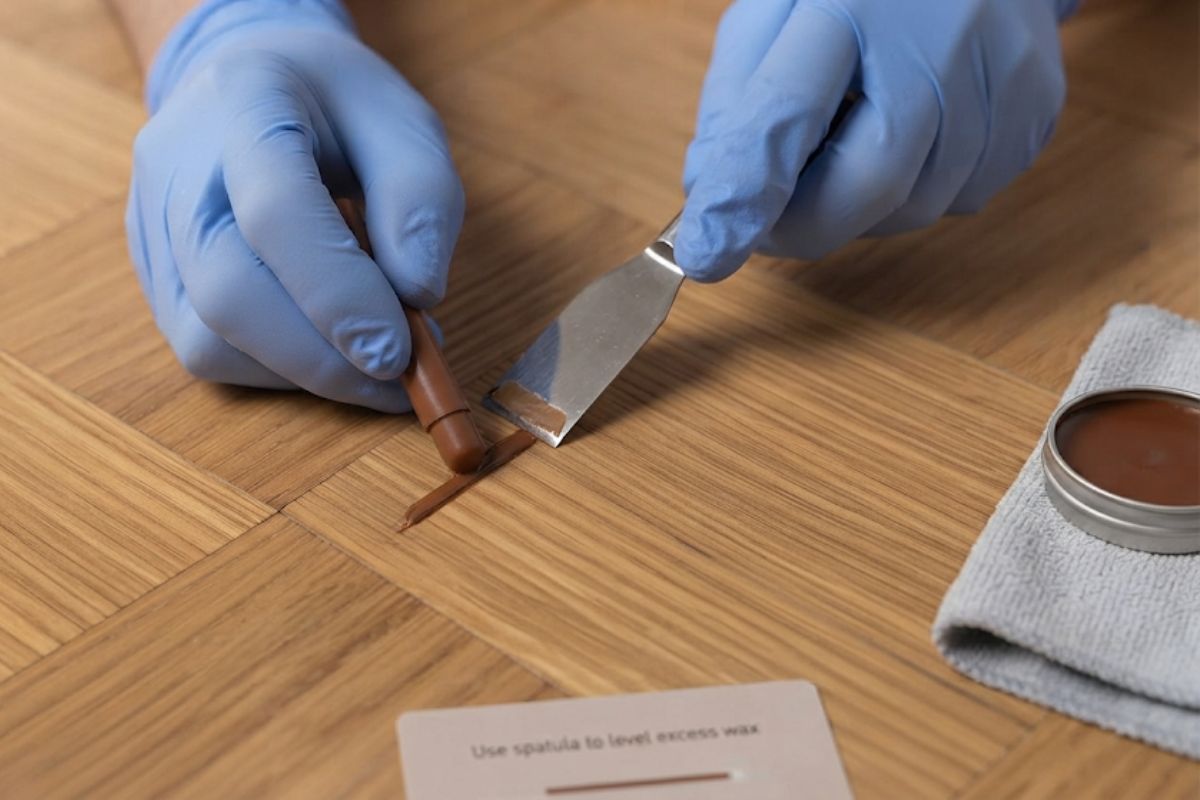
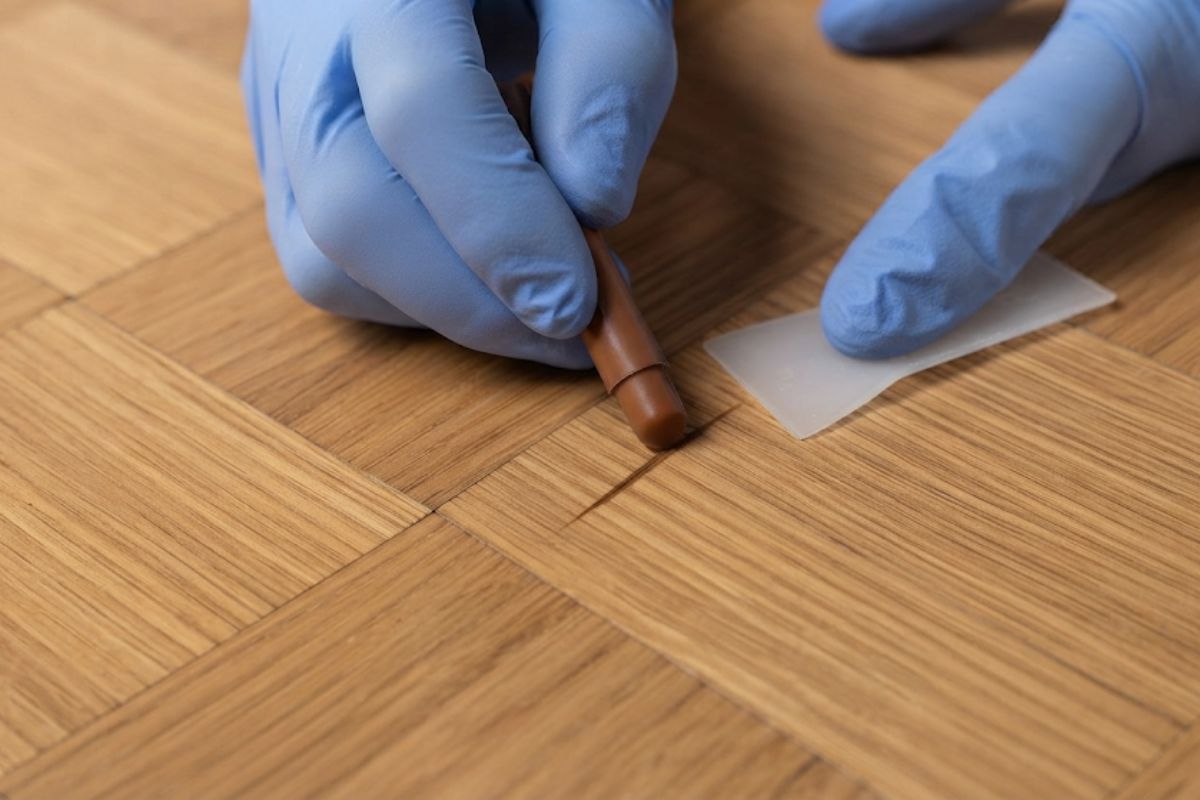
Fine to medium scratches. Colour-matched wax repair sticks or timber touch-up markers can make scratches much less noticeable. Choose a shade that matches your floor, work the wax into the scratch, remove the excess and buff gently with a soft cloth. You may need to blend two colours to match the grain.
Deeper gouges. Timber filler can repair deeper damage, but it usually needs light hand-sanding of the patch afterwards, followed by a matching finish. Blending a patch into a patterned floor takes skill. For visible areas, a specialist in patch repairs may get a better result.
Loose or missing blocks. Loose blocks are usually lifted, cleaned of old adhesive and re-bonded with a suitable flexible floor adhesive. Missing or water-damaged blocks can be replaced with matching blocks, sometimes salvaged from a hidden area such as under a built-in cupboard.
In older homes, parquet was often laid on black bitumen adhesive. Some black adhesives used in Australian buildings contained asbestos, and you cannot tell by looking. If your home is older and you find black adhesive under a block, do not scrape, sand or heat it until a qualified assessor has tested it.
What to avoid when restoring parquet
- Steam mops and wet mopping. The National Wood Flooring Association’s wood floor maintenance guidance advises against wet mops and steam mops because they damage the finish and the wood over time. Australian timber flooring industry guidance gives similar advice.
- Wax or polish on a polyurethane floor. These can make a future recoat difficult or impossible.
- Vinegar, bleach and abrasive cleaners. They can dull or etch the finish.
- Mixing product systems. An oil product over polyurethane, or a coating over wax, can fail to bond.
- Aggressive DIY sanding of thin parquet. Some parquet has only a thin layer of hardwood on top. Over-sanding can wear through it, which cannot be undone.
When sanding is the better choice
No-sand methods have real limits. Sanding and refinishing is usually the better option when:
- the finish has worn through and bare timber is visible across large areas
- the wood has turned grey, black or deeply stained from water or pets
- scratches and dents have cut deep into the timber
- blocks are uneven, cupped or have moved significantly
- a test patch shows the new finish will not bond, often because of old wax
- you want to change the colour of the floor, not just the sheen
Parquet sanding is skilled work because the grain runs in different directions. It also creates fine dust that needs good extraction. A professional can tell you how thick the hardwood layer is and how many more sands it can take.
How to keep restored parquet looking good
- Put felt pads under furniture legs, and lift furniture rather than dragging it.
- Place doormats at entrances to trap grit, which acts like sandpaper on the finish.
- Use rugs in high-traffic areas such as hallways and in front of sofas.
- Dust-mop or vacuum regularly with a soft head or bare-floor setting.
- Wipe spills promptly with a dry or slightly damp cloth.
- Keep pets’ nails trimmed.
- Protect the floor from strong direct sunlight, which can change the colour of timber over time.
- Plan a light maintenance recoat before the finish wears through, rather than waiting until sanding is the only option.
Bringing your parquet back to life
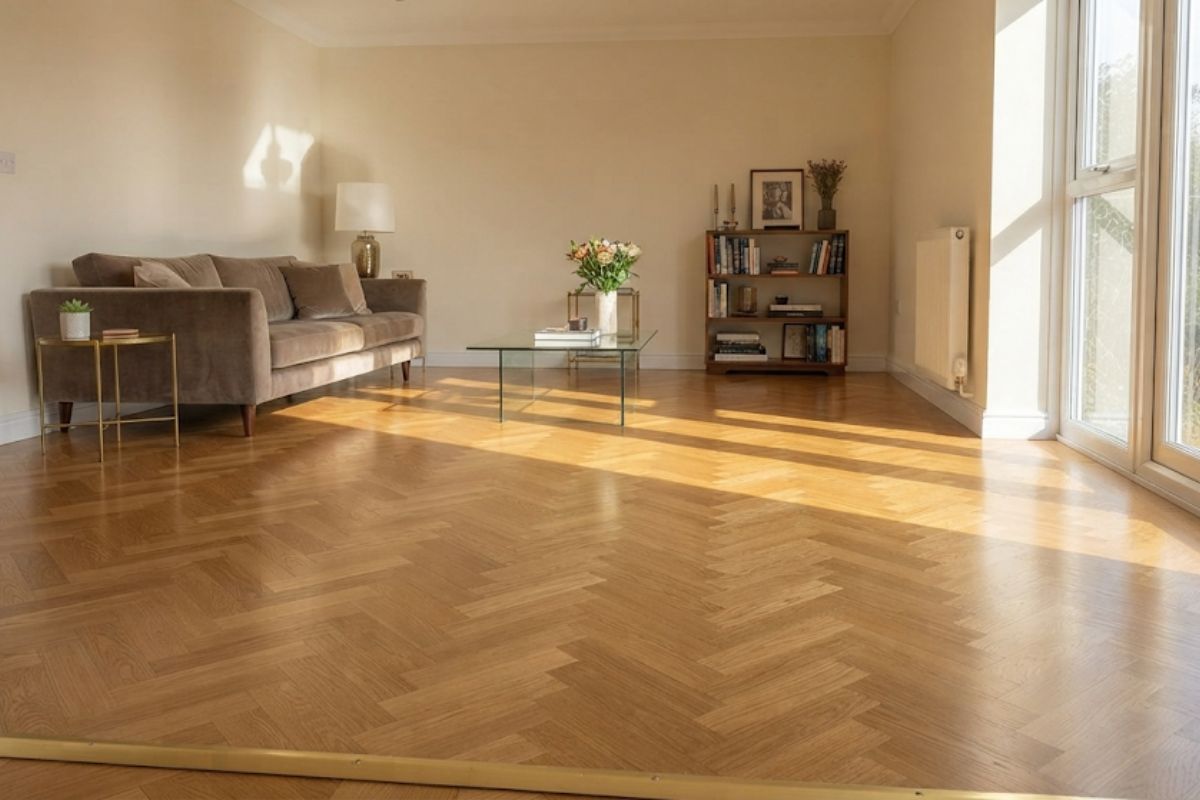
Restoring parquet without sanding works best when you match the method to the damage. Clean first, check the finish and the floor’s stability, and use products made for your type of finish. Fix problem blocks one by one, and call in a timber flooring professional for a screen and recoat or for any floor with bare or damaged timber.
With regular care, your restored parquet can keep its character for many years. For more practical guides to caring for your home, browse our home improvement articles.