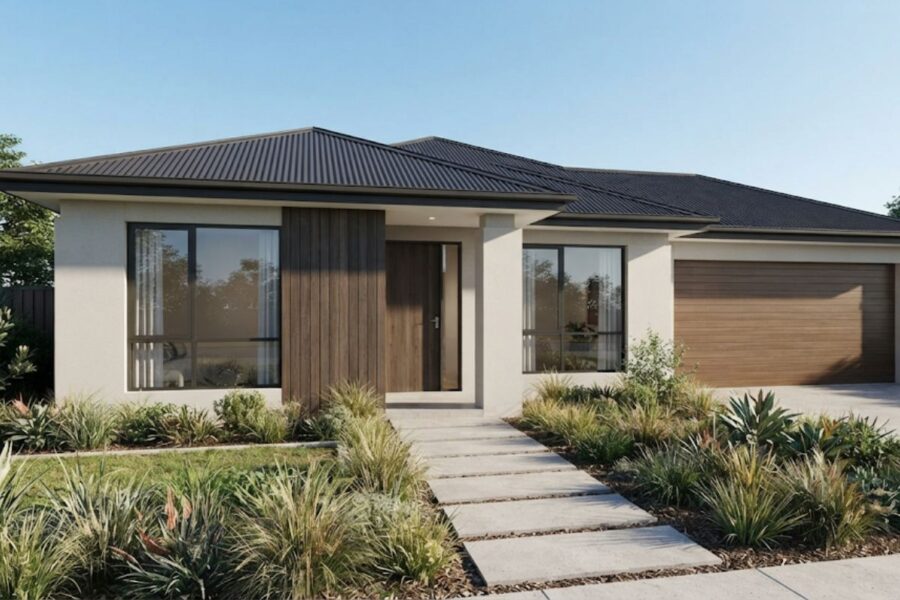
If you are comparing wall materials for a new home, an extension or a knockdown-rebuild, Hebel will almost certainly come up. This guide explains what Hebel wall panels are, how they perform on insulation, fire, termites and moisture, where they can go wrong, and what to ask your builder before you commit.
Quick answer
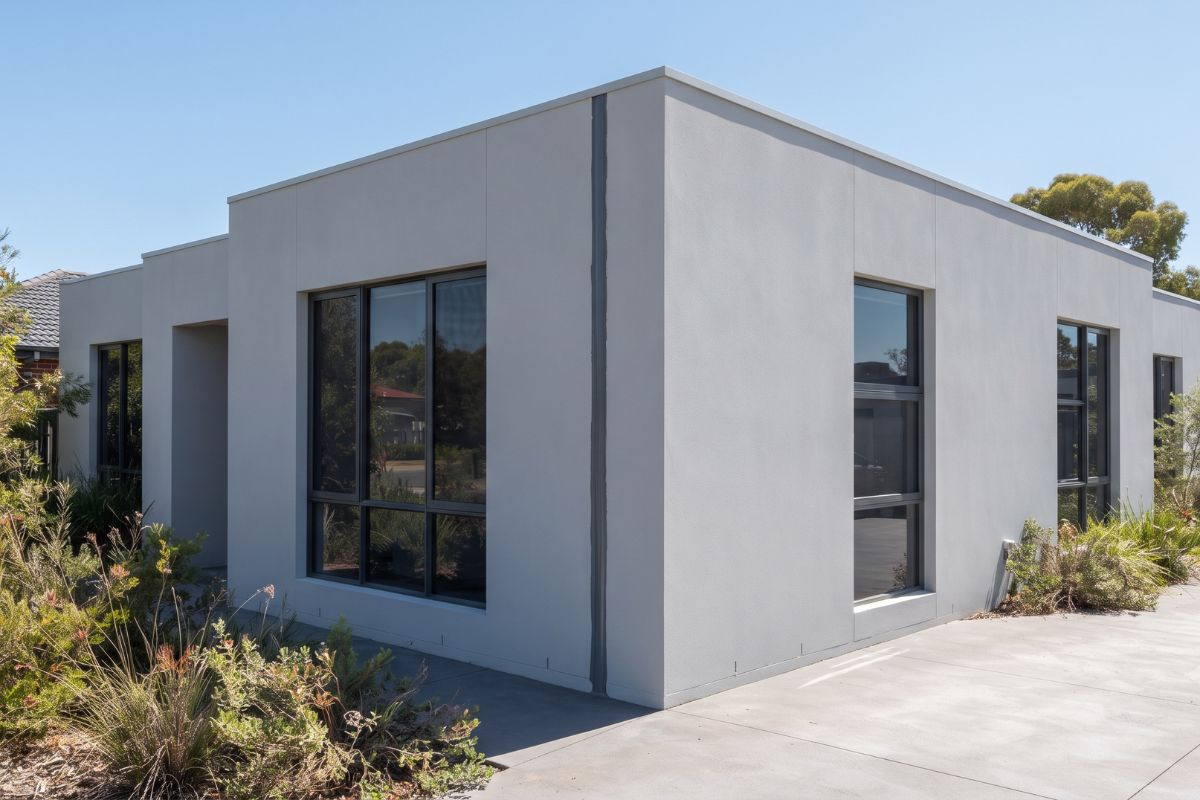
Hebel wall panels are steel-reinforced panels made from autoclaved aerated concrete (AAC), sold in Australia by CSR Hebel. They are much lighter than conventional concrete, non-combustible, termite resistant and better insulators than most masonry cladding. Their main weakness is water: AAC is porous, so it depends on a correctly applied coating system, well-sealed joints and good flashing around windows and doors. Installed properly, Hebel can make a home quieter and more comfortable. Installed poorly, cracked render and leaking joints are the most common complaints.
What are Hebel wall panels?
Hebel is CSR’s brand name for its range of AAC blocks and panels. AAC is a lightweight, precast form of concrete that is full of tiny closed air pockets. CSR Hebel says it is the only AAC manufacturer in Australia, and its range includes both Australian-made and imported products. CSR has been owned by French building materials group Saint-Gobain since July 2024, but the products are still sold under the CSR Hebel name.
What is AAC made from?
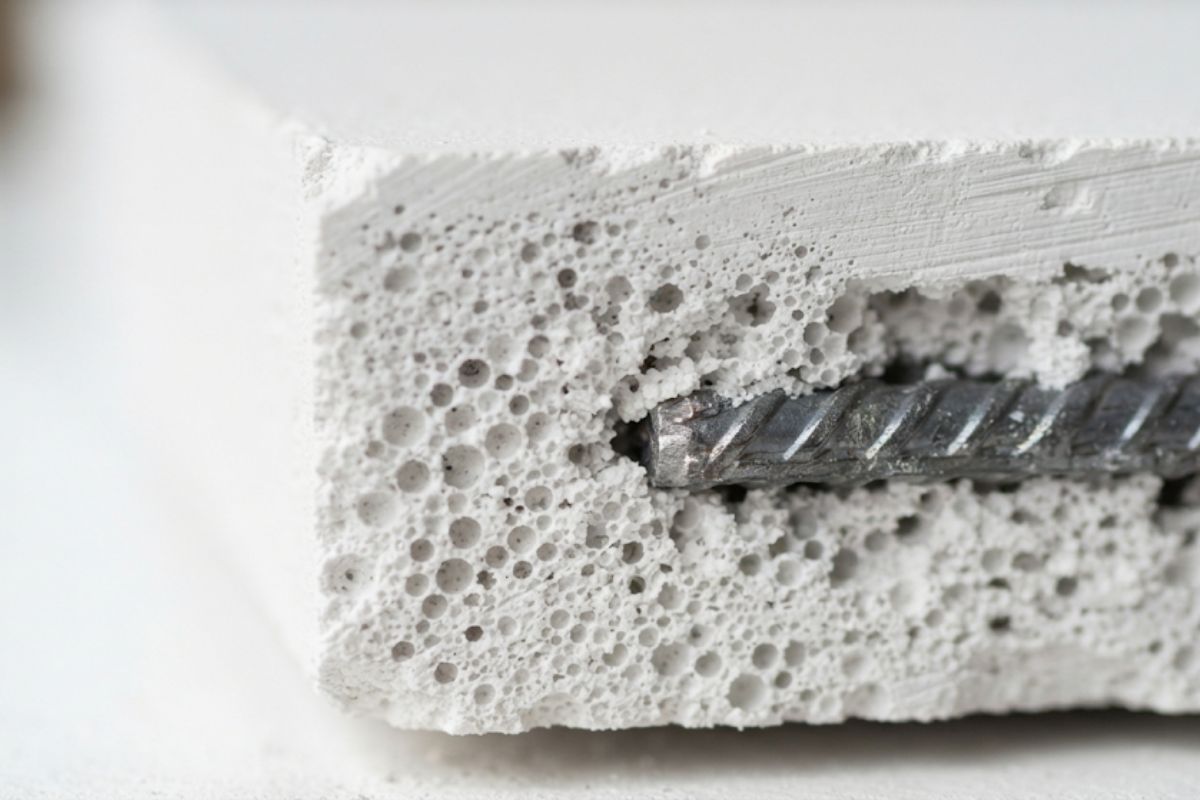
AAC is made mainly from fine sand, cement, lime and water, often with some gypsum. A small amount of aluminium powder or paste is added as an expansion agent. It reacts inside the wet mix and releases hydrogen gas, which makes the mix rise a little like bread dough. The set material is cut to size and cured with high-pressure steam in an autoclave, which is where the name comes from.
The result is a solid masonry material that is roughly one-fifth the weight of conventional concrete, according to the Australian Government’s Your Home guide to autoclaved aerated concrete. Hebel panels also contain steel reinforcement with an anti-corrosion coating.
How a Hebel wall goes together
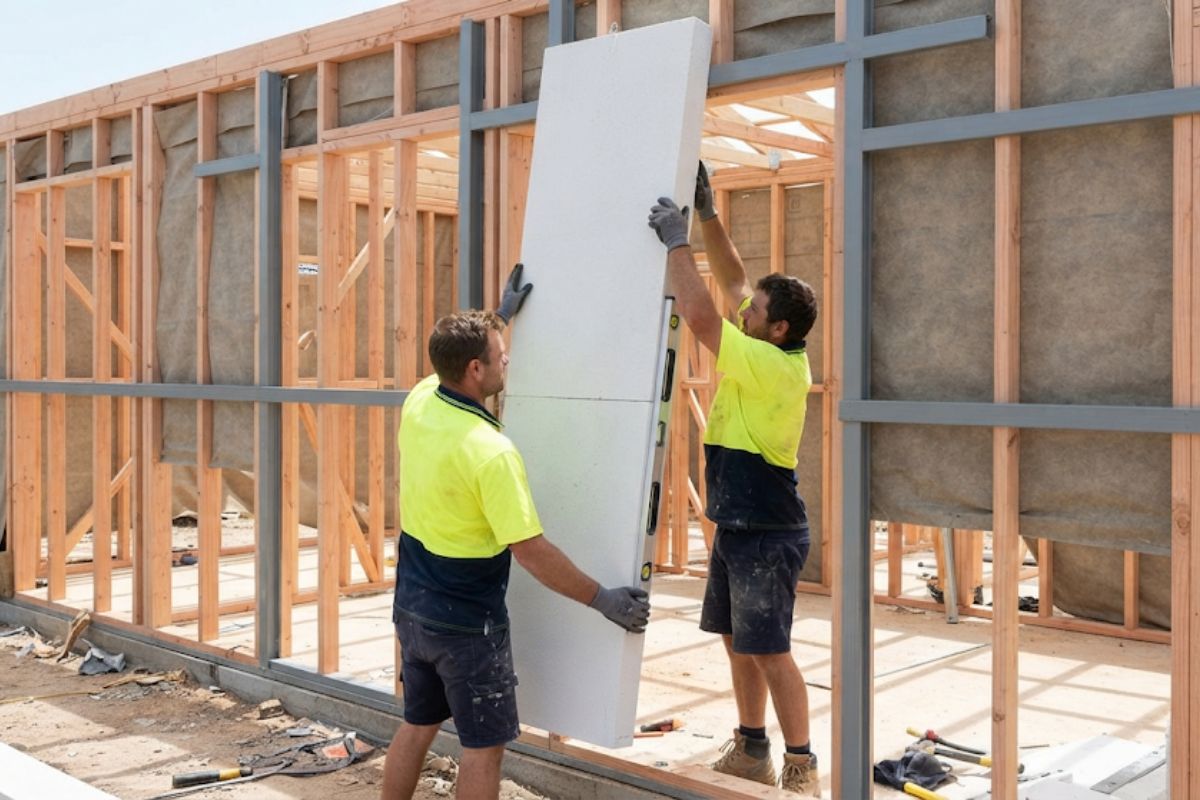
In most Australian houses, Hebel panels are cladding rather than the structure itself. In CSR’s PowerPanelXL system, for example, 75 mm thick panels are fixed vertically to horizontal steel battens (called top hats), which are attached to a load-bearing timber or steel frame. Insulation goes inside the frame, plasterboard lines the inside, and the outside is finished with a coating or render system.
CSR also makes thinner 50 mm panels, floor panels, blocks, and fire-rated and acoustic walls used between apartments and townhouses.
How energy efficient are Hebel wall panels?
Hebel insulates better than most masonry cladding, but it is the whole wall system, not the panel alone, that decides how comfortable your home will be.
Thermal performance is measured with an R-value, which describes how well a material resists heat passing through it. Higher is better. CSR’s current PowerPanelXL literature gives these figures:
- Panel alone: about R0.6
- Complete wall system: up to R3.8, once frame insulation, plasterboard and air gaps are included
- Compared with brick: CSR says the panel offers almost twice the thermal resistance of a standard brick
AAC also has moderate thermal mass, meaning it stores some heat, but less than dense brick or concrete. That balance helps smooth out indoor temperatures without soaking up as much heat on hot western walls.
Will Hebel lower my energy bills?
It can help, but nobody can promise a set percentage. You may see claims of savings of up to 30%, but there is no independent evidence for a fixed figure that applies to every home.
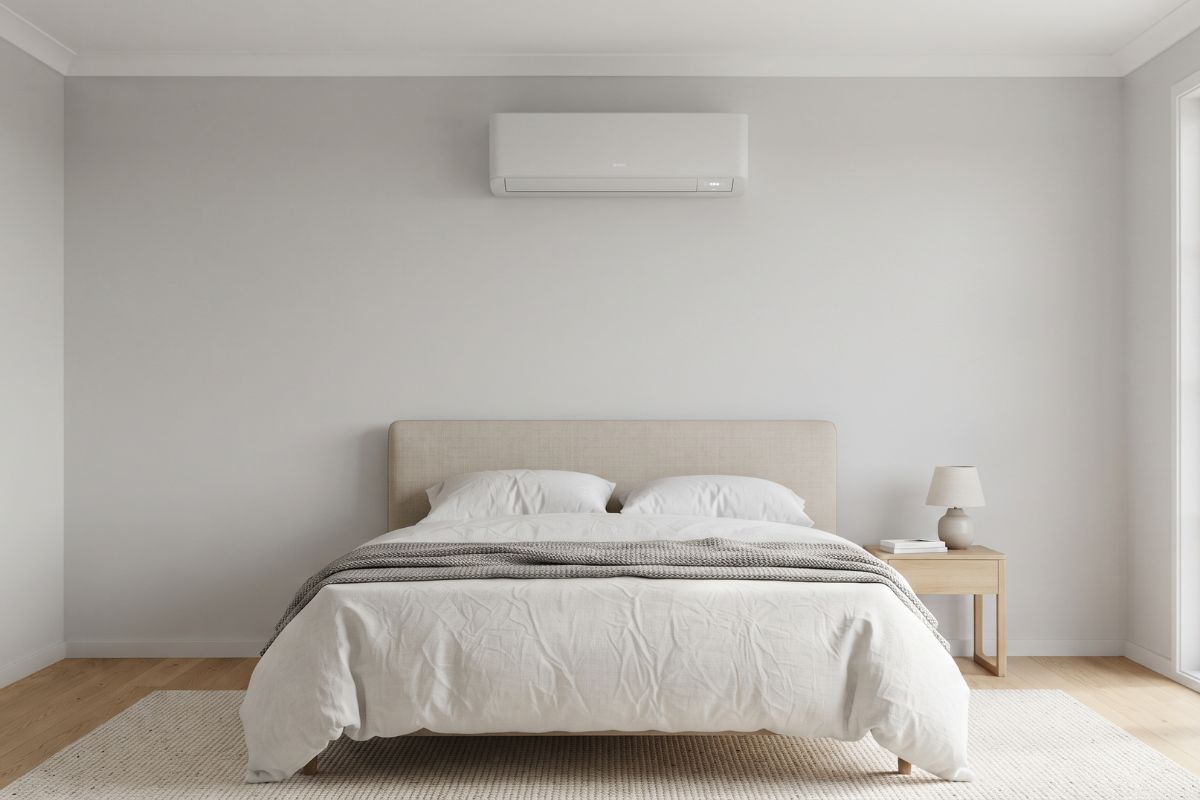
Your real heating and cooling costs depend on your climate, orientation, shading, insulation levels, air-tightness, glazing and how you use the home. Walls are only one part of the picture. Heat also moves through glass, so it is worth reading about double glazed awning windows and the benefits of double glazed entrance doors if you are planning a build. Even a well-insulated home usually needs some heating and cooling, and an efficient system matters too. Our guide to split system air conditioner benefits and trade-offs covers that side.
Is Hebel better for the environment?
It may be, but treat broad claims with care. Some builders quote figures for lower embodied energy and emissions compared with brick veneer or concrete, but these are not always linked to a published, independent study. If sustainability is a priority, ask your builder or CSR for an Environmental Product Declaration (EPD), a standardised report of a product’s environmental impact, and compare it with the alternatives you are considering.
How durable are Hebel wall panels?
Hebel is very durable against fire and termites, but its long-term performance depends heavily on how well it is protected from water.
Fire
Hebel is non-combustible and its systems have been tested by the CSIRO. Depending on the system, CSR reports Fire Resistance Levels (FRLs) from 60 to 240 minutes. The PowerPanelXL external wall system is rated up to 180/180/180 against fire from the outside. Those three numbers are minutes of structural adequacy, integrity and insulation.
CSR says its cladding systems can be used in all Bushfire Attack Level (BAL) categories. In a bushfire-prone area, though, the whole house must comply, including windows, doors, roofing, vents and gaps. Your building designer or certifier should confirm the right system for your BAL.
Termites
Termites cannot eat AAC because it is a mineral material. However, Hebel panels are usually fixed to a timber or steel frame. A timber frame still needs proper termite management, so Hebel cladding does not replace a termite barrier or regular inspections. Our article on whether you can do termite control yourself explains when to call a professional.
Moisture: the part to take seriously
Hebel is not waterproof on its own. AAC is porous and absorbs water if it is left uncoated, which is why CSR requires an approved coating system. Most water problems in Hebel homes are traced to:
- cracked or poorly sealed control joints (the flexible joints that allow walls to move)
- missing or badly installed flashings around windows, doors and balconies
- rigid render or paint that cracks as the building moves
- impact damage that is never repaired
AAC is a mineral product that does not feed mould, but a wall that stays wet can still damage finishes and framing. Good detailing and regular checks matter more than the panel itself.
Cracking
Hairline cracks in the coating are one of the most common complaints from Hebel owners. They usually come from joints that are too far apart, a coating that is not flexible enough, movement in door or window frames, or knocks from cars, bins and lawnmowers. Small cosmetic cracks can often be sealed and recoated. Cracks that keep returning, run along panel joints or let water in need a builder or Hebel-experienced renderer.
How strong are Hebel panels?
Hebel panels are strong for their weight and reinforced with steel, but in a typical house they do not carry the building’s load. The frame does. That means Hebel itself does not create larger open-plan spaces; your frame design and engineering do.
The frame must also be designed to carry the weight of the panels, so this needs to be planned from the start rather than swapped in late. Hebel is commonly used for single and double-storey homes, townhouses and apartment walls.
Hebel vs brick: how do they compare?
Hebel and brick both suit Australian homes. The right choice depends on the look you want, your budget, your site and how much ongoing care you are happy to do.
| Factor | Rendered Hebel (e.g. PowerPanelXL) | Face brick veneer |
| Look | Smooth or textured rendered finish | Exposed brick; can be rendered at extra cost |
| Insulation | Higher thermal resistance than brick (manufacturer figures) | Lower; relies mostly on frame insulation |
| Weight | Much lighter than brick | Heavy |
| Build speed | Fast; CSR says one standard panel equals about 75 bricks | Slower, laid brick by brick |
| Fire | Non-combustible; tested fire ratings | Non-combustible |
| Termites | Panel is termite proof; frame still needs protection | Brick is termite proof; frame still needs protection |
| Maintenance | Coating needs checks, sealing and periodic recoating | Very low for face brick; rendered brick needs similar care to Hebel |
| Fixing things to walls | Needs fixings designed for AAC | Standard masonry fixings |
| Cost | Often cheaper than rendered brick; compare quotes | Varies widely with brick choice and finish |
How much maintenance does a Hebel home need?
A Hebel home is low maintenance, not no maintenance. The coating is the part that ages, so plan to:
- Check walls, joints and window surrounds once a year, especially after storms.
- Wash off dirt, salt spray and mildew gently, following the coating supplier’s advice.
- Seal small cracks promptly with a product suited to AAC and the coating system.
- Recoat when the coating supplier recommends, and keep receipts for warranty purposes.
- Use fixings rated for AAC when hanging anything outside or inside, and check the load ratings in CSR Hebel’s fixing guide.
Questions to ask your builder before choosing Hebel
- Which Hebel system will you use, and will it follow CSR’s current design and installation guide?
- Is the installer experienced with Hebel, and can I see a Hebel home they built several years ago?
- Which coating system will you use, and what are its warranty and recoat intervals?
- Where will the control joints go, and how will windows, doors and balconies be flashed?
- What is the R-value of the complete wall system, and what insulation goes in the frame?
- Has the frame been designed for the weight of the panels?
- If I am in a bushfire-prone area, which BAL applies and does the whole system comply?
- What does each party warrant: CSR, the builder and the coating supplier?
The bottom line
Hebel wall panels offer real advantages in insulation, fire resistance, termite resistance and build speed. They are not a set-and-forget material, though. The quality of the installation, joints and coating decides how well a Hebel home performs over time. Get detailed quotes, ask the questions above and look at older Hebel homes before you decide. For more practical guides to planning and caring for your home, browse our Home Improvement section.