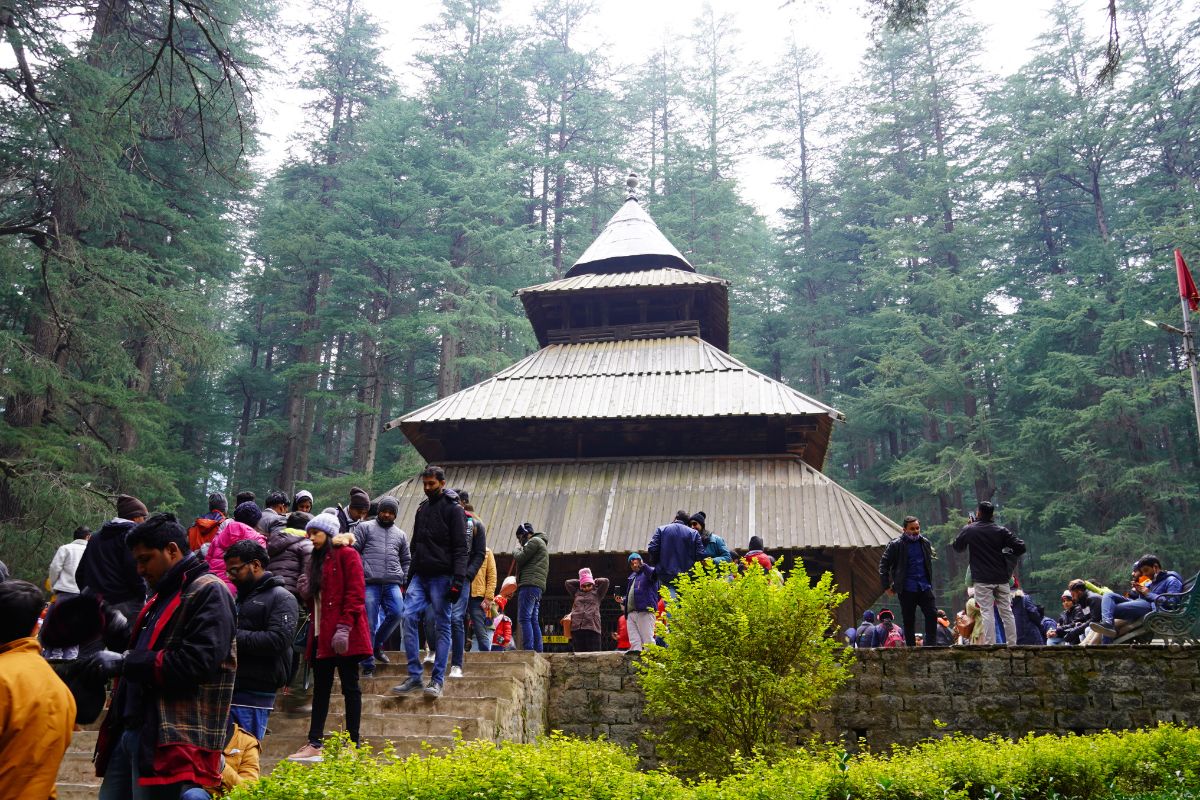
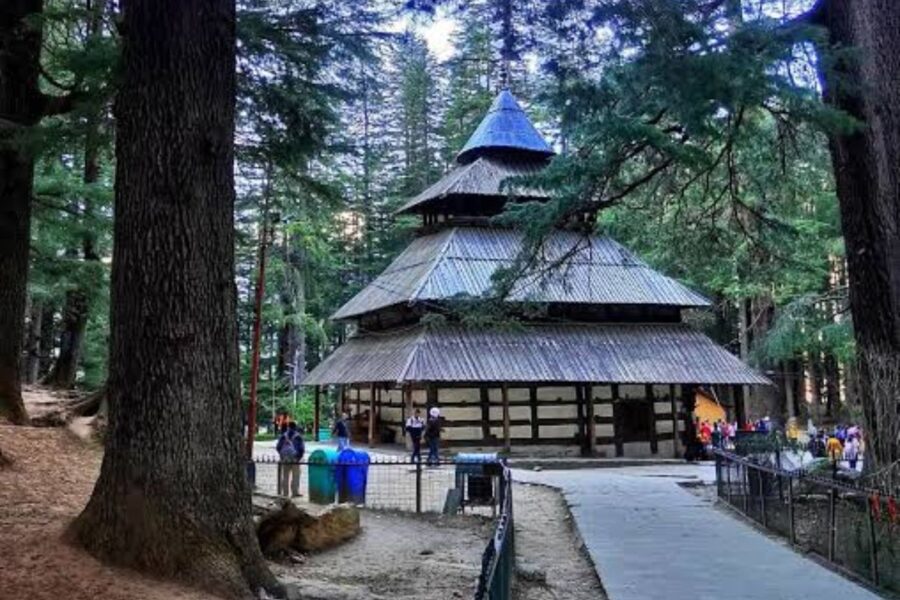
Yes, you can visit Hadimba Temple and Dhungri Forest together, because the temple stands inside the forest. The cedar grove around it is called Dhungri Van Vihar, so one easy walk covers both. Give it one to two hours, start near the 8 am opening, and wear shoes with good grip.
The road up to Hadimba Temple ends at the edge of the woods, and the last short stretch to the shrine is on foot under tall deodars. Once you’ve seen the temple, the paths behind it lead deeper into the trees, past the tiny Ghatotkacha shrine, and on toward Old Manali if you want more.
The main exception is winter. Snow usually settles from December to February, and the paved approach can turn icy, so plan a shorter loop after fresh snow. If you have a whole free day, our one-day plan for Manali’s main sights shows where this walk fits.
Is Hadimba Temple Really Inside Dhungri Forest?
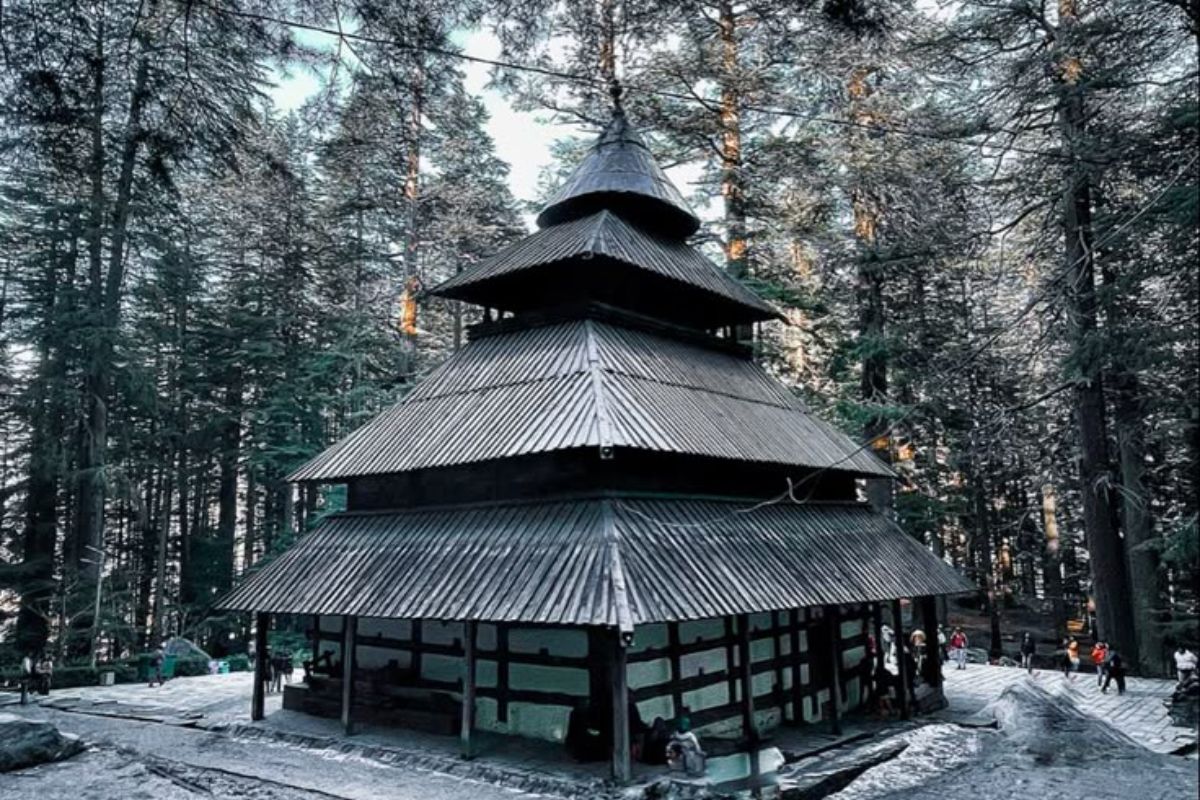
It is. Locals call it Dhungri Temple or Dhungari Temple, and the temple’s history on Wikipedia records that Maharaja Bahadur Singh built it in 1553, around a cave where Hidimba is said to have meditated. The protected cedar grove that wraps around the shrine is Dhungri Van Vihar, and the building sits right in the middle of it.
The mistake we see most often is mixing up two different “Van Vihar” names. Dhungri Van Vihar is the forest at the temple, on the hill above town.
The Van Vihar park near the Mall Road end of town is a separate deodar park, so if a driver drops you there, you’re still a 20 to 30 minute walk from the shrine.
Say “Hadimba Temple, Dhungri” to any auto driver and you’ll end up at the right gate. Hidimba, Hadimba and Hidimbi are all spellings of the same goddess, so don’t worry when signboards and maps disagree.
Hadimba Temple Visit Duration: How Long Do You Need?
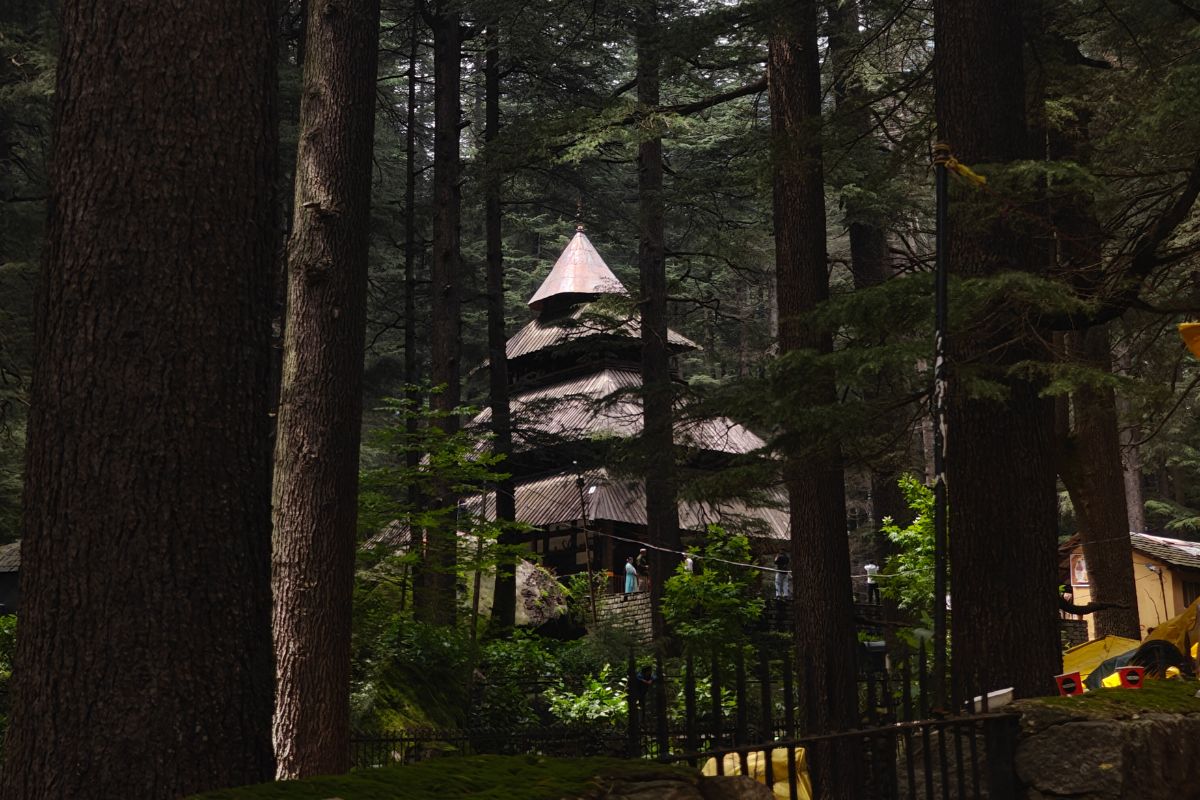
The shrine itself takes 15 to 20 minutes, including a slow walk round the outside to see the carvings. Add 30 to 45 minutes for the forest paths and the Ghatotkacha shrine, plus 20 to 30 minutes each way if you walk from Mall Road. That’s how a quick stop becomes a relaxed two-hour morning.
Crowds change those numbers. Summer weekends and the week between Christmas and New Year bring long queues to the sanctum, so treat those days as a half-morning job. On a winter weekday, you might have the clearing almost to yourself.
Short on time? Take an auto to the gate, see the shrine and the Ghatotkacha tree, then walk 15 minutes into the cedars before heading back. That version fits into about 45 minutes and still gives you both the temple and the forest.
A Simple Route Through the Temple and the Cedars
This is the order we suggest to readers, because it puts the busiest stop first, while it’s still quiet, and saves the calmest part for last. Each step flows into the next without doubling back.
Walk Up from Mall Road
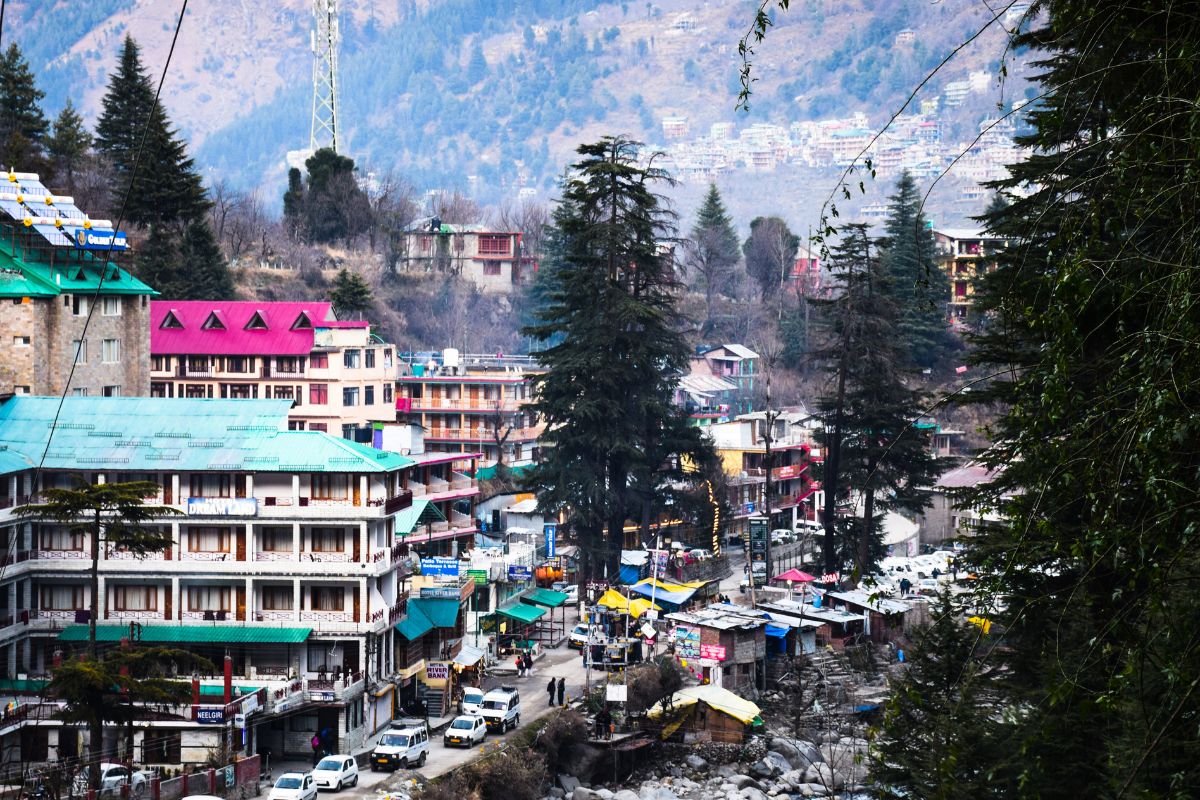
Hadimba Temple is about 2 km north-west of Mall Road, and the walk takes 20 to 30 minutes at an easy pace on a paved road. It’s uphill most of the way, and Manali sits at roughly 2,050 metres, so go slowly if you arrived only yesterday.
Walking is also the money-saving choice, since there’s no entry fee and no taxi fare. If the climb doesn’t suit you, take an auto up and walk back down, which is the easier direction for your lungs.
See Hadimba Temple Before the Crowds
Aim to be at the gate by 8 am. The light through the deodars is softer then, the queue is short, and you can stand back and look at the tiered roof without tour groups in every photo.
Take your shoes off before the steps, dress modestly, and ask before you photograph anything inside the sanctum. Leave the rock and the offerings alone unless the priest invites you closer.
Find the Ghatotkacha Shrine
Most visitors walk straight past this one. Ghatotkacha, Hidimba’s son with Bhima, is worshipped at a sacred tree a short walk from Hadimba Temple, with offerings tied around the trunk.
It takes five minutes and gives you a feel for how old the worship on this hill is. If you can’t spot it, ask one of the stall keepers near the compound gate.
Loop Through the Dhungri Cedars
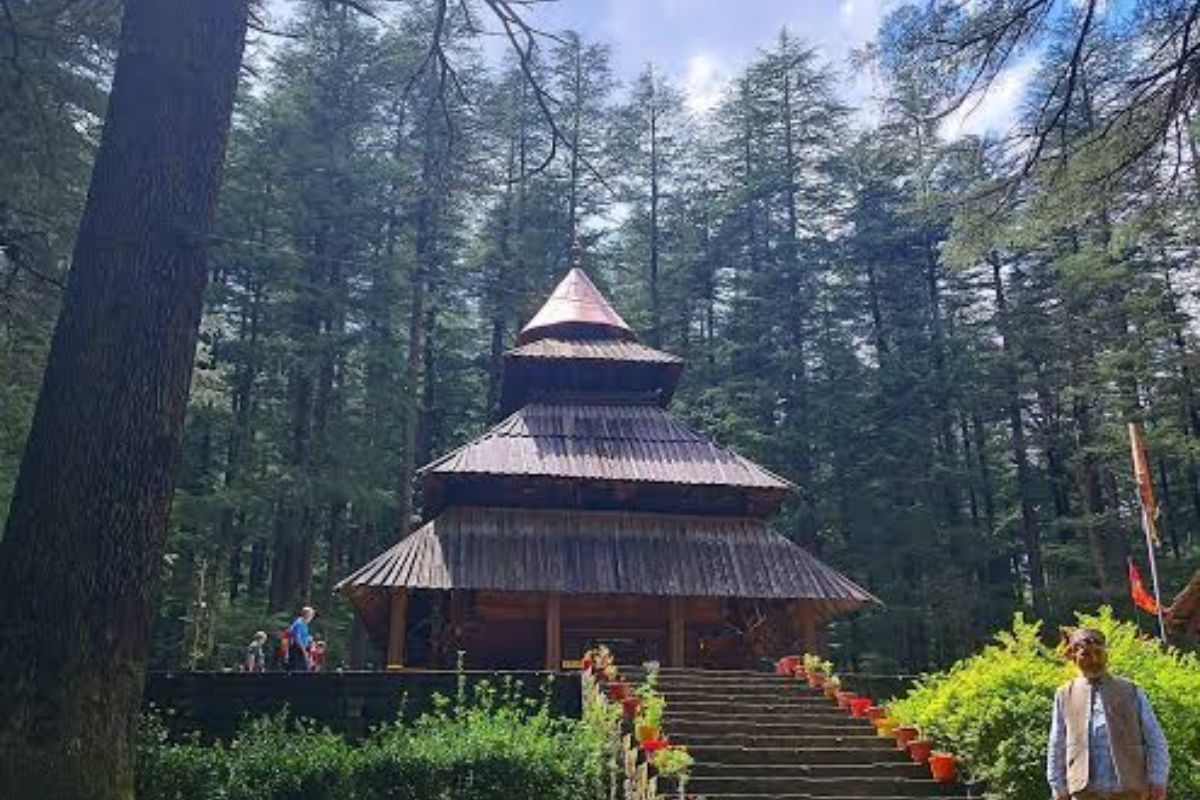
Behind the compound, footpaths run up and across the slope under the deodars, and some of these trees stand more than 30 metres tall. Stick to the trodden paths and you’ll find the quiet that the temple courtyard lacks.
This is the part most rushed itineraries cut, and in our view it’s the better half of the visit. Twenty minutes of slow walking here is worth more than another round of photos at the door.
Head On to Old Manali or Back Down
Old Manali and the Manu Temple are about 1 km further on, so you can stretch the morning into a half day without a cab. For more rural lanes nearby, our guide to villages you can reach from Manali on a day trip picks up where this walk ends.
What Will You See at Dhungri Temple Manali?
Hadimba Temple rises about 24 metres, with three square roofs covered in timber tiles and a fourth brass cone on top. The base is whitewashed stone covered in mud, which makes the dark carved wood above it stand out.
Spend a few minutes at the main door. Its carvings centre on Goddess Durga, with animals, dancers, leaf patterns, scenes from Krishna’s life and the nine planets, the Navagrahas, worked around her.
Inside there’s no large idol. You’ll see a big rock with the goddess’s footprints carved into it, worshipped along with a small brass image of Hidimba Devi about 3 inches tall. A rope hangs in front of the rock, tied to an old local story about punishing sinners.
We checked the official Incredible India page for Hidimba Temple on 27 November 2026, and it lists the hours as 8 am to 6 pm. A few private listings say the grounds stay open round the clock, so plan to go inside within the official window.
When Is the Best Time to Visit Hadimba Temple?
Time of day matters more than the season at Hadimba Temple. Before 9 am you’ll get short queues, cool air and the best light, while by late morning in summer the clearing fills with vendors, yak handlers and tour groups.
The calendar changes things too. The Dhungri Mela, the goddess’s birthday fair, usually runs for three days in mid-May, often around 14 to 16 May, with deity processions from nearby villages and Kullu folk dance. Navratri also brings big local crowds, so come then for culture, not for a quiet walk.
Late November, when we’re writing this, often brings clear skies, sharp cold and thinner crowds, which suits this walk well if you dress in layers. From December to February the grove usually wears snow, which looks lovely but makes every slope slippery. Our two-day plan for Manali’s main places helps you pick the best morning for it.
What Should You Skip at Hadimba Temple, and What Should You Watch?
We’d skip the yak rides and Himachali costume photos at the gate unless they genuinely matter to you. They aren’t part of the temple, they eat into your quiet early hour, and if you do want one, agree the full price before anyone hands you a costume.
The bigger risk is the ground. After rain or snow, the approach road and forest paths get slick, and ice on shaded steps is easy to miss. Shoes with deep rubber lugs help more than any jacket, so wear trail shoes or hiking boots rather than fashion sneakers.
Don’t treat the forest as a solo wander into the hills. The trail beyond Hadimba Temple runs into Manali Wildlife Sanctuary, where brown bear and leopard live, so stay on the main paths, walk with someone, and head back well before dark.
If you came mainly to shop, the stalls here sell mostly snacks and trinkets. You’ll find far more choice at the Tibetan market in Manali for handicrafts, so save your souvenir budget for that.
Can You Add Old Manali or the Sanctuary to the Same Day?
Yes, and this is one of the easiest pairings among Manali day trip attractions. A path from the Dhungri side continues through deodar, kail, horse chestnut, walnut and maple forest into the sanctuary, which begins about 2 km from town.
For a short look, walk to the sanctuary gate and back. For anything longer, such as the climb to the Lamadugh meadow, hire a registered local guide, because these trails gain height fast and mountain weather can turn within an hour.
The temple loop is mostly gentle, but the sanctuary trail is steeper and rougher underfoot. Set a turnaround time before you start, and stick to it even if the next bend looks tempting.
If anyone in your group twists an ankle, or feels dizzy, breathless or sick on the climb, stop, head downhill and see a doctor in town. For an emergency anywhere in India, call 112, and our health guides cover the warning signs worth knowing before a mountain trip.
What We Tell Readers Before They Visit Hadimba Temple
Here’s what we tell readers who ask about this walk: go early, go on foot, and give the forest as much time as the shrine. People come for the carvings, but the cedars are what make the morning feel unhurried.
Carry a small bag, some cash for snacks at the stalls, and a bottle of water. If you’re planning the rest of your stay, our guide to Manali local sightseeing without a private taxi links this hill with the town’s other stops.
Use this page as your Manali travel guide for one calm morning, then leave the busy road behind for a while. Our list of quieter places near Manali without a long drive is a good next read if you liked the peace up here.
This guide is for general travel information. Check the weather and local conditions on the day, and follow any advice from local police or forest staff.