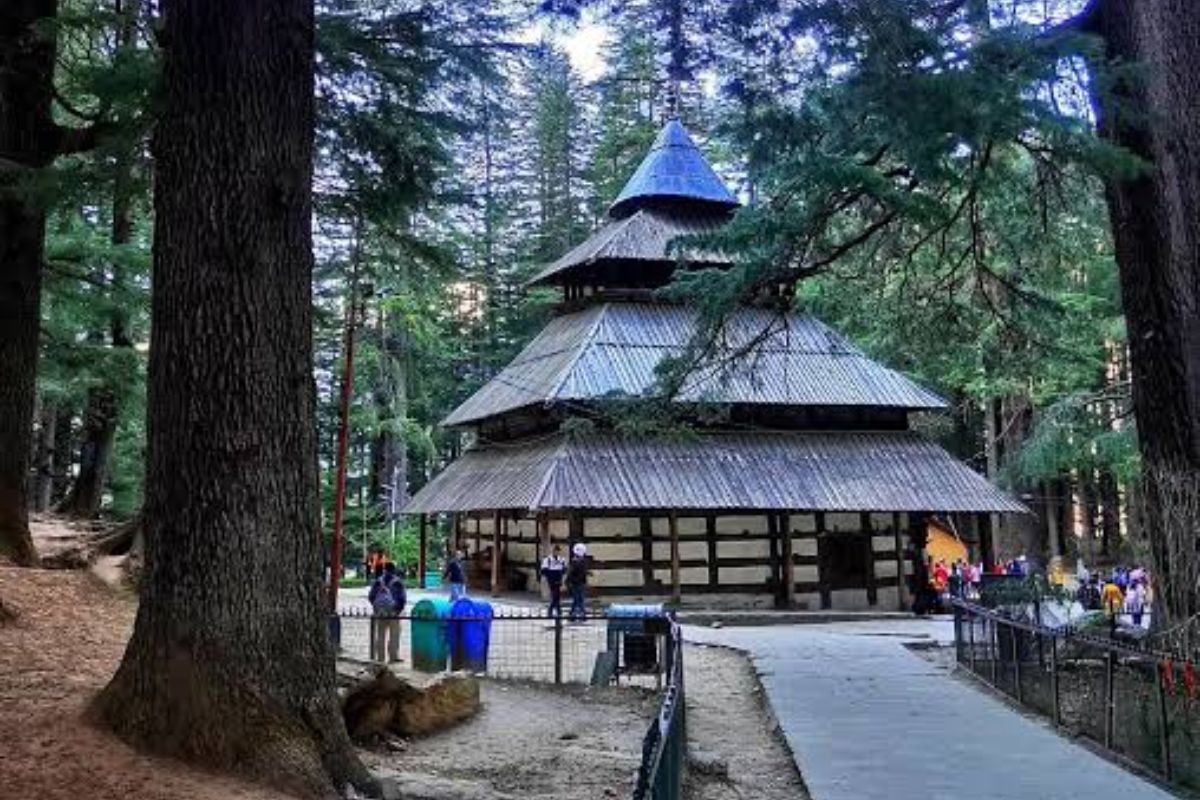
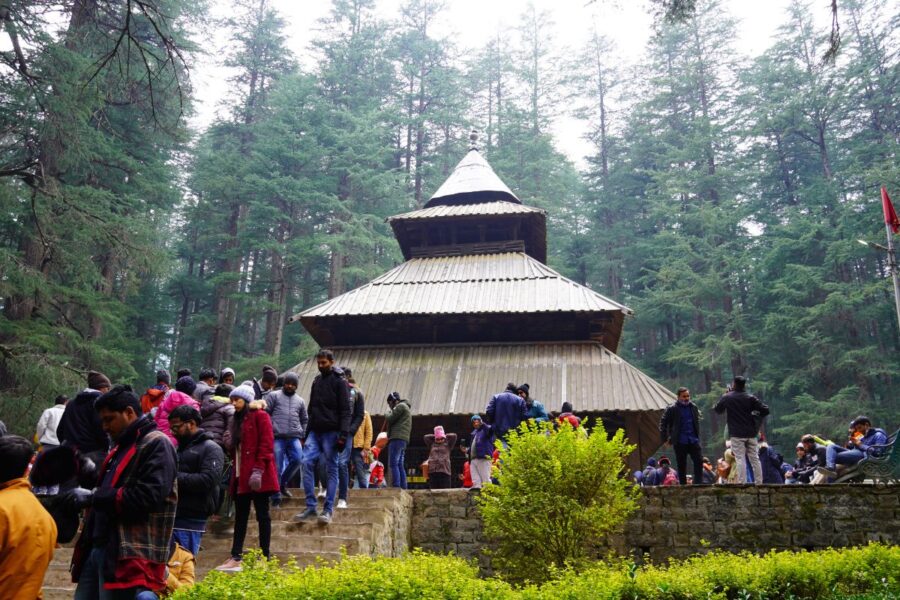
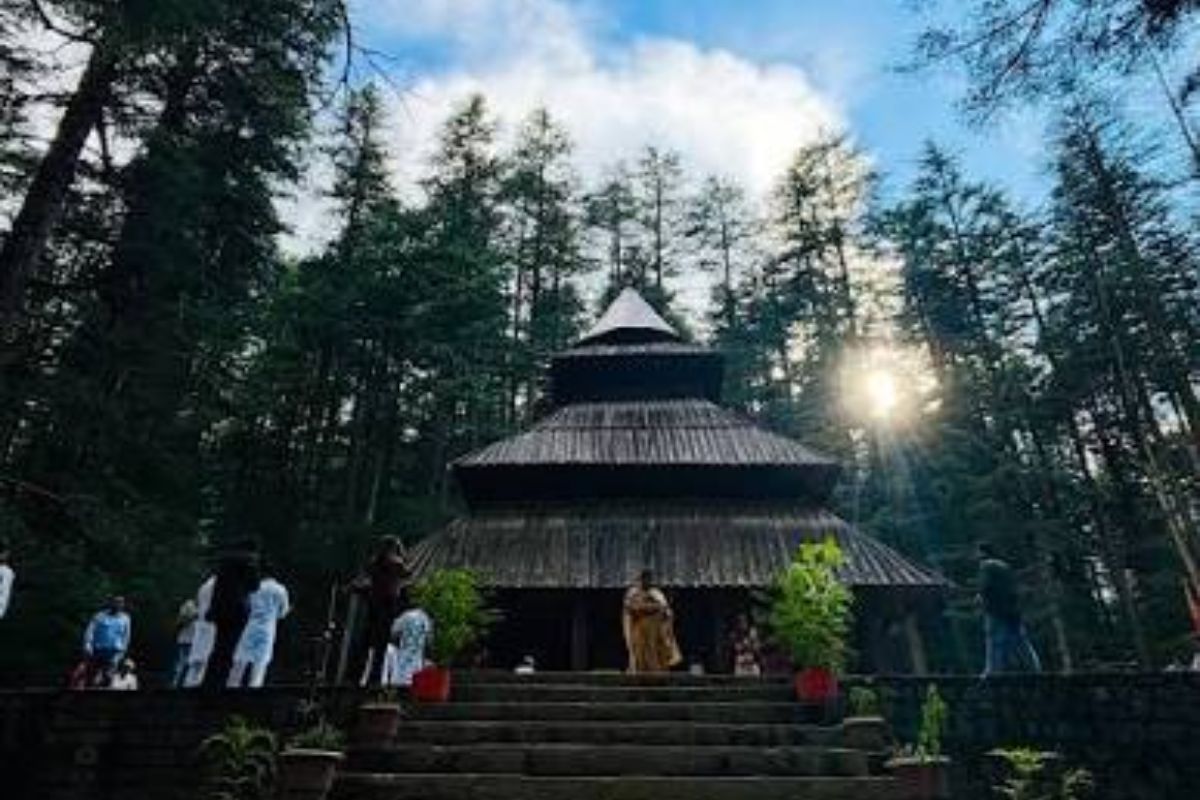
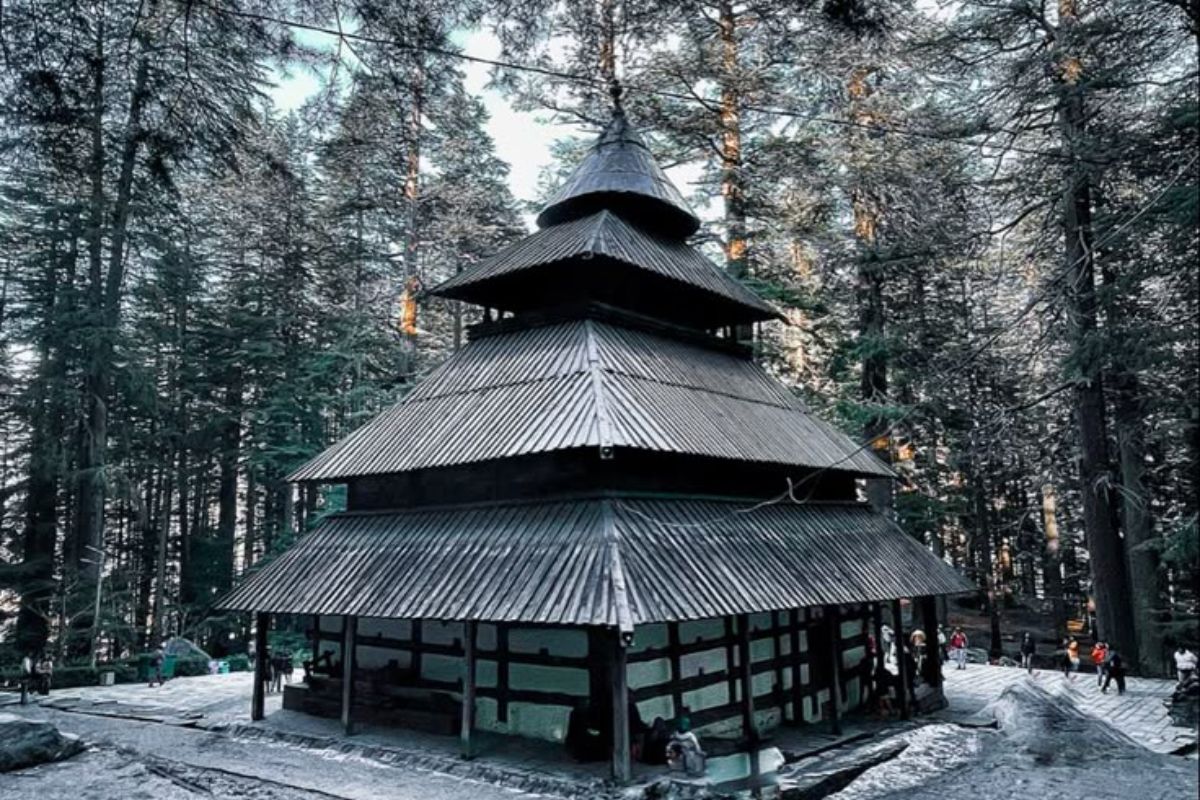
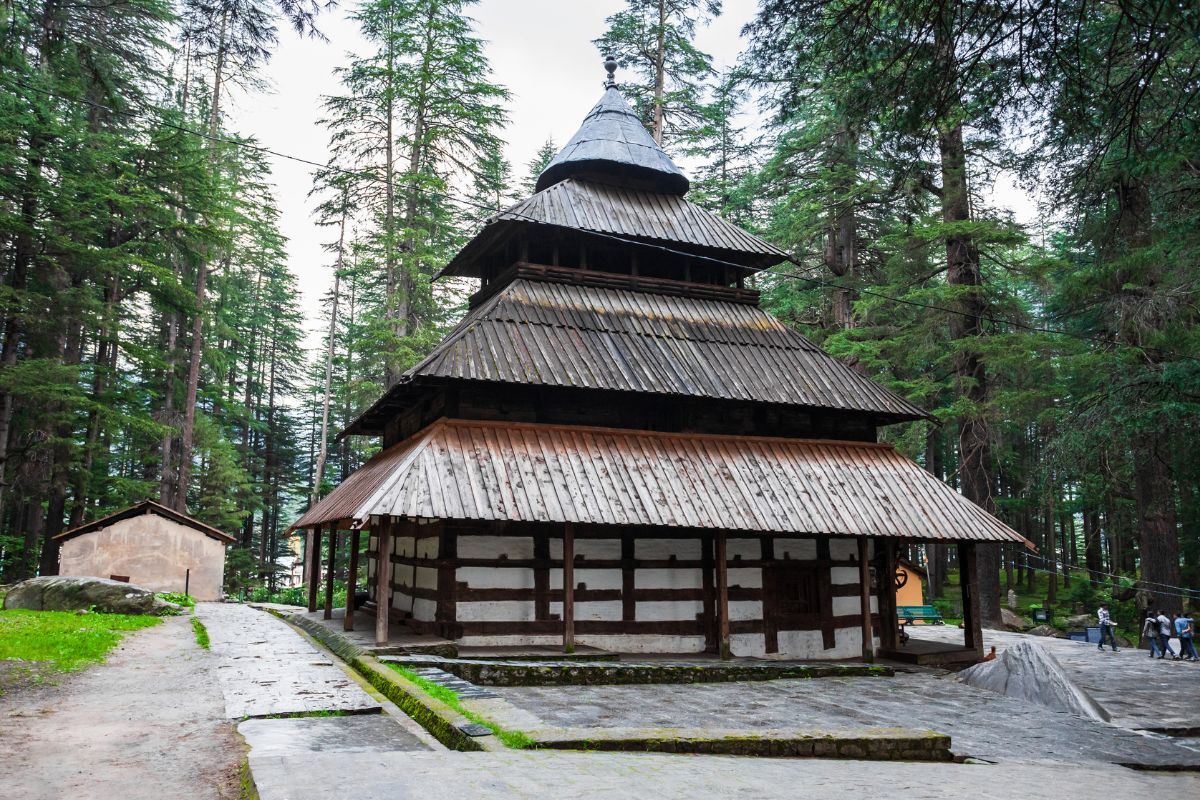
Yes, Hidimba Devi Temple is worth visiting for its architecture, as long as you go to look closely rather than just tick it off. Built in 1553, it stacks three timber-tiled roofs under a brass cone, has a doorway carved with gods, dancers and animals, and sits over a cave in a cedar forest.
What makes it special is that it looks nothing like the stone temples most Indian travellers grew up visiting. It’s a 24-metre pagoda-style shrine of wood and stone, a form few temples in India follow, and it has stood in this forest for more than four centuries.
The one big condition is crowds. In peak season the courtyard fills with selfie queues and photo stalls by late morning, so arrive close to the 8 am opening and give yourself about an hour. Our guide to reaching Hadimba Temple from Mall Road covers the walk up step by step.
If old buildings don’t interest you at all, be honest with yourself. You can see the best angles in 20 minutes and move on to the snow and the cafés without missing much.
What Do Most Visitors Get Wrong About Hidimba Devi Temple?
Most people treat it as a quick photo stop. They take one picture of the roofs from the front, join the queue, and leave without really looking at the doorway, which is where most of the craftsmanship sits.
The other common mistake is expecting a grand idol inside. The sanctum is built around a natural rock and a cave, and the main object of worship is a footprint carved into stone. Once you know that, the building makes sense: it’s a wooden shelter raised over a sacred rock, not a hall built around a statue.
We’d also gently correct the idea that the temple is “Japanese” because of its pagoda roofs. Tiered wooden temples are a Himalayan tradition shaped by heavy snow, local timber and generations of village carpenters, and you’ll spot the same thinking in old houses across the Kullu valley.
Who Built the Temple, and Why Does It Look Like This?
Hidimba Devi Temple was built in 1553 CE by Maharaja Bahadur Singh, a ruler of Kullu, around a cave where, by local belief, Hidimba meditated. Hidimba is worshipped here as a family goddess and a village goddess, which helps explain the care that went into every carved panel.
Her story comes from the Mahabharata. Hidimba was the sister of the demon Hidimb, married the Pandava prince Bhima after he killed her brother, and became mother to Ghatotkacha. When the Pandavas left, she stayed behind to meditate, and local belief holds that she became a goddess.
The building’s value was recognised long ago. Hidimba Devi Temple is a centrally protected Monument of National Importance under the Archaeological Survey of India’s Shimla Circle, so the structure you see is looked after as heritage rather than freely rebuilt.
We checked the official Incredible India page for Hidimba Temple on 27 November 2026 before writing this guide. It describes the structure as 24 metres high, with three square timber-tiled roofs and a fourth, brass, cone-shaped roof on top.
Five Architectural Details at Hidimba Devi Temple Worth Your Time
To really see the Hidimba Temple wooden architecture, give yourself 30 to 45 minutes and look at these details in order, from the outside in. It’s the difference between “nice old temple” and actually understanding what you’re standing in front of.
The Three Timber Roofs and the Brass Cone
Stand at the far edge of the clearing first, not at the gate. From there you can see all three square roofs, each covered in wooden tiles and each smaller than the one below, topped by the brass cone that catches the morning sun.
Notice how far the roofs overhang the walls. Wide eaves keep rain and snow off the carved wood underneath, which goes a long way to explaining how a timber building has survived more than four centuries in a wet, snowy valley.
The Carved Doorway of Hidimba Devi Temple
This is the part we tell readers not to rush. The main door carvings centre on Goddess Durga, and around her you’ll find animals, leafy patterns, dancers, scenes from Lord Krishna’s life and the Navagrahas, the nine planets of Hindu astronomy.
Read the frame in small sections rather than as one block, and individual figures start to jump out. Bring a phone with a 2x or 3x zoom, because the upper panels are hard to see properly with the naked eye, especially when the courtyard is busy.
The doorway is also low, so most visitors stoop as they enter. Nobody will explain it to you, but bending your head on the way in feels like part of the design.
The Whitewashed Stone Base
Below the woodwork, the lower walls are whitewashed, mud-covered stonework. It’s easy to ignore, but this heavy base carries the tall timber tower and keeps the wood away from damp ground.
Compare it with the old houses you’ll pass in Old Manali, many built in the local kath-kuni style, where wood and stone are layered together. Kath means wood and kuni means corner, and the idea is the same: stone for weight, timber for strength and flexibility.
The Cave Sanctum Inside the Hidimba Devi Temple
Inside, a huge rock rises from the floor and the shrine is built over it. Devotees worship a carved footprint of the goddess on the stone, along with a small brass image of Hidimba only about 3 inches tall.
A rope hangs in front of the rock. A local legend says people accused of wrongdoing once had their hands tied to it and were swung against the stone, a reminder that this is a living folk shrine and not a museum piece.
The Ghatotkacha Shrine a Short Walk Away
Walk about 70 metres from the main temple to the shrine for Ghatotkacha, Hidimba’s son. It’s far simpler, but seeing mother and son side by side ties the architecture back to the Mahabharata story that brings most pilgrims here.
When Is the Best Time to Visit Hidimba Devi Temple?
Timing changes this visit more than anything else. Hidimba Devi Temple opens at 8 am and closes at 6 pm, according to the official listing, and the first hour after opening is when you’ll get the doorway to yourself and soft light through the cedars.
Season matters too. April to June brings mild weather and the biggest crowds, and the annual fair for Hidimba Devi’s birthday in May adds music, dance and large gatherings. If you came for the building rather than the festival, avoid fair days and Navaratri.
Winter is the quiet option. Night temperatures drop below freezing from December to February, and a fresh snowfall on the tiered roofs is the picture many photographers come for, though snow is never guaranteed on a given date.
If you’re planning a trip right now, in late November, expect cold, clear mornings and thinner crowds. It’s one of the better months to study the carvings without being jostled.
What Should You Skip at Hidimba Devi Temple?
We’d skip the yak photos and costume photo stalls in the courtyard. They aren’t harmful, but they eat up the quiet part of your visit and pull your camera away from the carvings you came to see.
If you do want one, agree the full price before you sit or pose, including how many photos and prints it covers. Settling it up front avoids an awkward argument when the photographer quotes a per-picture rate afterwards.
We’d also skip the long sanctum queue on a crowded day, unless you’re there to pray. Most of the architecture is on the outside, so you lose very little by admiring the doorway and moving on.
Staying Safe on the Path and Around the Shrine
The walk up to Hidimba Devi Temple from Mall Road through the forest is about 2 km and gently uphill. In winter the stone steps and shaded forest paths can turn icy, so wear shoes with real grip and avoid the unlit shortcut trails after dark.
You’ll take your shoes off before entering the sanctum, so wear warm socks in the cold months, because stone floors get painfully cold. Keep your phone and wallet zipped away in the crowded queue.
If someone in your group slips and hurts a knee or ankle, or feels unwell in the cold, get them checked at a clinic in town rather than walking it off, and call 112, India’s emergency number, if it’s serious. After heavy snow, ask your hotel or the local police about road conditions before driving up.
How Does Hidimba Devi Temple Fit a Manali Day Trip?
The temple works best as the first stop of a half day. Visit at opening, wander through Dhungri Van Vihar, the cedar forest around it, then head down towards Old Manali, a route our guide to visiting Hadimba Temple and Dhungri Forest together lays out.
For a full day, pair it with other Manali day trip attractions such as the old village lanes and nearby temples. Our plan for covering Manali’s main sights in one free day shows where the temple slots in without wasting time on backtracking.
To save money, walk instead of hiring a taxi for this stop alone. You’ll avoid the small paid car park near the entrance, which fills fast on weekends, and the forest walk is half the experience. Our tips on Manali local sightseeing without a private taxi help with the rest of the day.
If the pagoda form grabs you, the Tripura Sundari temple in Naggar uses a similar tiered design. It makes a good second stop on a day spent exploring the villages near Manali and their older wooden buildings.
Is Hidimba Devi Temple Worth Visiting for Its Architecture?
For most travellers, yes. Few places in Manali let you stand this close to 16th-century woodwork, and it costs nothing more than the walk up. It won’t wow you if you rush it, though, and in peak afternoons the setting can feel more like a fairground than a shrine.
What we tell our readers is simple: go at opening, start at the edge of the clearing, spend most of your time on the doorway, and leave before the stalls take over. If you want more of the Hadimba Temple history before you go, the Wikipedia entry on the Hidimba Devi Temple is a short, useful read.
For more ideas around the valley, browse our Manali travel guide collection. This guide is for general travel information, so check local weather and advisories before you set out in winter.