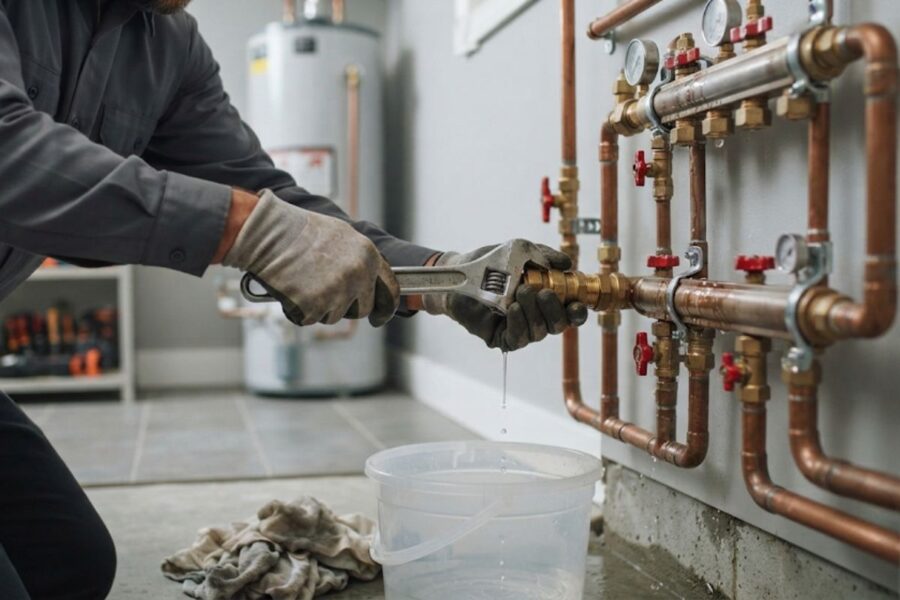
A burst pipe at midnight or sewage coming up through the shower drain is stressful enough without wondering who to ring. The good news is that the first few minutes matter more than anything else, and most of what you need to do in those minutes doesn’t require a plumber at all.
This guide explains how to tell a true plumbing emergency from one that can wait, what to do before help arrives, when to call Sydney Water or the gas network instead of a plumber, and how to choose an emergency plumber on the Northern Beaches you can trust.
Quick answer
In a plumbing emergency, stop the water first, then call for help. Turn off the tap at your water meter, keep away from any water near electrics, and call a licensed emergency plumber for problems inside your property. If you smell gas, leave the area and call your gas distributor (Jemena, on 131 909, for most mains-gas homes in Sydney) or 000 if anyone is in danger. If the leak is at your water meter or between the meter and the street, or sewage is overflowing when nobody is using water, call Sydney Water on 13 20 90, 24 hours a day.
Is it a plumbing emergency?
A plumbing problem is an emergency when it threatens safety, is causing damage right now, or leaves you without a working toilet or water. Everything else can usually wait for business hours, which is often cheaper.
| What you’re seeing | How urgent | Who to call first |
| Smell of gas (rotten eggs) | Emergency – act now | Leave the area, then call Jemena on 131 909 (or the number on your gas bill); 000 if anyone is in danger |
| Burst pipe or water spraying | Emergency | Turn off the meter tap, then call a licensed plumber |
| Leak at the water meter, or between the meter and the street | Emergency | Sydney Water, 13 20 90 (24/7) |
| Sewage overflowing from a toilet, shower or outdoor gully | Emergency | A plumber if it only happens when you use water; Sydney Water on 13 20 90 if it overflows when nothing is running, or you’re unsure |
| Water reaching power points, light fittings or the switchboard | Emergency | Keep clear; Ausgrid on 13 13 88 or a licensed electrician |
| No hot water | Urgent, but may wait a few hours | A plumber (a licensed gasfitter for gas units) |
| Only toilet blocked | Urgent | A plumber the same day |
| Dripping tap or slow drain | Not an emergency | Book a regular appointment |
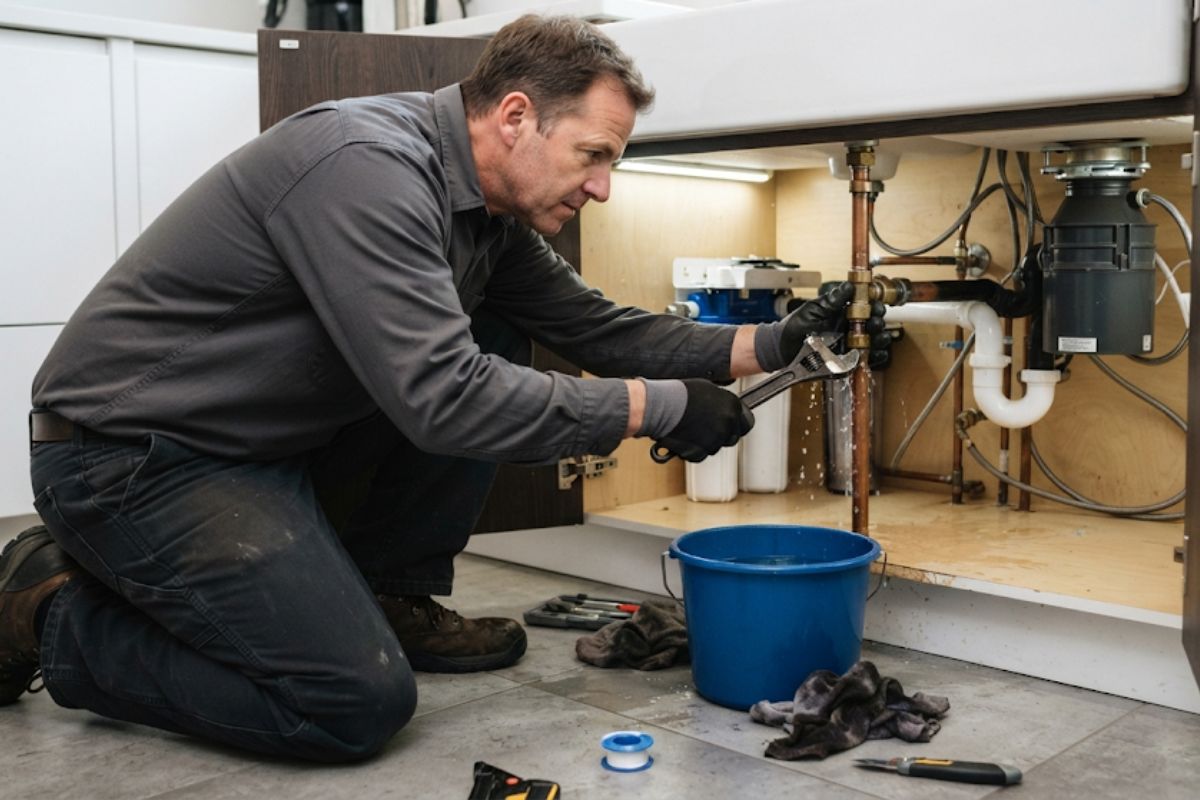
What to do before the emergency plumber arrives
These steps limit damage and make the plumber’s job faster. Do only what is safe.
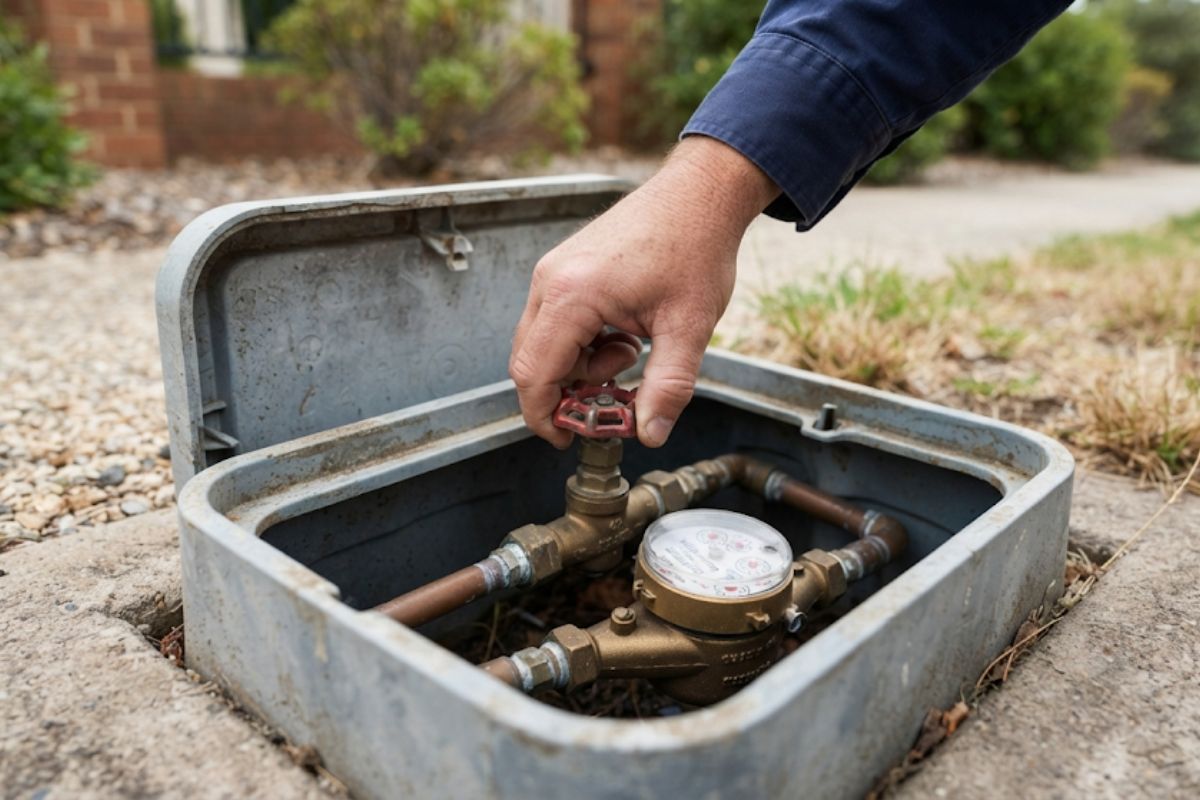
- Turn off the water. Most houses have a meter tap next to the water meter, usually near the front boundary. Turn it off (usually clockwise, or with the lever turned across the pipe) until it stops. Units may have an isolation valve inside or in a service cupboard.
- Keep away from water near electrics. Don’t touch electrical equipment if you’re standing in water or your hands are wet. Only switch off power at the main switchboard if the board is dry and you can reach it safely.
- Turn off the hot water system if the leak involves it, following the instructions on the unit.
- Open a cold tap at the lowest point of the house to drain water left in the pipes.
- Contain the water. Use buckets, towels and mops, and move furniture, rugs and electronics out of the way.
- Take photos and video of the damage and the source of the leak before cleaning up. Your insurer or landlord may ask for them.
- Call the right person using the table above, and describe exactly what is happening.
Tip: find your meter tap and test that it turns today. In an emergency, old taps can be stiff, and it’s much easier to sort this out on a calm afternoon.
Who fixes what: you, Sydney Water or the gas network?
Who is responsible depends on where the problem is. In general, Sydney Water looks after the water main and the meter, while the property owner is responsible for pipes on their side of the meter.
According to Sydney Water’s guide to reporting a fault, a leak between your water meter and your building is a job for a licensed plumber, while a leaking meter, meter tap, or pipe between the meter and the street may be fixed by Sydney Water. A simple test: if water is flowing on your property, turn off the meter tap. If the flow stops, the leak is in your pipes.
For wastewater (sewage), the same logic applies. If a backup only happens when you’re using water, the blockage is probably in your private pipes and you need a plumber. If sewage overflows when nothing is running, or you can’t tell, Sydney Water treats it as an emergency.
Gas works the same way. The gas network company is responsible for the network and its meter, but any leak in pipes or appliances on your side of the meter must be repaired by a licensed gasfitter.
Not sure? Call Sydney Water on 13 20 90. They can help work out whether the fault is theirs or a job for your local plumber.
Why plumbing emergencies happen on the Northern Beaches
The Northern Beaches has a mix of older coastal cottages, post-war homes and newer builds, and the causes of plumbing emergencies tend to follow the age and setting of the property. The most common culprits include:
- Ageing pipes and fittings. Older copper, galvanised steel and clay pipes can corrode, crack or separate at joints.
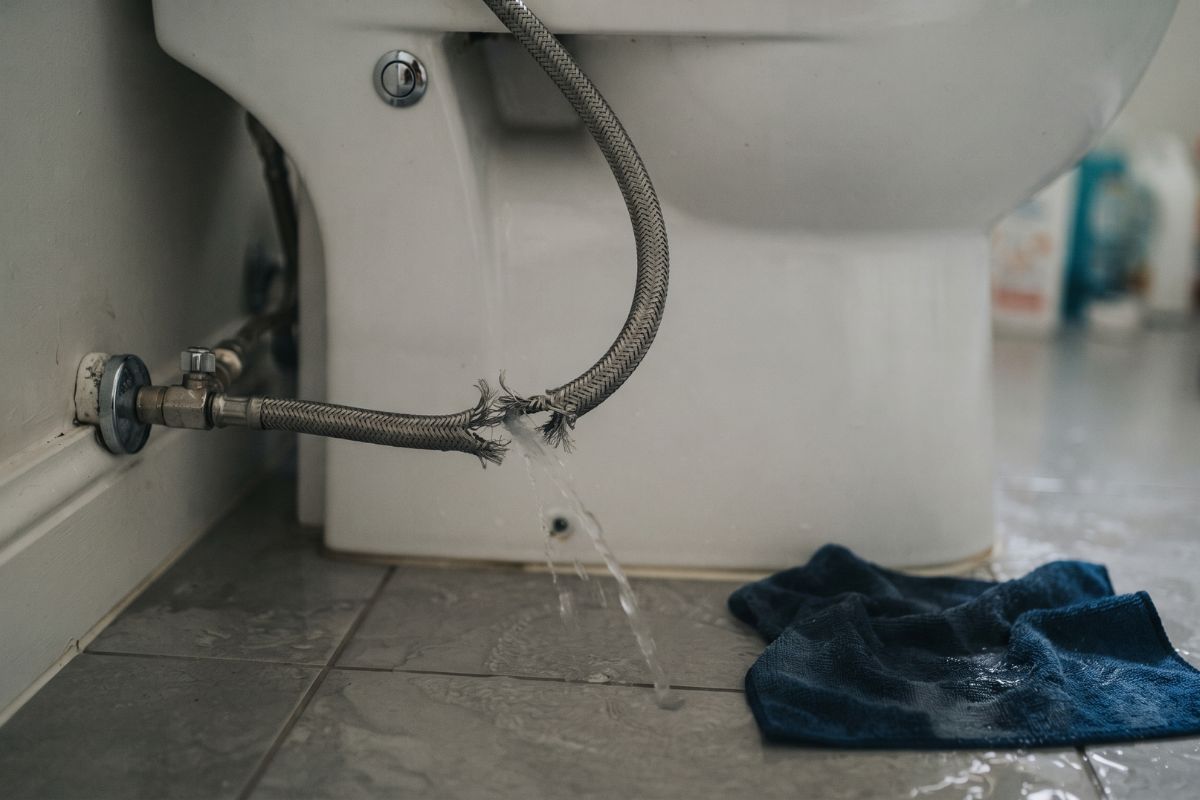
- Split flexible hoses. The braided hoses that connect taps and toilets to the wall can fail suddenly, especially once they’re several years old.
- Tree roots in sewer lines. Roots seek out moisture and can enter older clay sewer pipes through joints and cracks, causing blockages and backups.
- Grease, wipes and foreign objects in kitchen and toilet drains.
- Heavy rain. Storms can overload drains and stormwater systems.
- Salt air. Exposed metal fittings close to the coast may corrode faster.
Frozen pipes, a common cause of bursts in colder places, are rare in coastal Sydney.
How to choose an emergency plumber you can trust
The best time to choose an emergency plumber is before you need one. Save two local numbers in your phone now, so you’re not searching in a panic at 2am.
Check the licence. In NSW, plumbing, draining and gasfitting work must be done by a licensed tradesperson. You can search the free Service NSW licence check by name, licence number, ABN or suburb. Make sure the licence is current and covers the work you need, such as gasfitting for a gas hot water system.
Ask about insurance. A professional business should hold public liability insurance and be happy to confirm it.
Ask about pricing before they come out. Emergency plumbers usually charge more after hours. Ask these questions on the phone:
- What is the call-out fee, and is it credited to the job if I go ahead?
- What is your after-hours rate, and is there a minimum charge?
- Do prices include GST and parts?
- When can someone realistically get here?
Read reviews for patterns. One bad review means little. Repeated complaints about surprise fees, upselling or no-shows are a warning sign.
Watch for pressure. Be cautious if someone quotes a large job on the spot and pushes you to decide immediately. In an emergency, it’s reasonable to ask for a temporary fix tonight and a written quote for the permanent repair.
What does an emergency plumber cost?
There is no official or standard emergency rate. Most emergency plumbers charge a call-out fee plus labour and parts, and rates rise at night, on weekends and on public holidays. Some charge a minimum period, such as the first hour, even if the job is quick.
For indicative figures and tips on comparing quotes, see our guide to typical plumbing costs and how to choose a plumber in Sydney.
If the problem is contained (the water is off and nothing is getting worse), it may be cheaper to wait for business hours. If water, sewage or gas is still a risk, don’t delay to save money.
Renting? Your urgent repair rights in NSW
If you rent, contact your landlord or agent first, in writing if you can. A burst water service, serious leak, blocked or broken toilet, gas leak and failure of the hot water service are all classed as urgent repairs in NSW.
If you can’t reach your landlord or agent, or they won’t act within a reasonable time, you can arrange the repair yourself using a licensed tradesperson (preferably one listed in your lease). You can be reimbursed up to $1,000, and the landlord must pay you back within 14 days of your written notice with receipts. You may not be reimbursed if you caused the damage or didn’t give them a reasonable chance to fix it.
Insurance: what to record
Home insurance policies differ, so check your Product Disclosure Statement (PDS) or call your insurer early. Some policies cover sudden water damage but not the cost of fixing the pipe that failed, and gradual leaks are often treated differently.
To support a claim:
- photograph the source and the damage before cleaning up
- keep damaged items until the insurer says you can throw them out
- keep the plumber’s invoice and ask them to note the cause of the failure
- ask your insurer before booking non-urgent follow-up repairs.
Preventing the next emergency
Many plumbing emergencies give warning signs first. Fixing small problems early is far cheaper than an after-hours call-out.
- Check under sinks, behind toilets and around the hot water system for dampness or rust.
- Replace flexible hoses that are bulging, fraying or rusting.
- Watch for slow drains, gurgling, sewer smells or an unusually high water bill.
- Keep fats, oils and wipes out of drains.
- Fix drips early. Our guide to leaking tap spindle causes and DIY fixes explains what you can safely try yourself.
- If tree roots are a known problem, ask a plumber about a drain camera inspection.
You’ll find more practical upkeep guides in our plumbing articles and wider home improvement section.
Final thoughts
A plumbing emergency feels chaotic, but the order of steps is simple: make it safe, stop the water, then call the right person. Take ten minutes this week to find your meter tap, check it turns, and save the numbers for Sydney Water, Jemena and a licensed local emergency plumber. If something does go wrong, you’ll be ready.