
Being told you need your gallbladder removed can feel unsettling, and choosing who should do it can feel even harder. There is no official ranking of India’s “best” gallbladder surgeons, and online lists rarely explain how they were made.
This guide shows you what actually matters: which kind of doctor operates, when surgery is really needed, how to check a surgeon’s qualifications and registration, what to ask before you agree, what it may cost, and what recovery looks like.
Quick answer
The best doctor for gallbladder surgery in India is usually a qualified general surgeon or surgical gastroenterologist who performs laparoscopic (keyhole) gallbladder removal regularly, works in a well-equipped hospital, and explains clearly why you need the operation. Before you agree, check the surgeon’s medical registration, ask how often they perform this operation and how they handle complications, and get a written cost estimate. A gastroenterologist often diagnoses gallbladder problems, but a surgeon performs the operation.
Which doctor performs gallbladder surgery?
A surgeon performs gallbladder surgery, not a gastroenterologist. The two roles are easy to confuse, so here is how they differ:
- Gastroenterologist: A physician who specialises in the digestive system. They may investigate your symptoms, order scans and blood tests, and treat stones stuck in the bile duct with a camera procedure called ERCP (endoscopic retrograde cholangiopancreatography). They do not usually remove the gallbladder.
- General surgeon: Most routine gallbladder removals in India are done by general surgeons trained in laparoscopic surgery.
- Surgical gastroenterologist (GI surgeon): A surgeon with extra training in operations on the digestive organs. Complex cases, such as severe inflammation, bile duct problems or suspected cancer, are often referred to them.
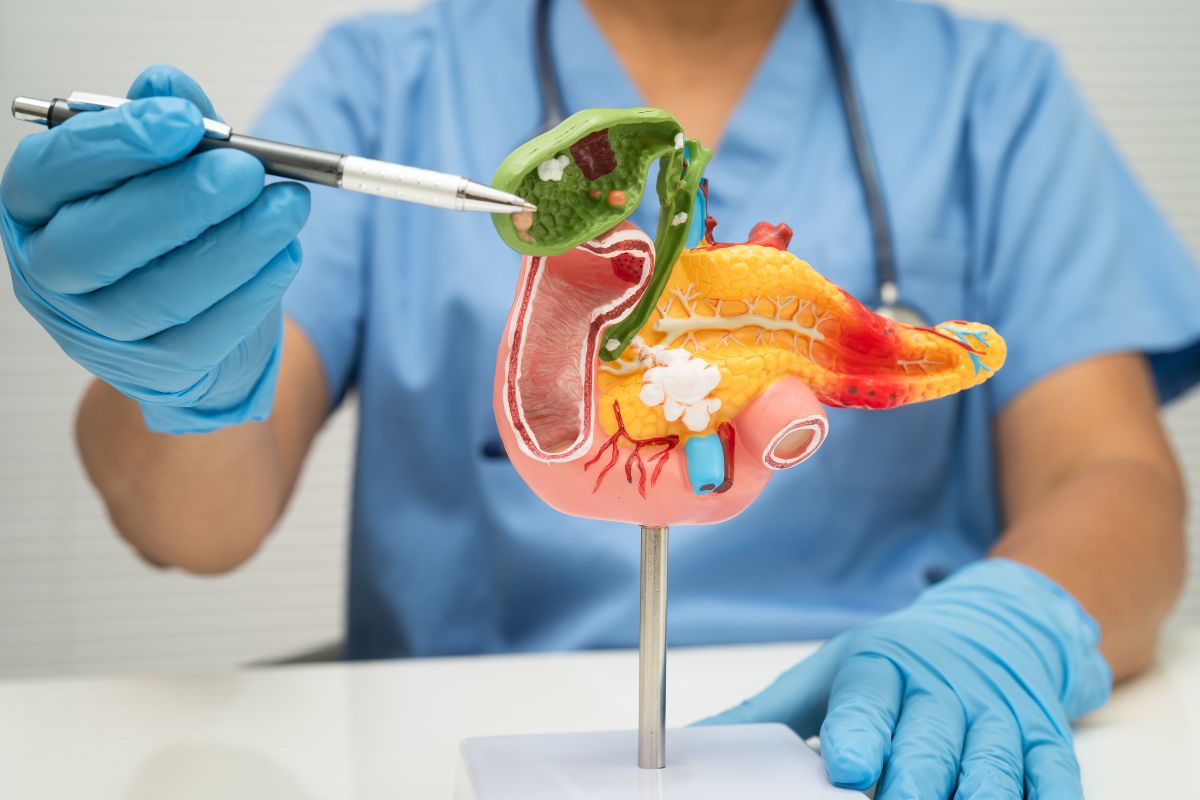
The operation itself is called a cholecystectomy. When it is done through a few small cuts using a camera, it is a laparoscopic cholecystectomy, the standard approach for most people.
When is gallbladder surgery actually needed?
Surgery is usually recommended when the gallbladder is causing symptoms or complications. Your own surgeon will decide based on your scans, blood tests and overall health. Common reasons include:
- Gallstones that cause pain. Gallstones are hard deposits that form from the substances in bile, a digestive fluid stored in the gallbladder. Repeated attacks of upper-right or upper-middle tummy pain, often after meals, are the most common reason for surgery.
- Acute cholecystitis. This is inflammation of the gallbladder, usually because a stone blocks its outlet. It causes constant pain and sometimes fever. UK guidance recommends early keyhole removal, ideally within a week of diagnosis.
- Stones in the bile duct or gallstone pancreatitis. A stone can slip into the bile duct, causing jaundice (yellow skin or eyes) or inflammation of the pancreas. The duct is usually cleared, often by ERCP, and the gallbladder is then removed to prevent a repeat.
- Gallbladder polyps. These are small growths on the gallbladder lining. Most are harmless. European guidelines advise removal when a polyp is 10 mm or larger, or 6 to 9 mm with risk factors. Asian ethnicity is one of the listed risk factors, which matters for Indian patients.
- Biliary dyskinesia. This means the gallbladder does not empty properly, causing pain without stones. Doctors disagree about when surgery helps, so a careful assessment and second opinion are sensible.
What if you have gallstones but no symptoms?
Many people find gallstones by chance on an ultrasound done for something else. UK national guidance advises that stones found in an otherwise normal gallbladder usually do not need treatment unless symptoms develop. Practice in India varies, and some surgeons recommend surgery for people with certain conditions, such as diabetes. If you have no symptoms and are advised to have surgery, ask the surgeon to explain exactly why.
How to choose the best gallbladder surgeon in India
The right surgeon for you combines proper qualifications, regular experience with this operation, a capable hospital and honest communication. Work through these checks.
1. Check the surgeon’s qualifications
Look for an MBBS degree plus a postgraduate surgical qualification:
- MS (General Surgery) or DNB (General Surgery) for routine gallbladder removal.
- MCh or DrNB (Surgical Gastroenterology) for complex liver, bile duct or pancreas problems.
- Laparoscopic training. Many surgeons hold fellowship certificates in minimal access or laparoscopic surgery from Indian surgical associations. These show extra training but are not a substitute for real experience.
Qualifications are usually listed on the hospital’s website and the surgeon’s prescription pad. If something is unclear, ask.
2. Verify the doctor’s registration
Every doctor practising modern medicine in India must be registered with a State Medical Council. You can search by name or registration number on the National Medical Commission’s Indian Medical Register. The register notes that its data is still being updated, so if you cannot find a doctor, check with the relevant State Medical Council rather than assuming the worst. A newer National Medical Register is being rolled out, and the NMC has said it expects it to become fully publicly searchable in 2027.
3. Ask about experience with this operation
A surgeon who performs laparoscopic gallbladder removal regularly is likely to be more familiar with difficult anatomy and complications. Ask roughly how many they do each year, how often they need to switch to open surgery, and how they manage problems such as bile leaks. A good surgeon will answer calmly and without exaggeration.
4. Look at the hospital as well as the surgeon
The team and facilities matter as much as the individual. Useful signs include:
- NABH (National Accreditation Board for Hospitals & Healthcare Providers) accreditation, which shows the hospital meets national quality standards.
- Qualified anaesthetists and an ICU or high-dependency unit on site.
- Access to ERCP and imaging such as MRCP (a special MRI scan of the bile ducts) if a bile duct stone is suspected.
- Empanelment with your insurer or with Ayushman Bharat PM-JAY, if you plan to use either.
5. Get a clear, written estimate
Ask for an itemised estimate covering the surgeon, anaesthetist, operating theatre, room category, medicines, tests and follow-up. Ask what would change if your surgery became more complex.
Warning signs to take seriously
- Guarantees of a perfect result or “zero risk.”
- Pressure to book surgery immediately when you have no symptoms and no emergency.
- Promises that pills, powders or “laser” treatments will clear stones in days.
- Agents or consultants who will not tell you whether they are paid by the hospital or surgeon they recommend.
- Vague answers about fees, qualifications or registration.
Questions to ask before you agree to surgery
Take these to your consultation, and bring someone with you if you can:
- Why do I need my gallbladder removed, and what happens if I wait?
- Will it be laparoscopic? What is the chance you will need to switch to open surgery?
- Do I need any other tests first, such as an MRCP or ERCP?
- How many of these operations do you do each year?
- What are the main risks for someone with my health conditions?
- Will I go home the same day or stay overnight?
- What is the total expected cost, and what is not included?
- Who do I contact if I have a problem after discharge, including at night?
It is reasonable to get a second opinion for planned (non-emergency) surgery. A confident surgeon will not mind.
Laparoscopic vs open gallbladder surgery
Most people have keyhole surgery. Open surgery is used when keyhole surgery is not safe or possible.
|
Laparoscopic (keyhole) |
Open |
|
|
Cuts |
Usually 3 to 4 small cuts |
One larger cut under the ribs |
|
Hospital stay |
Often same day or one night |
Usually a few days |
|
Typical return to normal routine |
About 1 to 2 weeks |
About 4 to 6 weeks |
|
When used |
Most planned and many urgent cases |
Severe inflammation, scarring, unclear anatomy, or if keyhole surgery needs to be converted |
Recovery times vary with your health, your job and whether there were complications.
How much does gallbladder surgery cost in India?
Costs vary widely by city, hospital type, room category and how complex your case is. Government hospitals are usually far cheaper than private ones. Insurer guides currently put laparoscopic gallbladder removal at private hospitals at roughly ₹60,000 to ₹1.5 lakh, with complex cases costing more. Treat any online figure as a rough guide and ask for a written estimate.
Will insurance or Ayushman Bharat pay?
- Ayushman Bharat PM-JAY: Eligible families get cashless cover of up to ₹5 lakh per family per year at empanelled hospitals, and gallbladder removal is among the covered surgical packages. Since late 2024, all senior citizens aged 70 and above can get cover through the Ayushman Vay Vandana card, regardless of income.
- Private health insurance: Gallbladder surgery is generally covered as a hospitalisation claim. However, many policies list gallstones under a specific-illness waiting period, often up to two years. Check your policy wording and get pre-authorisation for planned surgery.
- CGHS, ECHS or employer cover: Check which hospitals are empanelled and what paperwork is needed before admission.
Recovery and life without a gallbladder
Most people recover well after keyhole surgery and live normally without a gallbladder. Bile still reaches the gut; it simply flows directly from the liver instead of being stored first.
What to expect:
- Going home: Many people go home the same day; some stay one night.
- Pain: The wounds are sore for a few days. Shoulder-tip pain from the gas used during keyhole surgery is common and short-lived.
- Work: Many people return to work within 1 to 2 weeks after keyhole surgery. Heavy lifting or physical jobs may need longer.
- Driving: Wait until you can do an emergency stop without pain.
- Eating: You can usually eat a normal, healthy diet. Small meals may be easier at first. Some people notice loose stools or bloating, especially after rich or fried meals. This usually settles, and limiting deep-fried and heavily processed food is good for your health anyway.
If nausea, indigestion, tummy pain or diarrhoea continue for more than a few weeks, tell your surgeon. This group of symptoms is sometimes called post-cholecystectomy syndrome, and it can often be treated.
When to get urgent medical help
Before or after surgery, contact your doctor urgently or go to the nearest emergency department if you have:
- Severe or worsening tummy pain that does not ease.
- Fever, chills or shivering.
- Yellow skin or yellow whites of the eyes.
- A wound that is red, swollen or leaking pus.
- Pain or swelling in one leg.
If you have chest pain or difficulty breathing, call 112 or 108 for an ambulance immediately.
The bottom line
The best doctor for gallbladder surgery is not a name on a list. It is a qualified, registered surgeon who does this operation regularly, works in a capable hospital, and explains clearly why you need surgery and what it will cost. Take your time with planned surgery, ask questions and get a second opinion if you are unsure.
For more practical advice on everyday health, browse our health guides and our wider health and wellness section.